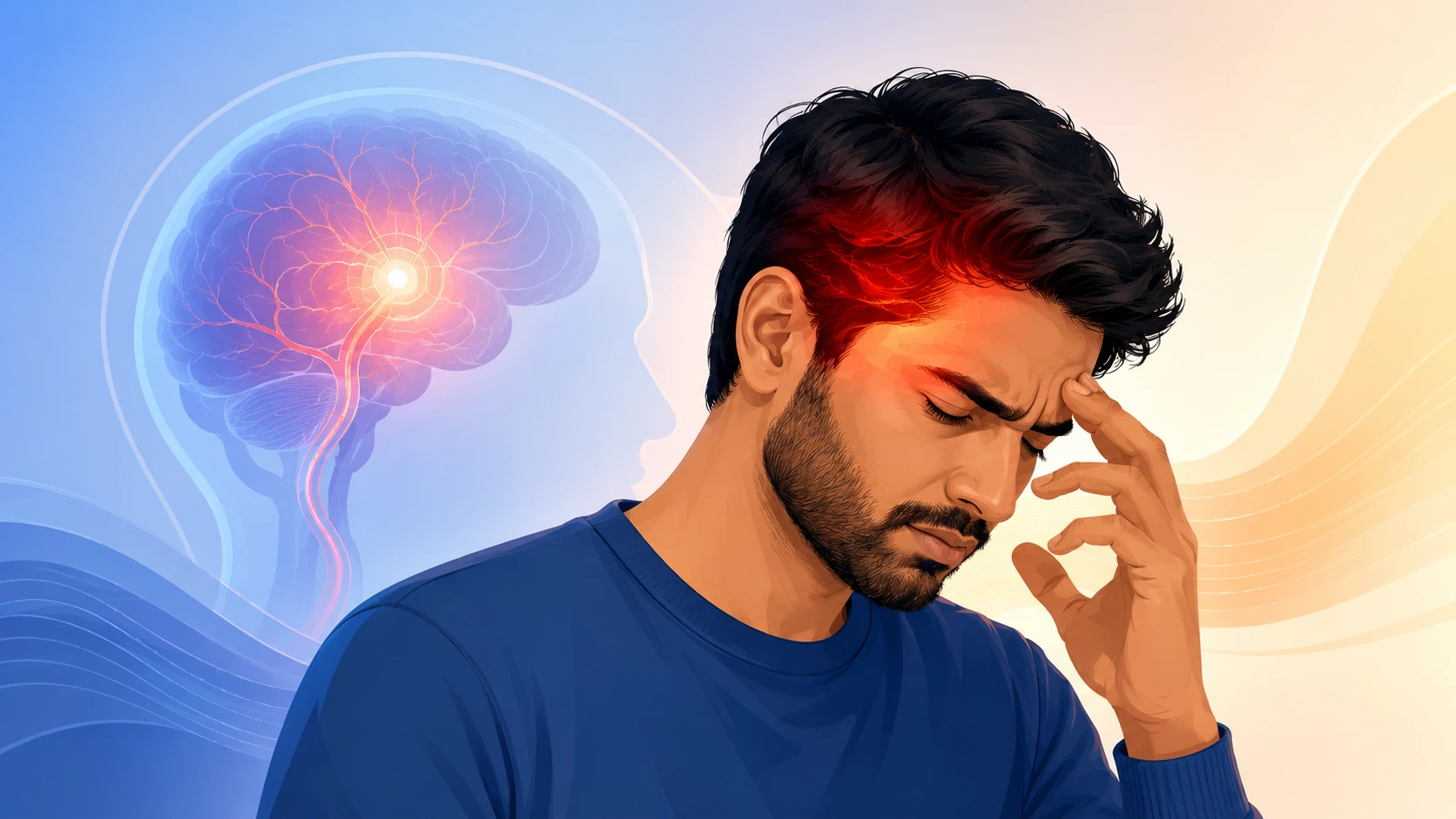
Once a migraine is fully established, reducing intensity becomes the goal. Gentle, consistent measures work better than aggressive interventions. Slow breathing, maintaining a stable body temperature, and avoiding physical exertion can prevent further escalation of pain.
12 Jan 2026
At its core, migraine happens because the brain has a lower threshold for stress and change. When several triggers occur together, the migraine brain reacts strongly, setting off a chain of nerve signals, chemical releases, and inflammation that leads to pain.
07 Jan 2026
For the vast majority of people, migraine is not dangerous or life-threatening. It is a chronic neurological condition that can be disabling, but it does not usually cause permanent brain damage, tumours, or death.
30 Dec 2025
A cure means the condition is eliminated and never returns. Migraine doesn’t fit into this category because it’s a neurological disorder with a strong genetic basis. The migraine brain is wired differently and remains sensitive to certain triggers like stress, hormonal changes, sleep disruption, or sensory overload.
24 Dec 2025
Abdominal migraine occurs when neurotransmitters and nerve pathways that typically influence headache patterns begin to affect the digestive system instead. The brain and gut communicate constantly, and when this connection becomes hyperactive or dysregulated, the signals trigger episodes of central abdominal pain without any structural issue in the organs.
18 Dec 2025
Vestibular migraine is a type of migraine that primarily affects the vestibular system, which is the network in the inner ear and brain responsible for balance and spatial orientation.
11 Dec 2025