

Abdominal Migraine: Symptoms, Triggers & Management



Most of us think of migraines as head-throbbing episodes, but there’s a form that settles deep in the gut instead of the skull. Abdominal migraine is a neurological condition where pain pathways in the brain-gut axis become hypersensitive, leading to severe stomach pain that comes and goes in cycles. Abdominal migraine is most common in children, yet it often affects adults too, remaining unnoticed for years because it resembles acidity, gastritis, food intolerance, or general stomach upset.
What is the “gut-brain axis” in abdominal migraine?
The gut-brain axis is the two-way communication network between the digestive system and the brain that influences pain, digestion, stress and inflammation.
Understanding Abdominal Migraine
Abdominal migraine occurs when neurotransmitters and nerve pathways that typically influence headache patterns instead affect the digestive system. The brain and gut communicate constantly, and when this connection becomes hyperactive or dysregulated, the signals trigger episodes of central abdominal pain without any structural issue in the organs. Many of us who experience it often share a family history of migraines or motion sickness, pointing to a genetic and neurological link rather than just digestive sensitivity.
Abdominal Migraine in Adults
Although abdominal migraine is more common in children, it can persist into adulthood. Some adults transition from abdominal episodes to classic migraine headaches over time, while others continue to experience gut-centred attacks well beyond their teenage years. Irregular routines, work pressure, unpredictable sleep schedules and disorganised eating patterns play a major role in triggering episodes in adults. Increased stress-related inflammation in the gut and nervous system often adds to the frequency.
Can children with abdominal migraine develop regular migraines later in life?
Yes, many children with abdominal migraine eventually develop classic migraine headaches during adolescence or adulthood.
Symptoms of Abdominal Migraine
Recurring episodes of deep, dull pain around the belly button
Nausea and vomiting during episodes
Loss of appetite
Extreme tiredness or fatigue
Pale or “washed-out” appearance
Mild sensitivity to light or sound (similar to classic migraines)
Short, intense bouts of pain
In addition, long symptom-free intervals can easily mislead us into assuming it was just a random digestive disturbance.
Why is abdominal migraine often misdiagnosed?
Its symptoms closely resemble common digestive issues like acidity, gastritis, IBS, or food intolerance, making neurological causes easy to overlook.
Common Triggers Behind Abdominal Migraine
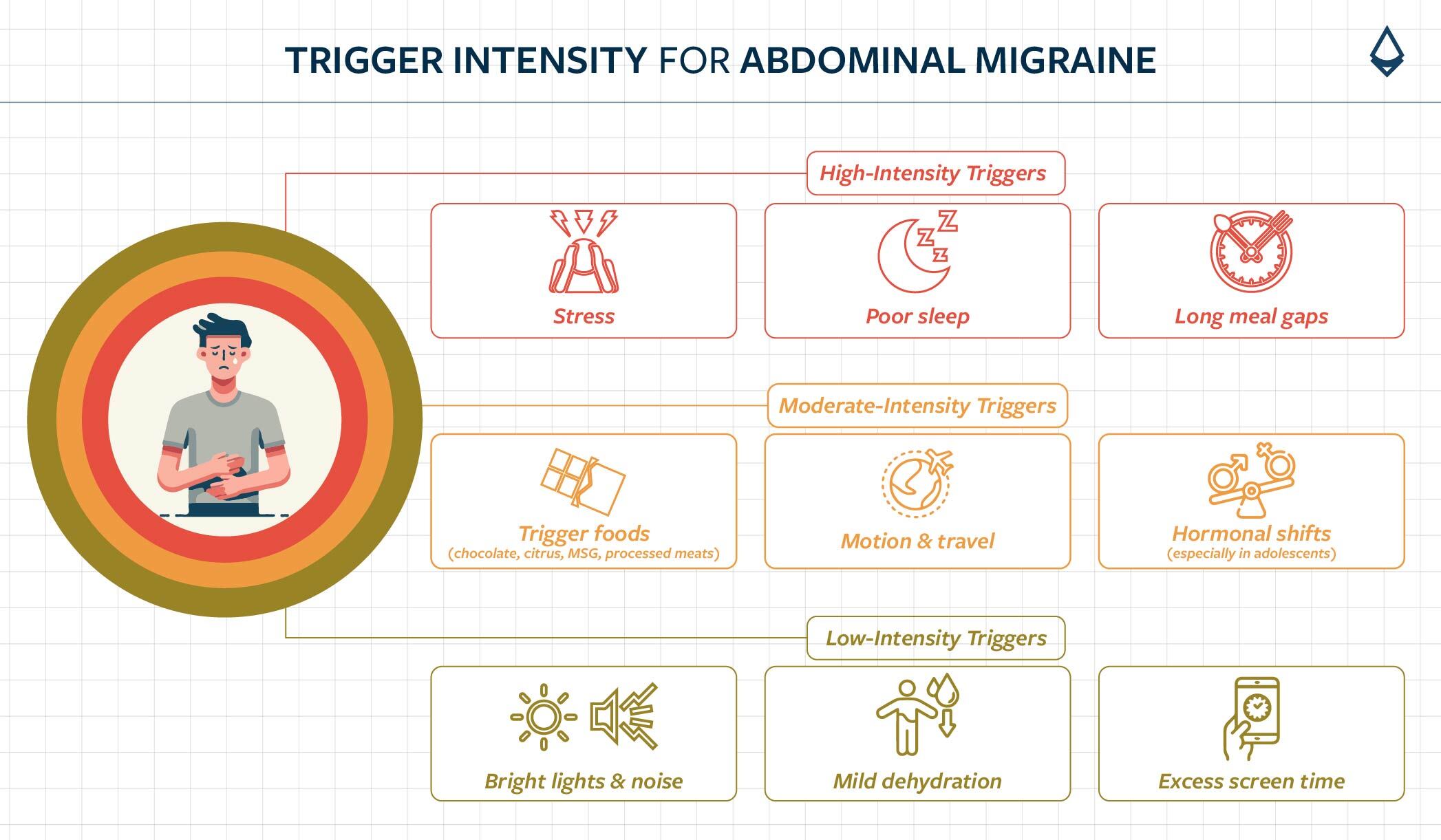
Most abdominal migraine episodes follow clear patterns. Stress, emotional overload, disrupted sleep, long gaps between meals and specific foods are well-known triggers. Items such as chocolates, processed meats, citrus fruits and foods containing MSG frequently show up in trigger diaries. Hormonal changes during adolescence can increase vulnerability, while travel, bright lights and motion sickness can also activate an episode because of heightened nervous-system sensitivity.
Abdominal Migraine Management
During an episode, supportive care becomes essential. Resting in a calm, dark space helps settle the nervous system, while a warm compress on the abdomen often eases the intensity of pain. Small, frequent sips of water or ORS prevent dehydration, especially when nausea or vomiting is present. Soft, easy-to-digest foods, such as rice, toast, or bananas, can help alleviate gut sensitivity. Many people experience that gentle breathing practices or simple relaxation techniques reduce the duration and discomfort of an ongoing attack.
How is abdominal migraine different from a regular stomach ache?
Abdominal migraine occurs in recurring cycles, is linked to neurological sensitivity and often comes with nausea, fatigue, or migraine-related symptoms.
Regular meals, a steady sleeping pattern, consistent hydration and limited exposure to known trigger foods create a stable environment for the gut-brain axis. Reducing screen time, especially before bedtime, supports better sleep quality. Stress-management tools such as journaling, stretching and mindful evening routines can be especially helpful for children and adolescents navigating pressure from school and social environments.
Why do long gaps between meals trigger abdominal migraine episodes?
Irregular eating can stress the nervous system and alter gut-brain signalling, increasing the likelihood of an episode.
When to Seek Care?
Medical guidance becomes important when episodes start affecting appetite, concentration, or sleep, or when their frequency increases. Any persistent vomiting, fever, or blood in the stool warrants immediate review. Once other gastrointestinal conditions are ruled out, clinicians often recommend a combination of lifestyle regulation, trigger management and supportive therapies. Cannabinoid-based medication has also shown potential in calming the gut-brain axis and reducing the intensity of migraine-related pain.
Way Forward
Abdominal migraine may be lesser-known, but it becomes far more manageable once we understand its patterns and triggers. With consistent routines, environmental stability, and supportive care, many individuals experience a substantial reduction in both the frequency and intensity of episodes. Recognising the condition early prevents unnecessary worry, endless dietary experiments and repeated misdiagnoses.
Also Read:
Key Takeaways
- - Abdominal migraine is a neurological condition involving the brain-gut axis; it causes severe, recurring stomach pain even though there is no structural problem with the digestive organs.
- - It is often misdiagnosed in adults as acidity, gastritis, or food intolerance because the symptoms settle in the gut rather than the head.
- - Episodes are characterized by deep, dull pain around the belly button, often accompanied by nausea, vomiting, paleness, and fatigue, followed by long periods with no symptoms.
- - Identifying personal triggers is essential for management common culprits include emotional stress, irregular sleep, skipped meals, and specific foods like MSG, chocolate, or processed meats.
- - Recognizing the pattern early prevents unnecessary medical tests, reduces anxiety, and allows for better control through consistent routines, stress management, and supportive care.