

Why Does Weight Gain Happen During Perimenopause?


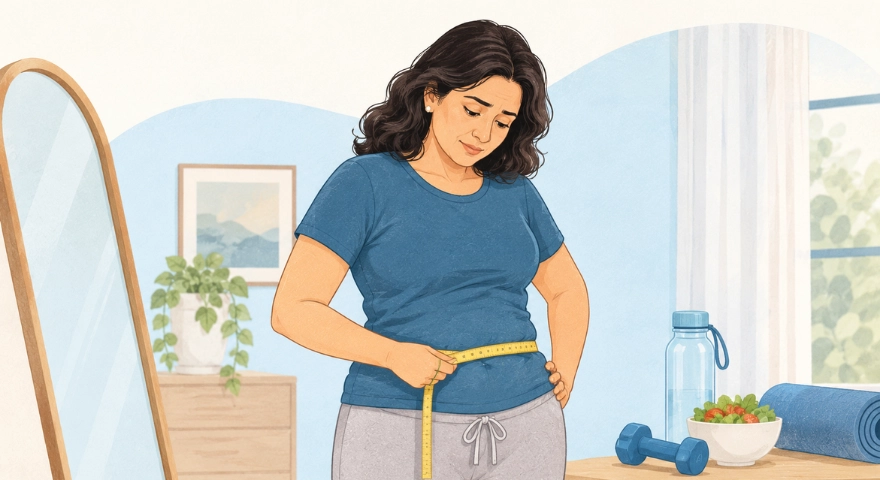
Perimenopause weight gain is a common concern in the years leading up to the final menstrual period. Weight often rises gradually, and fat tends to settle around the stomach and upper body. The change is common but not inevitable and hormones are only one of several contributing factors.
1. Is perimenopause weight gain inevitable? No. It is common, but diet, activity, sleep and genetics all influence the outcome
Why Does Weight Gain Occur During Perimenopause?
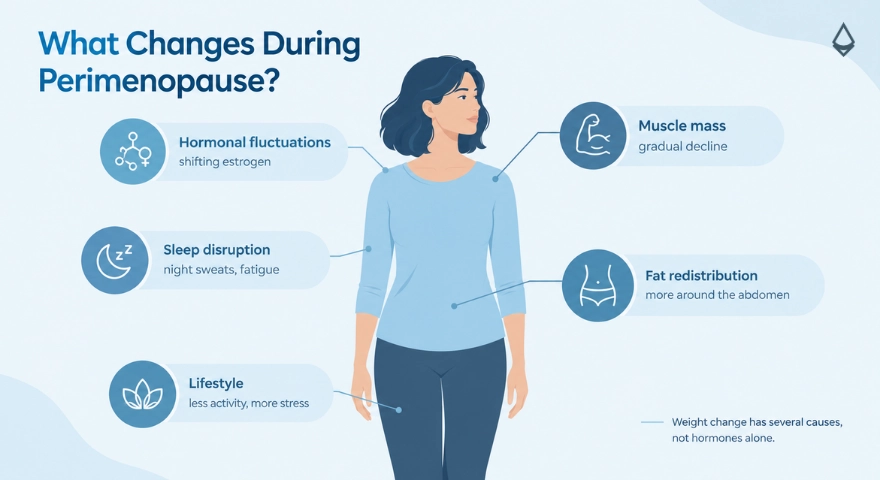
Falling and fluctuating estrogen influences where the body stores fat. Hormonal weight gain in perimenopause also overlaps with changes that come with ageing itself, so hormones alone do not explain it. Metabolism slows gradually and muscle mass declines with age. Muscle uses more energy than fat, so less muscle means lower daily calorie needs.
Lifestyle shifts add to this. Hot flushes and night sweats disrupt sleep, tiredness reduces activity and stress can alter appetite and food choices. Genetics also plays a role. When eating habits stay the same while energy needs fall, weight can creep up. These same changes also affect where fat is stored.
Can weight increase without changes in eating habits?
Yes. Slower metabolism and muscle loss lower energy needs, so unchanged intake can lead to gradual gain.
Why Does Belly Fat Increase During Perimenopause?
Hormonal changes make weight gain around the abdomen more likely than around the hips and thighs. Two fat types are involved. Subcutaneous fat sits beneath the skin. Visceral fat lies deeper, surrounding internal organs. Waistlines can widen even when scale weight changes little, because muscle loss and fat redistribution alter body composition.
Excess abdominal fat is associated with higher risks of conditions such as heart disease . Perimenopause belly fat is not universal, however, and it is not inevitable. Since the same lifestyle factors drive fat distribution, they are also the focus of management.
Why does belly fat increase when overall weight is stable?
Muscle loss and fat redistribution shift body composition, so waist size can grow without a change on the scale.
How Can Perimenopause Weight Gain Be Managed?
No single approach works for everyone. The evidence favours steady, combined habits.
Nutrition
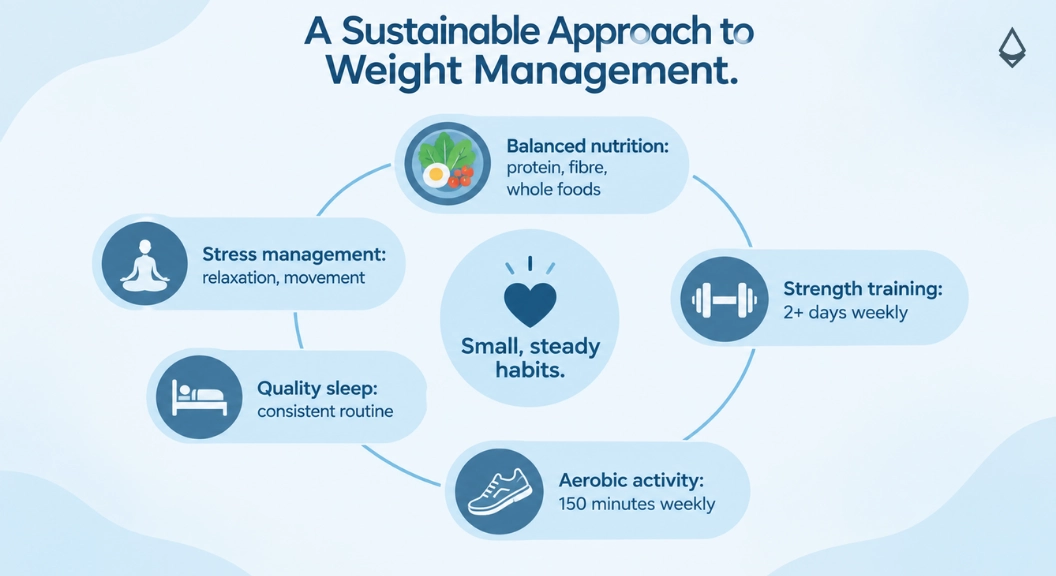
Balanced meals with vegetables, fruit, whole grains, fibre-rich foods, healthy fats and adequate protein support fullness and muscle maintenance. Portion awareness helps, while extreme calorie restriction, crash diets and detoxes are unsupported and hard to sustain.
Physical activity
Adults are advised to do at least 150 minutes of moderate aerobic activity weekly, such as brisk walking, cycling, or swimming, plus strength exercises on two or more days. Strength training helps preserve muscle. Breaking up long periods of sitting also helps. Exercises cannot target belly fat specifically.
Sleep
Poor sleep is linked to tiredness and changes in appetite. Regular sleep and wake times, a cool, dark bedroom and limiting caffeine and screens before bed support better rest. Persistent sleep problems merit medical advice.
Stress management
Chronic stress can drive emotional eating and disrupt routines. Relaxation techniques, mindfulness and regular activity help and none of these needs exaggerated claims to be worthwhile.
Realistic expectations
Routines that worked earlier may need adjusting. Waist circumference, strength, energy and metabolic health markers are more useful measures than weight alone. Rapid loss is not a realistic goal.
How to lose weight during perimenopause?
The principles match those at other life stages: balanced eating, regular aerobic and strength activity, adequate sleep and stress management. Gradual progress is more sustainable than rapid loss.
When Should Weight Changes Be Medically Evaluated?
Perimenopause can coincide with other health changes, so unexplained symptoms should not automatically be blamed on menopause. Medical assessment is useful for rapid or unexplained weight gain, persistent or unusual accompanying symptoms, significant fatigue, or concerns about metabolic health. Weight gain and tiredness can also occur with an underactive thyroid, among other conditions. A doctor can assess the cause.
Does hormonal weight gain go away after menopause?
Not automatically. Age-related and lifestyle factors continue, and weight gain often persists through the 50s unless habits adjust.
Conclusion
Perimenopause weight gain results from a combination of hormonal fluctuations, ageing and lifestyle changes. Balanced nutrition, regular physical activity, adequate sleep and stress management can support sustainable weight management and long-term metabolic health. Additionally, cannabinoid-based products are being explored for managing menopause-related symptoms, including sleep disturbances and discomfort. Medical advice is recommended before trying new therapies.
Key Takeaways
- - Perimenopause weight gain is common but not inevitable.
- - Hormones, ageing, muscle loss, sleep and stress all contribute.
- - Perimenopause belly fat reflects fat redistribution, and spot reduction is not possible.
- - Balanced nutrition, strength and aerobic activity, sleep and stress care support sustainable management.
- - Unexplained or rapid changes warrant medical evaluation.