

What Is Premenstrual Syndrome (PMS)?


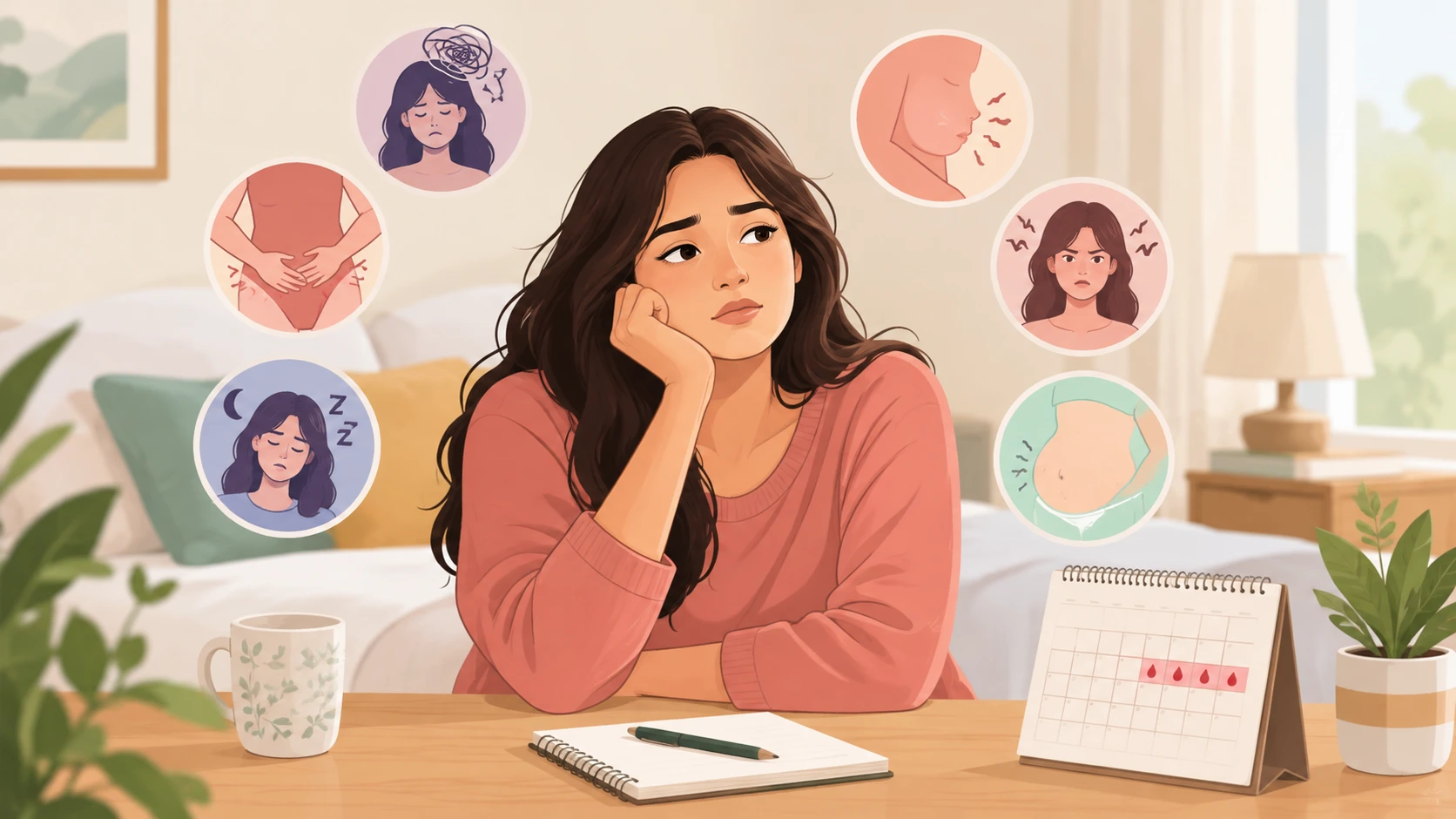
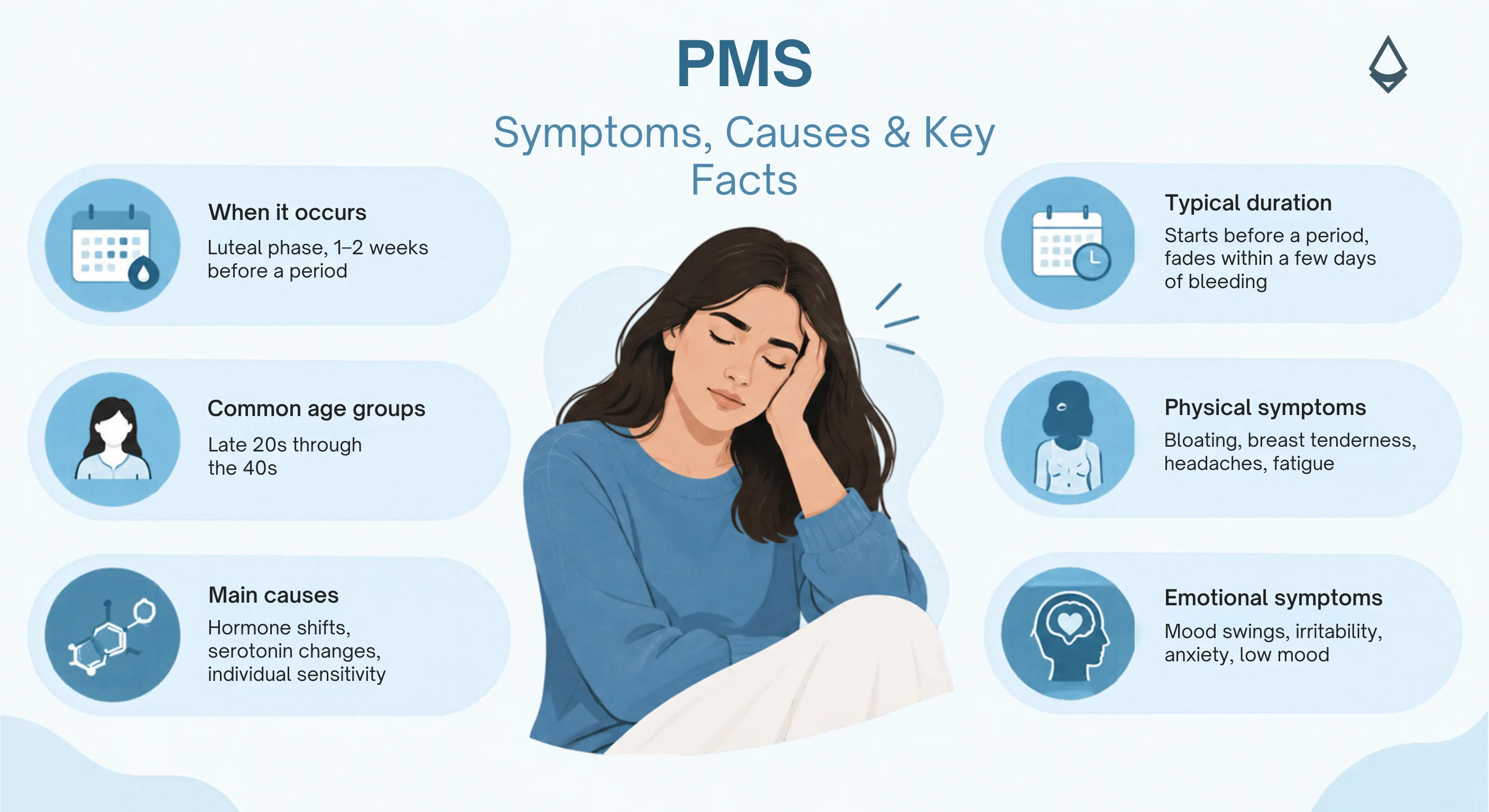
Premenstrual syndrome (PMS) is one of the most common women’s health concerns, affecting millions of menstruating women. It refers to a range of physical, emotional and behavioural symptoms that occur in the one to two weeks before a period and usually improve within a few days after bleeding begins.
Up to three in four women experience some premenstrual symptoms, although their type and severity can vary widely. For many, these changes are mild and manageable. However, for some, symptoms can be severe enough to interfere with daily activities, work, school, or relationships. Understanding PMS can help distinguish common cycle-related changes from symptoms that may require medical attention.
When Does PMS Occur in the Menstrual Cycle?
PMS occurs during the luteal phase, after ovulation and before the next period.
Ovulation usually occurs 10-16 days before the next period, but timing can vary.
After ovulation, hormone levels change as the body prepares for a possible pregnancy.
If pregnancy does not occur, hormone levels decline, which may trigger PMS symptoms.
PMS symptoms usually improve within a few days after the period begins.
What is the luteal phase?
The luteal phase is the part of the menstrual cycle between ovulation and the start of the next period.
Why Does PMS Happen?
PMS is linked to the hormonal changes of the menstrual cycle. After ovulation, estrogen and progesterone rise, then fall sharply if pregnancy does not occur. Symptoms typically begin as hormone levels decline.
Key biological factors include:
Hormone fluctuations: Shifts in estrogen and progesterone affect the brain and body.
Brain chemistry: Hormone changes influence serotonin, which helps regulate mood, sleep and appetite.
Individual sensitivity: Some women respond more strongly to normal hormone changes.
Risk factors: Family history of PMS, high stress and a personal history of depression or anxiety are associated with more severe symptoms.
What is serotonin?
Serotonin is a brain chemical that helps regulate mood, sleep, appetite and overall well-being.
What Are the Common Symptoms of PMS?
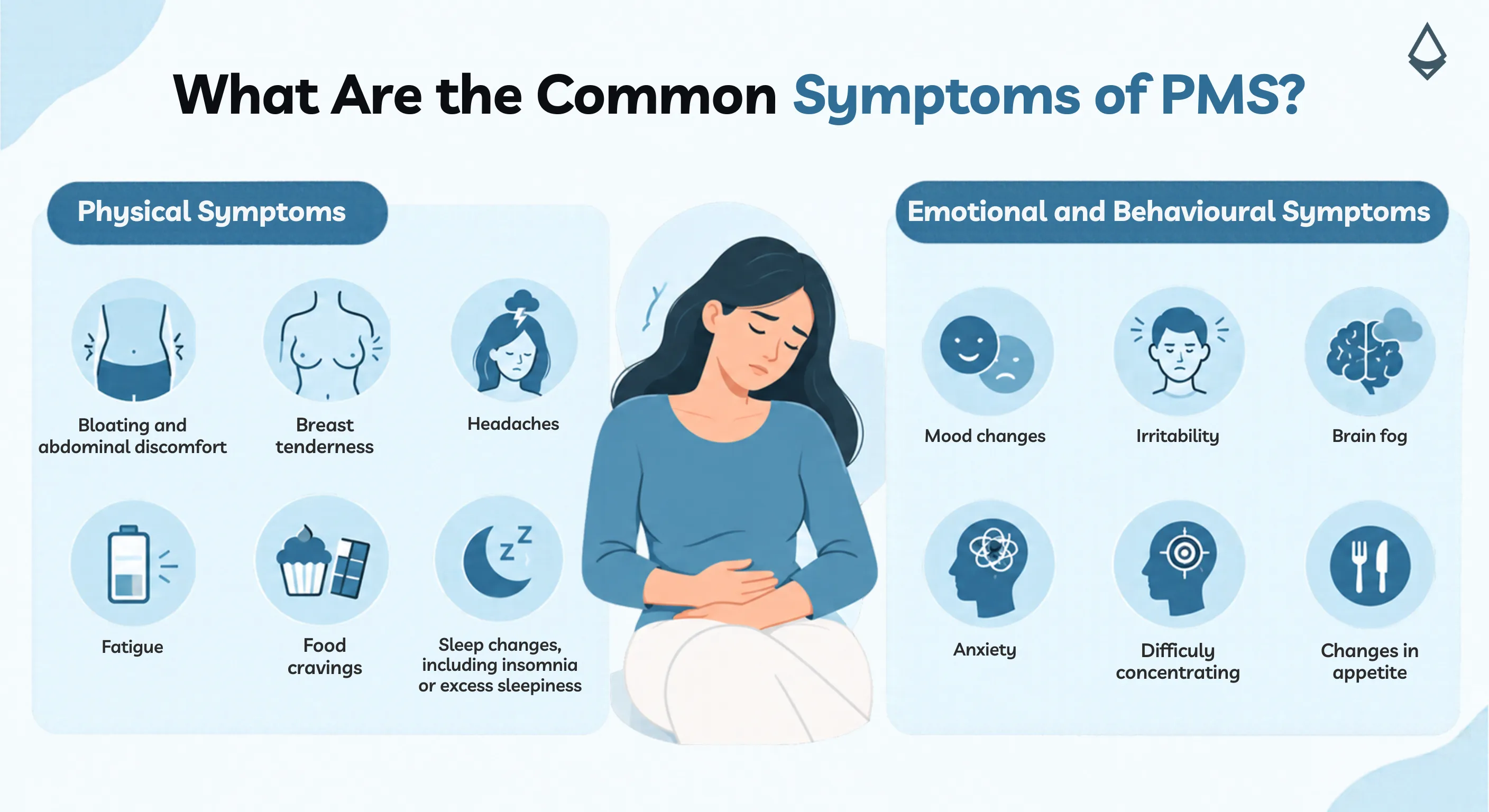
PMS can cause a range of physical, emotional and behavioural symptoms. Most women experience only a few symptoms, and the pattern is often consistent from one menstrual cycle to the next.
Can PMS symptoms change with age?
Yes. PMS symptoms may change over time and can become more noticeable during the late reproductive years
Can PMS Symptoms Be Confused With Ovulation Symptoms?
Some symptoms that occur during the menstrual cycle can overlap with ovulation-related changes. However, when the symptoms occur and how long they last can provide useful clues.
Ovulation pain: Usually occurs around ovulation, often about 10 to 16 days before the next period. It may cause one-sided lower abdominal or pelvic pain and can last from a few minutes to several hours, sometimes up to 1-2 days.
PMS: Occurs during the days or weeks after ovulation and before menstruation. Symptoms may include bloating, breast tenderness, headaches, fatigue, mood changes, irritability and changes in appetite or sleep.
Ovulation pain is primarily a type of pelvic or lower abdominal discomfort, while PMS involves a broader combination of physical, emotional and behavioural symptoms that follow a recurring pattern before menstruation.
How Is PMS Diagnosed?
No single test confirms PMS. Diagnosis relies on the pattern of symptoms across the menstrual cycle.
A healthcare professional typically:
Reviews symptoms and menstrual history to understand when symptoms occur and how they affect daily activities.
Recommends a daily symptom diary for at least 2–3 cycles to see whether symptoms consistently appear before menstruation and improve after the period begins. Checks for other possible causes when needed, such as thyroid disorders, depression or anxiety, which can cause similar symptoms.
Confirms the recurring pattern of symptoms and their effect on everyday life before making a diagnosis.
What is a symptom diary?
A daily record of symptoms, their severity and menstrual dates that helps identify recurring patterns.
A diagnosis is supported when symptoms appear before a period, resolve soon after it starts and include a symptom-free period during the cycle.
What Helps Manage PMS Symptoms?
Mild symptoms often respond to lifestyle changes. Moderate to severe symptoms may need medical treatment.
Lifestyle approaches
Regular physical activity
Consistent sleep routines
Balanced meals with whole grains, fruits and vegetables
Reduced salt, caffeine and alcohol
Stress-reduction practices such as relaxation exercises
Cannabinoid-based medicines are also being used for their potential to help manage pain during menstrual cramps. However, they should be considered only with appropriate medical guidance.
When Should Medical Help Be Sought?
Medical advice is recommended when:
Symptoms interfere with work, school, or relationships
Lifestyle changes do not bring relief
Mood symptoms feel severe or overwhelming
Conclusion
PMS is a common condition associated with hormonal changes across the menstrual cycle and individual sensitivity to those changes. Symptoms range from mild discomfort to significant disruption. Understanding when symptoms occur in relation to ovulation and menstruation, tracking them across cycles and seeking professional care when needed can help with diagnosis and effective management.
Key Takeaways
- - PMS is a common condition that causes physical, emotional and behavioural symptoms in the one to two weeks before a period.
- - Doctors diagnose PMS by tracking symptom patterns across menstrual cycles and ruling out other conditions with similar symptoms.
- - Keeping a symptom diary for several menstrual cycles can help identify recurring patterns and support an accurate diagnosis.
- - Common PMS symptoms include bloating, breast tenderness, headaches, fatigue, mood changes, irritability and sleep disturbances.
- - Symptoms develop after ovulation during the luteal phase and usually improve once menstruation begins.