

What Is Menopause?



Menopause is a natural biological transition in a woman’s life that marks the end of her reproductive years. It is officially diagnosed when a woman has gone 12 consecutive months without a menstrual period. At this stage, the ovaries stop releasing eggs and levels of key hormones such as estrogen and progesterone decline.
What happens when estrogen and progesterone decline?
The body begins to adjust to lower hormone levels, leading to changes in metabolism, mood, sleep and overall physical health.
While menopause is often talked about as a single moment, it is actually part of a broader hormonal transition that unfolds over several years. Many women begin experiencing symptoms well before menopause during a phase known as perimenopause. Understanding what menopause means, what signs to expect, and how the body changes during this time can help women navigate this stage with greater confidence and awareness.
What is perimenopause?
The transitional phase before menopause is when hormone levels fluctuate and early symptoms begin to appear.
So, What Exactly Is Menopause?
In simple terms, menopause refers to the permanent cessation of menstruation due to the natural decline in ovarian function. Once a woman has completed 12 months without a menstrual cycle, she is considered to have reached menopause.
The transition typically occurs between the ages of 45 and 55, with the global average age being around 51 years. However, the experience can vary widely depending on genetics, lifestyle factors, and overall health.
Menopause is not a disease or disorder. It is a normal physiological phase, much like puberty, but in reverse. The body gradually adjusts to lower levels of reproductive hormones, which can influence several physical and emotional functions.
What Are the Early Signs of Menopause?
Most women do not transition into menopause suddenly. Instead, the body begins to show early signs during perimenopause, which can start several years before menopause itself.
Some of the first noticeable changes include:
Irregular menstrual cycles: Periods may become shorter, longer, heavier or lighter.
Hot flashes: Sudden sensations of warmth, often accompanied by sweating.
Night sweats: Episodes of excessive sweating during sleep.
Sleep disturbances: Difficulty falling asleep or staying asleep.
Mood fluctuations: Increased irritability, anxiety or mood swings.
Changes in metabolism: Weight gain, particularly around the abdomen.
These symptoms occur primarily because estrogen levels begin to fluctuate unpredictably.
What Are the Common Symptoms of Menopause?
Menopause affects multiple systems in the body because estrogen plays a role in many physiological processes. As hormone levels decline, women may experience a combination of physical, emotional and metabolic changes.
Physical Symptoms -
Hot flashes, night sweats
Fatigue, reduced energy levels
Joint or muscle discomfort
Vaginal dryness
Reduced libido
Emotional and Cognitive Changes -
Mood swings or irritability
Difficulty concentrating
Memory lapses or “brain fog”
Increased stress sensitivity
Metabolic and Long-Term Changes -
Slower metabolism
Changes in cholesterol levels
Increased risk of osteoporosis
Why is there an increased risk of osteoporosis during menopause?
Declining estrogen levels reduce bone density, making bones weaker and more prone to fractures.
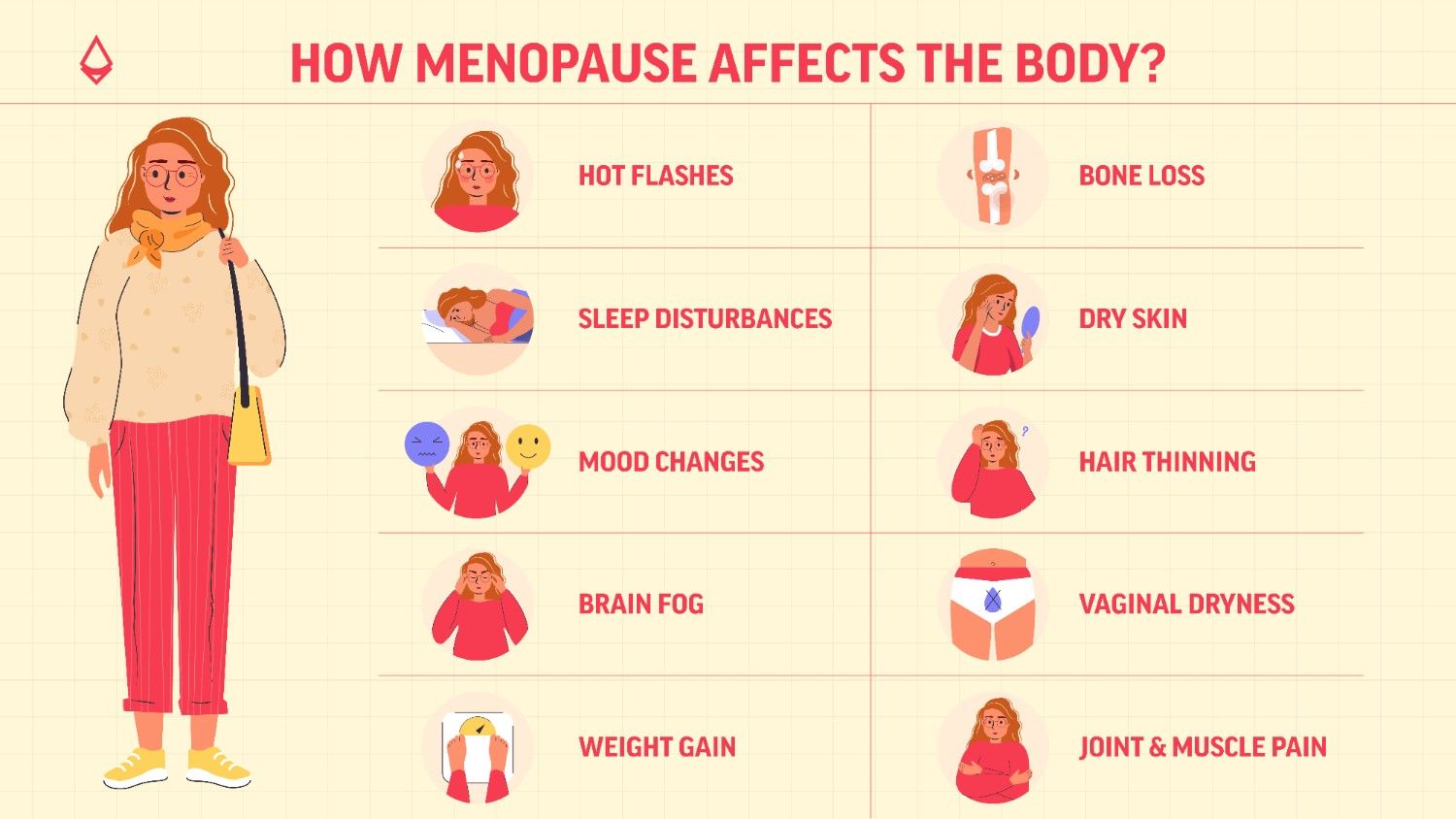
Not every woman experiences all these symptoms and their intensity can vary widely.
What Causes Menopause?
Menopause occurs primarily because the ovaries gradually lose their ability to produce estrogen and progesterone. This natural decline is part of the body’s ageing process.
However, menopause can also occur earlier due to certain conditions or medical interventions, such as:
Surgical removal of the ovaries
Cancer treatments like chemotherapy or radiation
Autoimmune disorders affecting ovarian function
Premature ovarian insufficiency
What is premature ovarian insufficiency?
When the ovaries stop functioning normally before the age of 40, leading to early menopause-like symptoms.
Understanding the cause can help determine the best ways to manage symptoms and maintain long-term health.
How Can We Manage Menopause Symptoms?
While menopause is a natural transition, the symptoms can sometimes disrupt daily life. Many women find relief through lifestyle adjustments and supportive therapies.
Some helpful approaches include:
Maintaining a balanced diet rich in calcium and vitamin D to support bone health.
Practising regular physical activity to improve mood, metabolism and sleep
Managing stress through yoga, meditation or breathing exercises
Ensuring consistent sleep routines
Emerging research also suggests that cannabinoid-based formulations may help support sleep, mood balance, and pain relief in some women experiencing menopausal symptoms, although more research is still ongoing.
What Does Menopause Mean for Long-Term Health?
Menopause represents a new phase of life rather than simply the end of menstruation. With the drop in estrogen levels, women may need to pay closer attention to certain aspects of health.
Key areas to monitor include:
Bone health, as reduced estrogen can increase the risk of osteoporosis
Heart health, since cardiovascular risk may rise after menopause
Metabolic health, including cholesterol and weight management
Regular health check-ups, balanced nutrition, and an active lifestyle can play a significant role in maintaining overall well-being during the post-menopausal years.
Key Takeaways
- - Menopause is confirmed after 12 consecutive months without a menstrual period.
- - The transition typically occurs between ages 45 and 55, with an average age of 51.
- - Early symptoms often begin during perimenopause, years before menopause.
- - Common symptoms include hot flashes, sleep disturbances, mood changes, and metabolic shifts.
- - Lifestyle support and emerging therapies can help manage symptoms and support long-term health.