

What is High-Functioning Anxiety?


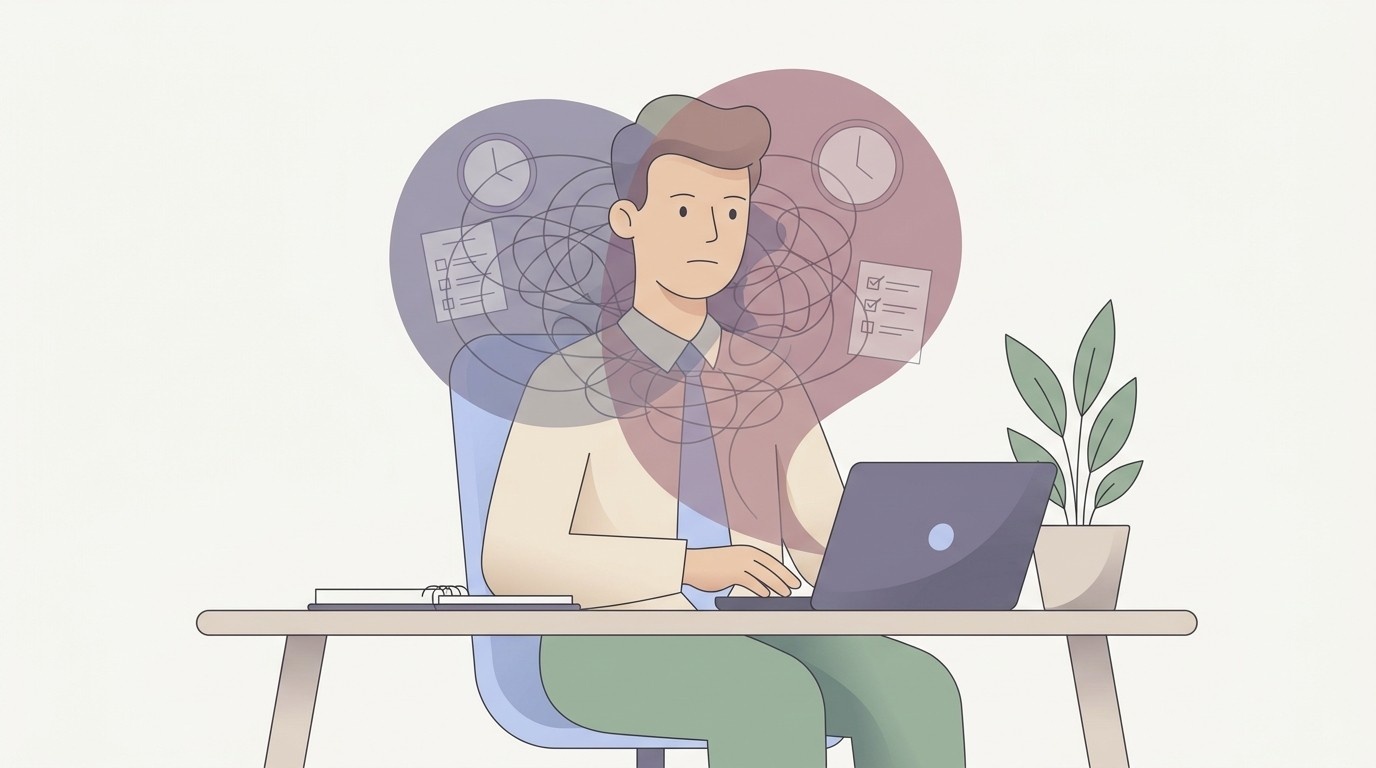
From the outside, everything looks in control - deadlines met, goals achieved, life running with precision. But internally, there’s a constant hum of pressure. This is often what high-functioning anxiety looks like. It doesn’t slow one down; it pushes one harder, sometimes at a cost one doesn’t immediately recognise.
And at the centre of this pattern sits the perfectionism panic, a cycle where the need to get everything “just right” quietly fuels anxiety. Over time, this doesn’t just affect how we perform, but how we think, rest and even experience success.
What is perfectionism panic?
It’s a cycle where fear-driven perfectionism creates constant pressure to perform, making even small tasks feel high-stakes.
What is High-Functioning Anxiety?
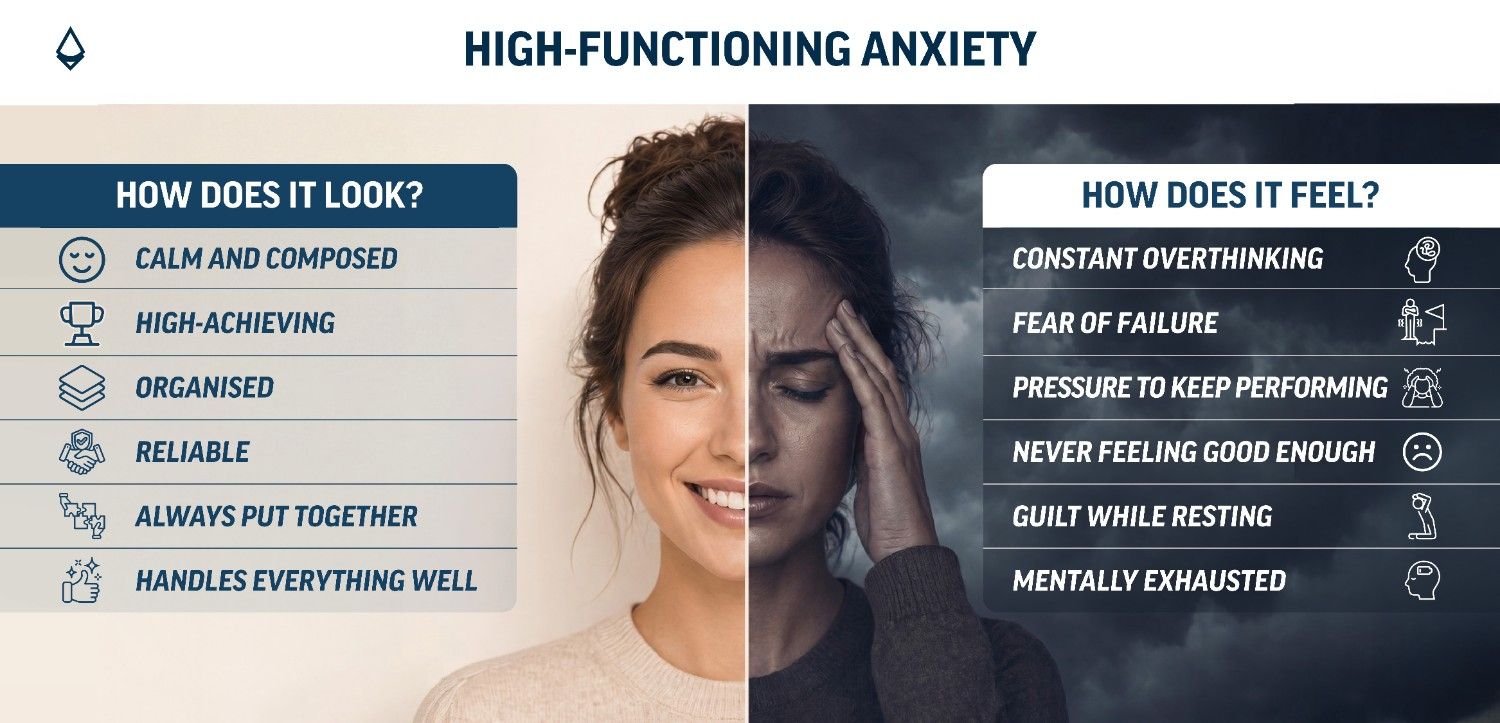
High-functioning anxiety isn’t always obvious. People experiencing it are often dependable, driven, organised and even high-achieving. But beneath that is persistent overthinking, fear of failure and difficulty switching off.
It’s not a formal diagnosis, but it overlaps with conditions like Generalised Anxiety Disorder, just with better masking and sustained performance.
What is meant by Generalised Anxiety Disorder?
Generalised Anxiety Disorder is a condition marked by persistent, excessive worry about everyday situations, often without a clear cause.
What often goes unnoticed is that this form of anxiety can feel useful. It helps one to stay ahead, anticipate problems and avoid mistakes. That’s exactly why it’s hard to identify and even harder to let go of.
Where Does the Perfectionism Trap Begin?
This kind of perfectionism is less about excellence and more about fear. It often sounds like - “If it’s not perfect, it’s not good enough.”
But underneath that is a deeper concern - “If I make a mistake, I’ll lose control, credibility or approval.”
That belief creates a loop:
Unrealistic expectations
Constant self-monitoring
Fear of mistakes
Temporary relief after success
Immediate pressure to perform again
How does the perfectionism loop work?
It follows a cycle of high expectations → overthinking → fear of mistakes → brief relief → renewed pressure.
Over time, even small tasks start to carry a disproportionate emotional weight. What looks like discipline from the outside often feels like pressure from within.
What are the Signs of High-Functioning Anxiety?
High-functioning anxiety shows up in ways that are often praised or normalised:
Over-preparing for everything: Tendency to mentally rehearse conversations, scenarios and outcomes
Struggling to relax without guilt: Rest feels unearned or uncomfortable
Taking on too much responsibility: Stepping in, even when it’s not required
Fear of disappointing others: Decisions are shaped by external validation
Overthinking small details: Minor choices feel disproportionately important
Never feeling “done”: There’s always something more to fix or improve
Less obvious signs that are often missed:
Perfection-driven procrastination: Delaying tasks because the outcome must be flawless
Constant need for reassurance: Seeking subtle validation to ease internal doubt
Busy as a coping mechanism: Staying occupied to avoid slowing down and feeling anxious
Physical symptoms: Muscle tension, fatigue, headaches, digestive discomfort or shallow sleep
Why Perfectionism Fuels Anxiety?
Perfectionism raises the stakes; anxiety magnifies the consequences. Together, they create constant internal pressure, even when things are going well.
The brain starts associating performance with safety. The better one does, the more they feel the need to maintain that standard.
Over time, this can lead to:
Mental fatigue and burnout
Poor sleep quality despite exhaustion
Reduced ability to feel satisfaction or relief
A growing disconnect between external success and internal experience
What are Some Natural Ways to Ease the Perfectionism Panic?
The goal isn’t to reduce ambition, but to remove the fear driving it. Small, consistent shifts can ease the constant pressure.
Start by defining what “good enough” looks like. Clear endpoints prevent endless refining and reduce mental load. Alongside this, regulating the body is key, with simple practices like slow walking, stretching or breathwork can calm an overactive nervous system.
It also helps to balance stimulation with stillness. When the mind is always “on,” intentional pauses become necessary, not optional. Reducing cognitive overload, like limiting notifications and multitasking, can further lower baseline anxiety and improve focus.
Nutrition can support this process too. Nutrients and herbs such as ashwagandha, magnesium, and omega-3 fatty acids are known to support stress regulation and nervous system balance.
What are some other nutrition supports for high-functioning anxiety?
Foods like bananas, eggs, whole grains, green tea and curd or other fermented foods, along with regular exposure to morning sunlight, can naturally support mood and help reduce stress.
Finally, there should be a shift in how we measure productivity. Focusing on effort instead of perfect outcomes reduces constant self-evaluation and builds a healthier work rhythm.
In addition, plant-based approaches, including cannabinoid-based medication, are being explored for their role in regulating stress via the endocannabinoid system. These should always be considered under the guidance of a healthcare expert.
Way Forward
High-functioning anxiety often goes unnoticed because it doesn’t reduce output; it sustains it. In fact, it’s often rewarded.
But the long-term cost shows up in quieter ways - burnout, emotional fatigue, irritability and a constant feeling of chasing something just out of reach. Even achievements don’t feel as fulfilling as they should. Separating the sense of safety and self-worth from constant performance can help in the long term.
Key Takeaways
- - High-functioning anxiety hides behind productivity and outward success.
- - Perfectionism here is driven by fear, not just high standards.
- - Subtle signs like overthinking, guilt during rest and hyper-responsibility are key indicators.
- - Natural strategies and lifestyle shifts can help regulate internal pressure effectively.
- - Sustainable success comes from reducing fear-driven performance, not ambition itself.