

What Herbs Can Help with Sleep and Stress?


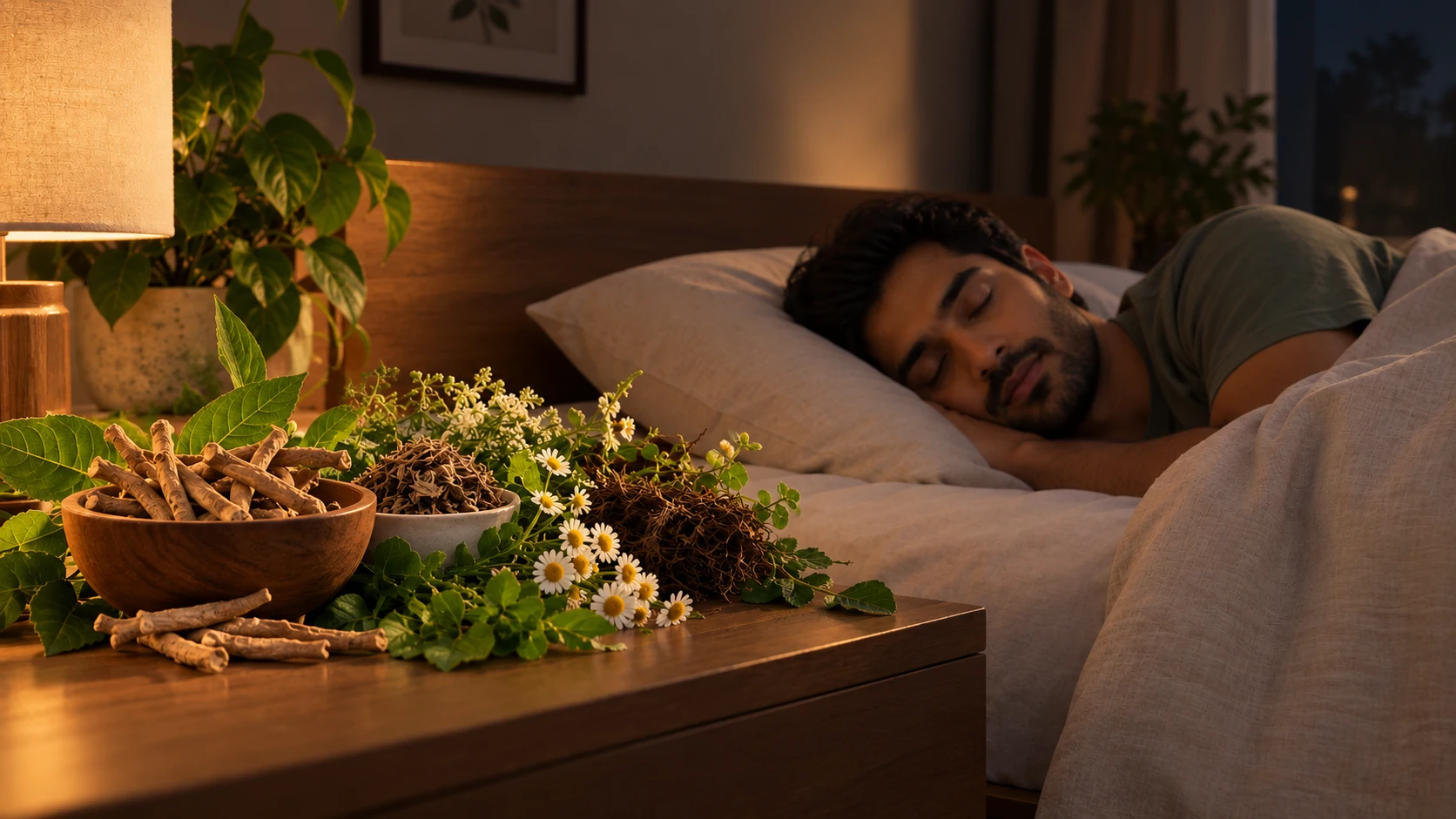
Stress can leave the mind feeling constantly “switched on,” while poor sleep can make it harder to manage stress the next day. When occasional sleeplessness becomes a pattern, improving sleep may require more than simply going to bed earlier.
Alongside appropriate medical care, herbs, Ayurvedic botanicals, relaxation practices and healthy daily routines may offer additional ways to support relaxation, manage stress and encourage better sleep. However, their effects can vary and the strength of scientific evidence differs across herbs and approaches.
How Does Stress Affect Sleep?
Stress activates the body's alerting systems, increasing mental and physical arousal when the body should be winding down. Racing thoughts, muscle tension and anticipation about the next day can make it harder to fall asleep or stay asleep.
This connection between stress and sleep is one reason approaches that promote relaxation and reduce pre-sleep arousal are being studied as part of sleep management.
What does pre-sleep arousal mean?
Pre-sleep arousal is the state of heightened mental or physical alertness at bedtime, such as racing thoughts, worry or muscle tension, that can make it harder to fall asleep.
Which Are Some Herbs Studied For Sleep and Stress?
Several medicinal plants are researched to support mental wellbeing, relaxation and sleep. Modern research is now examining some of these botanicals, although the amount and quality of evidence differs from herb to herb.
Ashwagandha - One of the better-studied Ayurvedic herbs in this area, with clinical research exploring its effects on stress, sleep quality and insomnia symptoms.
Brahmi - Traditionally used for cognitive and mental wellbeing; research is stronger for cognition, with emerging interest in its potential role in stress management.
Jatamansi - Traditionally associated with calming and sleep in Ayurveda, with small clinical studies exploring its use in primary insomnia.
Tagara - An Ayurvedic botanical traditionally used for sleep and relaxation; limited clinical research has examined its potential role in primary insomnia.
Shankhpushpi - Traditionally used to support mental calmness and cognitive wellbeing, making it more relevant to stress management than established insomnia treatment.
What Other Plant-Based Remedies Are Used for Relaxation?
Several non-Ayurvedic botanicals have also been traditionally used for sleep or relaxation.
Chamomile - Often consumed as a tea for relaxation; compounds such as apigenin have been studied for their possible calming effects, although evidence for insomnia remains inconclusive.
Valerian- A traditional herbal sleep aid that has been studied extensively, but clinical findings on insomnia have been inconsistent.
Passionflower - Traditionally used for calming and nervous tension, with small studies exploring possible effects on anxiety and sleep.
But traditional use or a plausible biological mechanism does not by itself establish an herb as an effective treatment. The plant species, part used, extraction method, formulation and dose can all affect its activity.
Why can the same herb affect people differently?
Response can vary with the plant preparation, dose, quality, individual health, medicines being taken and other factors, which is why natural does not always mean universally suitable.
Which Natural Practices May Help the Body Wind Down?
Herbs are only one part of a broader approach to sleep and stress. Slow breathing, mindfulness, progressive muscle relaxation and guided relaxation may help reduce physical and mental arousal before bedtime.
Ayurvedic and mind-body practices such as Abhyanga, yoga and Yoga Nidra are also being explored for relaxation and sleep. Ayurvedic research has examined approaches including Shirodhara and herbal interventions for insomnia, although clinical evidence remains limited and many studies are small.
What is the difference between an Ayurvedic herb and a medicinal plant?
An Ayurvedic herb is a plant used within the principles and practices of Ayurveda, while “medicinal plant” is a broader term for plants studied or used for potential therapeutic purposes across different healthcare systems.
Simple circadian-supporting habits can complement these practices. Keeping a consistent sleep-wake schedule, getting daylight during the day, limiting caffeine later in the day and maintaining a dark, quiet bedroom can help create conditions that are more conducive to sleep.
Cannabinoid-based medicines represent another plant-derived therapeutic approach being studied in relation to sleep disturbances and symptoms such as pain that can interfere with sleep. Their formulation, dose, potential interactions and individual health factors should be considered with medical supervision.
Can Nutrition and Daily Habits Influence Sleep?
Sleep is also shaped by what happens during the day. Regular physical activity can support sleep, while excessive caffeine, heavy meals close to bedtime and irregular daily routines may make it harder for some people to wind down.
Rather than relying on a single “sleep remedy,” a consistent combination of daytime activity, regular routines, relaxation and a supportive sleep environment may be more useful for long-term sleep health.
When Should Sleep Problems Be Medically Evaluated?
Natural approaches may complement healthy sleep habits, but persistent sleep difficulties should not simply be managed by adding more supplements or home remedies.
Frequent difficulty falling or staying asleep, significant daytime fatigue, loud snoring, interrupted breathing, persistent pain or sleep problems associated with medicines or anxiety can point to an underlying issue that needs assessment.
Key Takeaways
- - Stress and poor sleep can reinforce each other, making relaxation an important part of healthy sleep habits.
- - Ayurvedic herbs such as Ashwagandha, Jatamansi and Tagara have been traditionally used for stress, calming and sleep.
- - Chamomile, valerian and passionflower are also commonly used for relaxation and sleep, though research findings vary.
- - Relaxation practices, regular routines and good sleep habits can complement plant-based approaches to sleep support.
- - Persistent sleep problems need proper evaluation, as natural remedies may not address underlying causes or replace evidence-based treatment.