

What Does Anxiety Feel Like Physically?



Most people think anxiety is “in the mind” - racing thoughts, constant worry, overthinking. But if one has experienced it, they know that’s only half the story. Anxiety often shows up much louder in the body.
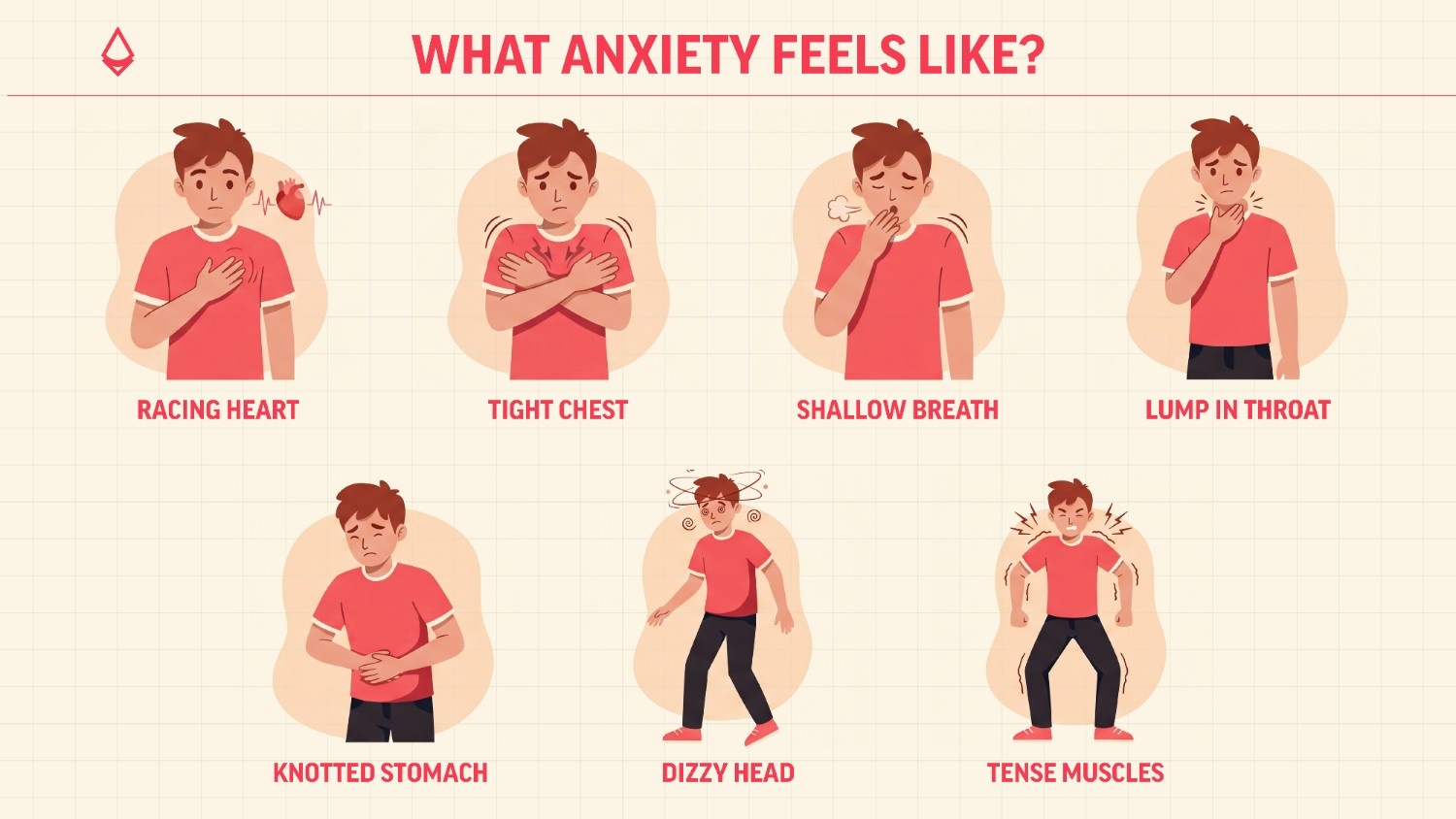
It can feel like the heart is racing for no reason, the chest feels tight, the stomach is off, or the body is constantly on edge. And when these sensations hit without an obvious trigger, they can feel confusing and even frightening.
Understanding what anxiety feels like physically can help recognising it sooner and respond to it better.
Why Does Anxiety Show Up in the Body?
Anxiety is not imagined - it’s a physiological response involving our nervous system, hormones, and body systems. The intensity comes from your body preparing for action, even when there’s no actual threat. It is our body’s built-in alarm system. When our brain senses stress or threat (even subtle ones like deadlines or social pressure), it activates the fight-or-flight response.
This leads to the release of stress hormones like adrenaline and cortisol, preparing our body to react quickly. The problem? In modern life, there’s often no real danger to run from - so the body stays activated longer than needed.
That’s when physical symptoms begin to show up.
Why do anxiety symptoms appear even without a clear trigger?
The brain can perceive subtle stress (like anticipation or overload) as a threat, activating the body before we consciously register it.
Common Physical Symptoms of Anxiety
1. Heart and Chest Sensations
Rapid or pounding heartbeat (palpitations)
Chest tightness or pressure
Feeling like the heart is “skipping” beats
These symptoms can feel intense and are often mistaken for heart issues, but they’re usually your body increasing blood flow in response to stress.
Why does anxiety feel like a heart problem sometimes?
Because anxiety increases heart rate and blood flow, which can mimic palpitations or chest pressure, even when the heart itself is healthy.
2. Breathing Difficulties
Short, shallow breathing
Feeling like one is unable to get a full breath
Anxiety disrupts the natural breathing rhythm, which can create a cycle where breathlessness increases panic.
3. Muscle Tension and Aches
Tight shoulders, neck stiffness
Jaw clenching or teeth grinding
Headaches or body aches
The muscles tighten as a protective response, and over time, this leads to discomfort or chronic pain.
4. Digestive Issues
“Butterflies” in the stomach
Nausea or uneasiness
Bloating, cramps or irregular digestion
Our gut is highly sensitive to stress. Anxiety can slow down or speed up digestion, which is why it often shows up here first.
Can anxiety really affect digestion?
Yes, the gut and brain are closely connected, so stress can directly alter digestion speed, sensitivity and gut movement.
5. Dizziness and Lightheadedness
Feeling faint or unsteady
Mild disorientation
This is often linked to changes in breathing and blood flow during anxious states.
6. Sweating and Temperature Changes
Cold, clammy hands
Sudden sweating
Chills or heat flashes
Our body is trying to regulate itself under stress, which can cause noticeable temperature shifts.
7. Tingling or Numbness
Pins and needles in hands or feet
Tingling around the face
Often caused by rapid breathing or heightened nerve sensitivity during anxiety.
What are Some Lesser-Known Physical Signs of Anxiety?
Not all symptoms are obvious. Some are subtle but equally important:
Tight throat or “lump in the throat” sensation
Frequent yawning (linked to oxygen imbalance)
Eye strain or blurred vision
Restlessness or inability to sit still
Sudden fatigue after anxious episodes
These can make anxiety harder to identify because they don’t always feel like “stress.”
What causes the “lump in the throat” feeling during anxiety?
It’s due to throat muscle tightening as part of the stress response, often called globus sensation.
What Happens During an Intense Anxiety or Panic Attack?
During a sudden spike (like a panic episode), symptoms can peak quickly:
Heart pounding or racing
Chest tightening
Difficulty breathing
Dizziness or feeling faint
Sweating, shaking,g or chills
These sensations can feel overwhelming, but they are our body’s temporary stress response and not a permanent condition.
Why does the body feel exhausted after anxiety episodes?
Because the body uses a lot of energy staying in a heightened state, leading to a natural “crash” once it settles.
When Anxiety Becomes Chronic?
If anxiety is frequent, the body may stay in a prolonged state of alertness. This can lead to:
Ongoing muscle tension
Digestive discomfort
Poor sleep and fatigue
Increased sensitivity to stress triggers
Over time, even small stressors can trigger noticeable physical reactions.
What are Some Natural Ways to Calm Physical Anxiety?
Managing anxiety often starts with calming the body:
Slow, deep breathing: Focus on longer exhales to relax the nervous system
Body relaxation: Release tension from the shoulders, jaw and neck
Gentle movement: Walking or stretching helps discharge built-up stress
Reduce stimulation: Lower lights, noise and screen exposure
Grounding techniques: Focus on physical sensations like touch or movement
In addition to these, a few natural approaches support overall calm. Emerging research suggests that cannabinoid-based formulations may help regulate stress responses and support nervous system balance. When used responsibly and under guidance, they are being looked at as a complementary, plant-based option alongside lifestyle changes.
Anxiety doesn’t just live in our thoughts - it’s deeply felt in the body. The more we understand these physical signals, the less intimidating they become and the easier it is to manage them effectively.
Key Takeaways
- - Anxiety often shows up as physical symptoms before mental ones.
- - Chest tightness, gut issues and dizziness are common signs.
- - These sensations come from the body’s natural stress response.
- - Chronic anxiety can keep the body in a constant state of tension.
- - Calming the body is one of the fastest ways to ease anxiety.