

What Are the Best Herbs for Brain and Neurological Health?



The brain needs constant energy, oxygen and communication between billions of cells to support memory, mood, focus and everyday function. Because of this heavy workload, neurological tissue is particularly sensitive to stress, inflammation and age-related changes.
Traditional healing systems, including Ayurveda and Traditional Chinese Medicine, have long featured herbs believed to support mental clarity and nervous system resilience and modern research is now examining these botanicals through a scientific lens.
Are herbs safe for everyone to take for brain health?
Not necessarily. Certain herbs can interact with medications or medical conditions, so professional guidance is recommended before starting any supplement.
What Role Do Herbs Play in Brain and Neurological Health?
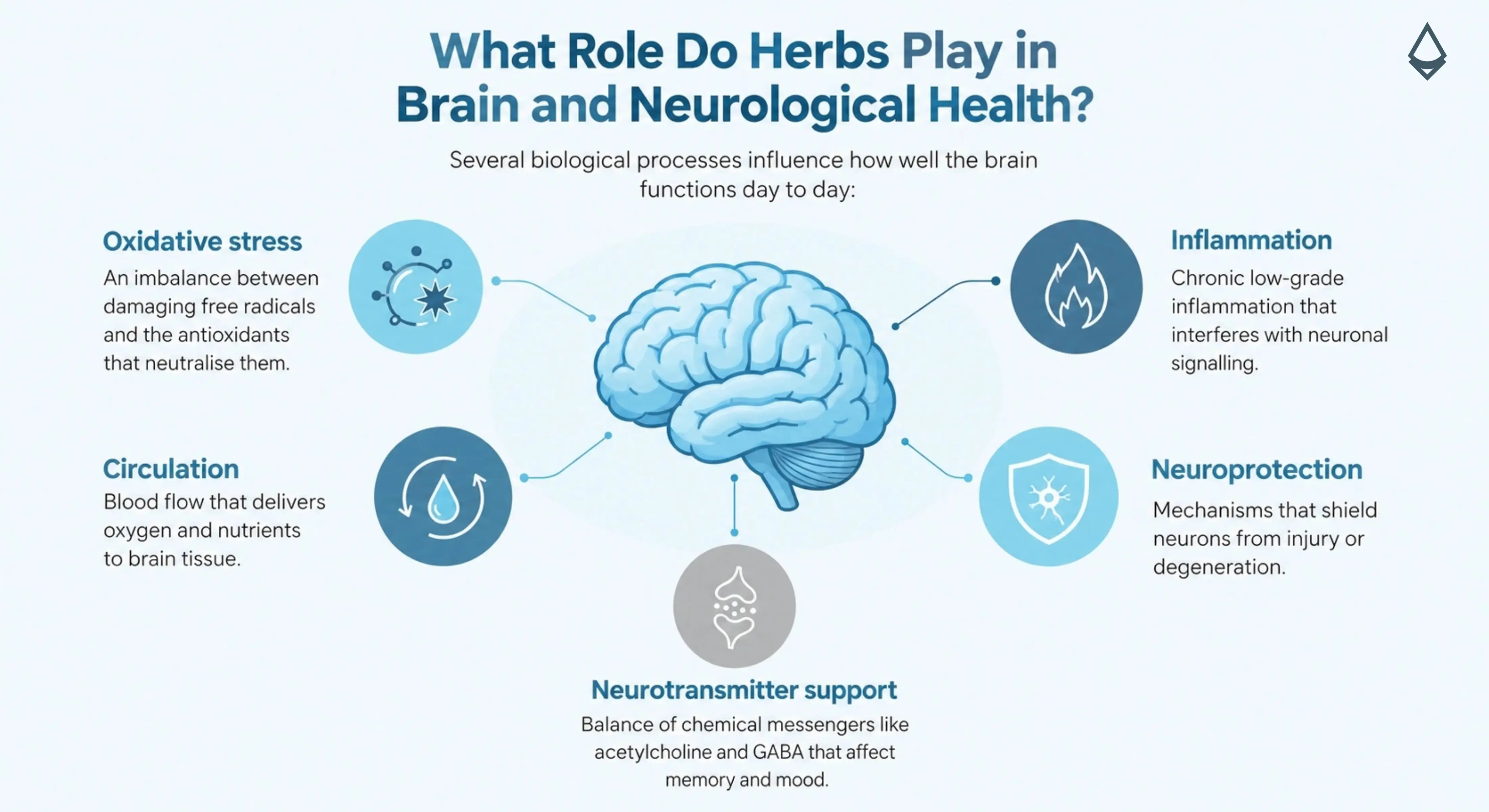
Several biological processes influence how well the brain functions day to day:
Oxidative stress - An imbalance between damaging free radicals and the antioxidants that neutralise them.
Inflammation - Chronic low-grade inflammation that interferes with neuronal signalling.
Circulation - Blood flow that delivers oxygen and nutrients to brain tissue.
Neuroprotection - Mechanisms that shield neurons from injury or degeneration.
Neurotransmitter support - Balance of chemical messengers like acetylcholine and GABA that affect memory and mood.
What are acetylcholine and GABA?
Acetylcholine and GABA are neurotransmitters that support brain function. Acetylcholine aids memory and learning, while GABA promotes relaxation and sleep.
Certain herbs contain plant compounds that appear to interact with one or more of these pathways, which is why they've drawn scientific interest for cognitive and neurological support.
Can Herbs Support Cognitive Performance and Memory?
Some herbs have been associated with improvements in memory, attention, processing speed and stress-related cognitive function. Herbs such as Brahmi (Bacopa monnieri) and Ashwagandha (Withania somnifera) are among the most studied for cognitive and neurological health and are commonly used in traditional systems of medicine to support mental performance and well-being.
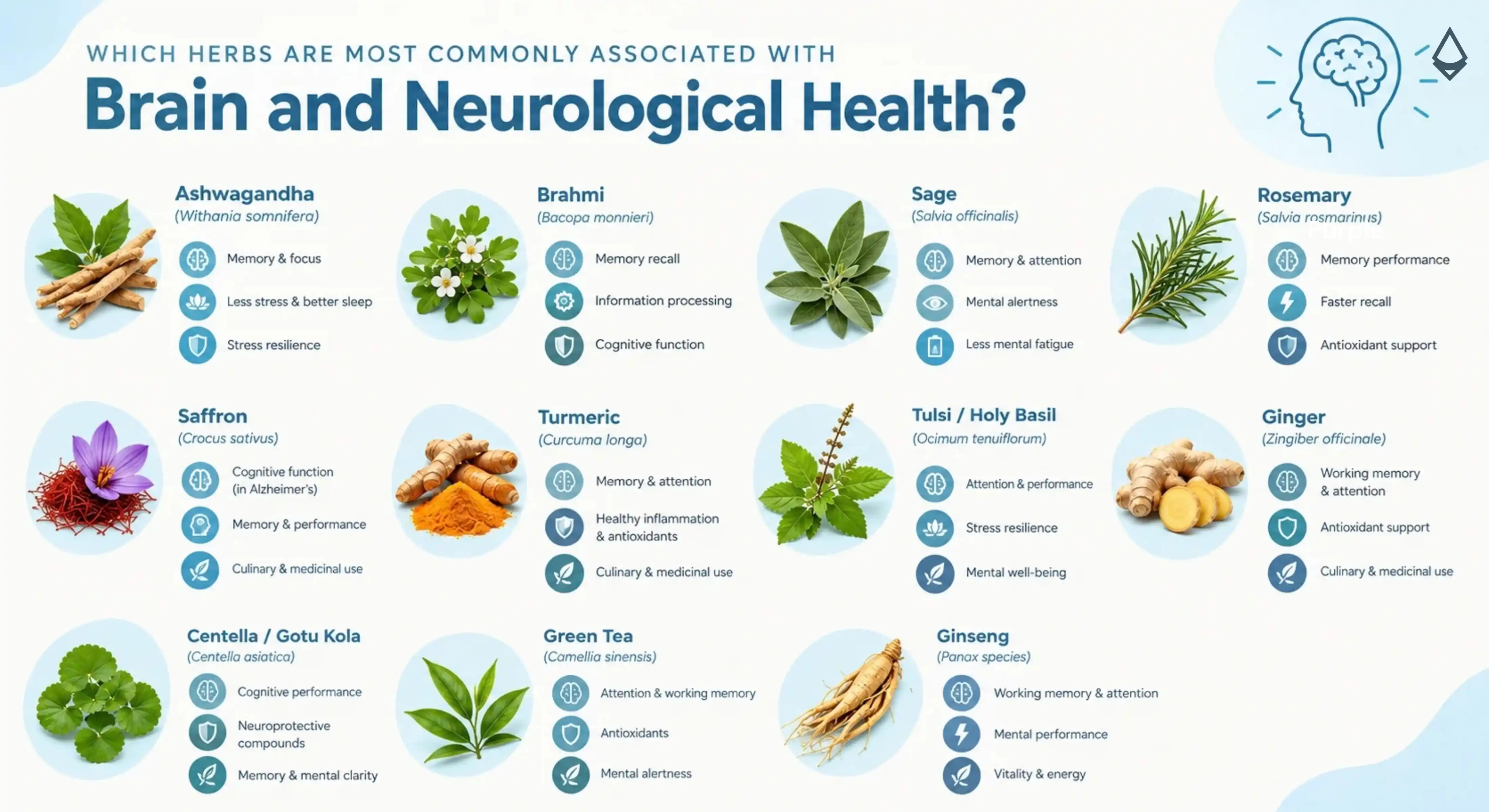
Which Herbs Are Most Commonly Associated With Brain and Neurological Health?
Ashwagandha (Withania somnifera)
Supports memory, attention, processing speed and executive function.
Helps reduce perceived stress and support sleep quality, both of which are important for cognitive health.
Traditionally used in Ayurveda as an adaptogenic herb to support stress resilience and mental well-being.
What is an adaptogenic herb?
An adaptogenic herb is a plant traditionally used to help the body manage physical and mental stress while supporting overall balance and well-being.
Brahmi (Bacopa monnieri)
Supports memory recall and information processing.
Helps improve aspects of memory in adults with age-associated memory impairment.
Traditionally used in Ayurveda to support memory and cognitive function.
Sage (Salvia officinalis)
Improves aspects of memory and attention.
Supports mental alertness and may help reduce mental fatigue.
Traditionally used as a culinary and medicinal herb.
Rosemary (Salvia rosmarinus)
Supports aspects of memory performance.
May influence memory recall speed and mental alertness.
Contains antioxidant compounds that support neurological health.
Saffron (Crocus sativus)
Supports cognitive function in people with mild-to-moderate Alzheimer's disease.
May help support memory and overall cognitive performance.
Traditionally used as a culinary spice and medicinal plant.
Turmeric (Curcuma longa)
Curcumin helps support memory and attention in older adults.
Helps support healthy inflammatory and antioxidant pathways associated with brain health.
Traditionally used in Ayurveda as a culinary spice and medicinal herb.
Tulsi / Holy Basil (Ocimum tenuiflorum)
Supports attention, stress resilience and cognitive performance.
Helps reduce stress-related symptoms that can affect mental performance.
Traditionally used in Ayurveda to support mental well-being and overall vitality.
Ginger (Zingiber officinale)
Supports aspects of working memory and attention in healthy adults.
Provides antioxidant compounds that help support neurological health.
Traditionally used as a culinary spice and medicinal plant.
Centella / Gotu Kola (Centella asiatica)
Supports cognitive performance and working memory.
Contains triterpenoids that have been studied for neuroprotective properties.
Traditionally used in Ayurveda and traditional medicine to support memory and mental clarity.
Green Tea (Camellia sinensis)
Green tea catechins and L-theanine supports attention and working memory.
Provides antioxidant compounds that help support healthy brain function.
Traditionally consumed for mental alertness and overall well-being.
Ginseng (Panax species)
Improves aspects of working memory, attention and mental performance.
Supports cognitive function during periods of mental fatigue.
Traditionally used in East Asian medicine to support vitality and mental performance.
Supporting brain and neurological health often requires a combination of lifestyle measures and evidence-informed natural interventions. Alongside herbs traditionally used for cognitive support, some individuals may consider cannabinoid-based products as part of their overall wellness strategy. Any supplement or botanical product should be used thoughtfully and, when appropriate, under the guidance of a qualified healthcare professional.
Is it safe to combine multiple brain-health herbs?
Combining supplements increases the potential for interactions and side effects, so professional advice is important before stacking multiple herbs.
How Does Oxidative Stress Affect Neurological Function?
The brain consumes a disproportionate share of the body's oxygen relative to its size, which makes it especially vulnerable to oxidative damage. Reactive oxygen species can increase susceptibility to neuronal damage and functional deficits, contributing to oxidative changes seen in neurodegenerative conditions. This is where antioxidant-rich herbs such as turmeric and ashwagandha draw scientific interest, since their plant compounds help offset some of this cellular stress, though translating lab findings into reliable real-world outcomes remains an ongoing area of research.
What Should Be Considered Before Using Herbs for Neurological Health?
Dosage variability
Effective doses used in trials differ significantly from those in over-the-counter products.
Supplement quality
Ingredient concentration and purity vary between manufacturers, since supplements are not regulated the same way as pharmaceuticals.
Medication interactions
Herb-drug interactions can occur between prescription drugs, over-the-counter medicines, dietary supplements and even substances in food and attention to this issue is particularly important for medications with a narrow therapeutic range.
Professional guidance
Consulting a healthcare provider before starting any herb, especially alongside existing medications, remains an important safety step.
Are Herbs a Replacement for Medical Treatment?
Herbs are not a substitute for diagnosis, treatment, or medication prescribed by a licensed healthcare professional. While certain botanicals show promising signals in early or small-scale research, none are currently approved as treatments for neurological or cognitive disorders. They complement a broader health strategy, but any neurological symptom, memory concern, or diagnosed condition warrants medical evaluation rather than self-treatment with herbal products alone.
Do herbs work the same way as prescription cognitive medications?
No, herbs generally have milder, less predictable effects and are not designed or approved to replace prescription treatments for neurological conditions.
Conclusion
Herbs like ashwagandha, Brahmi, turmeric, gotu kola and rosemary each bring a unique profile of traditional use and scientific evidence to the conversation around brain health. Several of these herbs have demonstrated benefits for specific aspects of cognitive and neurological health, including memory, attention, stress and mental well-being. Supporting the brain long-term still relies most heavily on foundational habits: quality sleep, regular physical activity, a nutrient-dense diet, stress management and timely professional medical care when needed.
Also Watch:
Key Takeaways
- - Oxidative stress, inflammation, and circulation all influence neurological function and are common targets of brain-supportive herbs.
- - Ashwagandha and Bacopa monnieri have some of the strongest clinical evidence for memory and executive function support.
- - Ginkgo biloba has not demonstrated conclusive benefit for dementia prevention in large, long-term trials.
- - Herb quality, dosage, and medication interactions are all important safety considerations before use.
- - Herbs complement, but should never replace, professional medical care for neurological or cognitive concerns.