

What are Common Signs of Stress and Burnout?



Stress doesn’t always show up as obvious exhaustion. It often builds quietly - missed breaks, constant mental fatigue, reduced focus, until it begins to affect both performance and well-being. What starts as temporary pressure can gradually turn into burnout if left unaddressed.
Understanding the early signs of stress and burnout is key, not just for productivity, but for long-term mental and physical health.
What is the Difference Between Stress and Burnout?
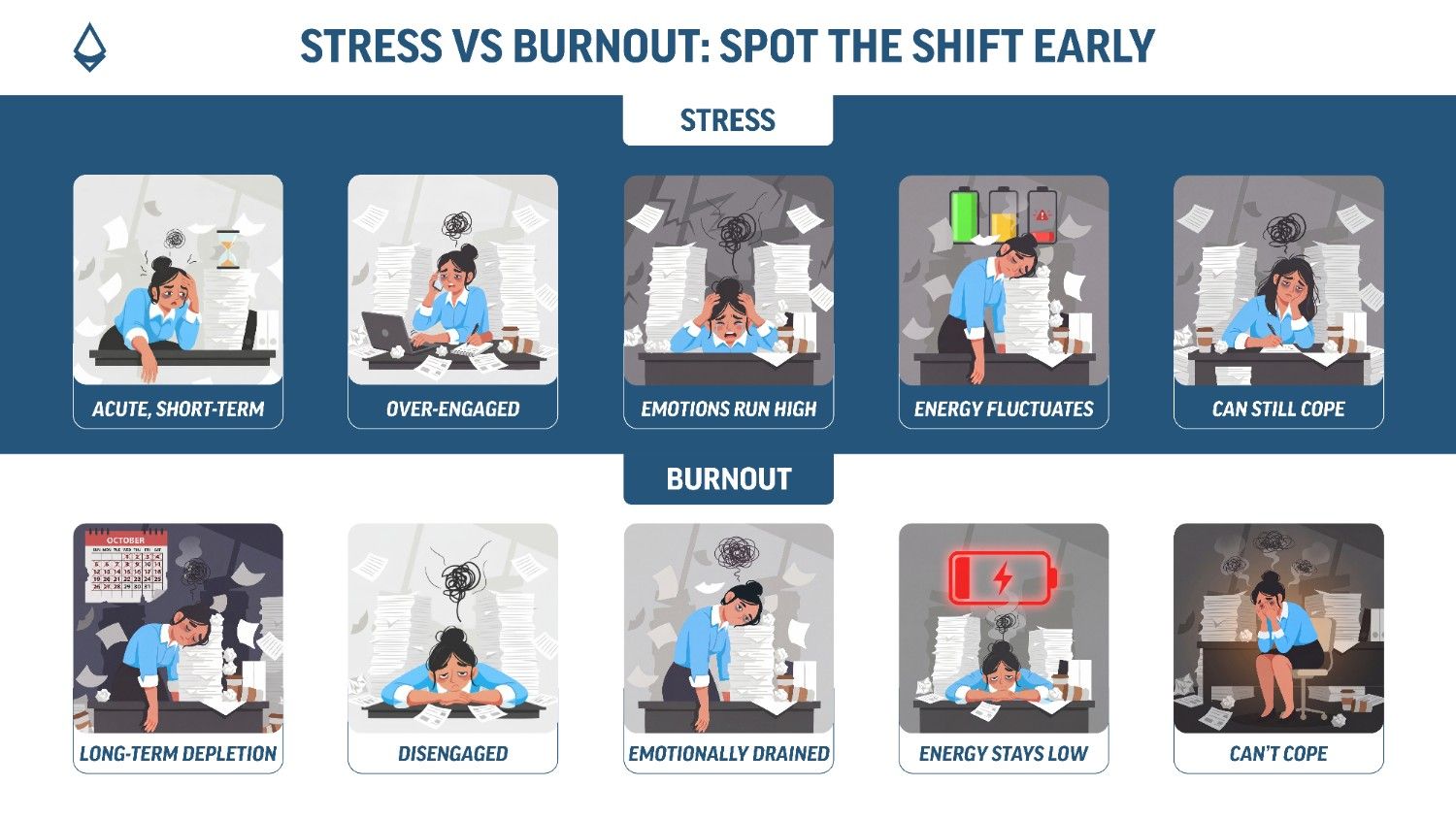
Stress and burnout are often used interchangeably, but they are not the same.
Stress - It is typically short-term and linked to specific demands or deadlines
Burnout - It is a prolonged state of emotional, mental and physical exhaustion caused by chronic stress
While stress can sometimes feel motivating in small doses, burnout often leads to detachment, low motivation and a sense of depletion.
What are the Early Signs of Stress at Work?
Stress tends to show up subtly before it becomes overwhelming. Recognising these early indicators can prevent escalation:
Constant mental fatigue, even after rest
Difficulty concentrating or frequent distractions
Irritability or low patience with routine tasks
Physical symptoms like headaches, muscle tension, poor sleep
Feeling “on edge” even outside work hours
These signs indicate that the nervous system is staying in a heightened state for too long.
What are the Signs of Stress Turning Into Burnout?
When stress becomes chronic, it can evolve into burnout. The shift is often marked by emotional and behavioural changes:
Emotional detachment: Feeling disconnected from work or colleagues
Reduced efficiency: Tasks take longer, with lower output quality
Loss of motivation: Even simple responsibilities feel overwhelming
Chronic exhaustion: Persistent tiredness that doesn’t improve with rest
Negative outlook: Increased cynicism or lack of satisfaction
Burnout is not just about working long hours but it’s about sustained imbalance without adequate recovery.
Why is Burnout More Physical?
Burnout is often perceived as purely mental, but it has strong physiological roots. Prolonged stress keeps cortisol levels elevated, affecting sleep, digestion, immunity and energy levels.
Why does burnout feel more physical?
Because prolonged stress disrupts hormones, immunity and energy, the body starts to carry the load.
Over time, the body remains in a constant “fight or flight” mode, making it harder to relax, even outside of work. This is why burnout recovery requires more than just taking time off; it involves regulating the nervous system.
What is the “fight or flight” state in stress?
It’s the body’s automatic survival response that increases alertness, heart rate and tension under pressure.
How to Recover From Stress and Burnout?
Recovery is not about drastic changes but about consistent, practical shifts that restore balance.
1. Micro-recovery during the day Short breaks between tasks, like stepping away from screens, stretching or brief walks, can reduce accumulated stress.
2. Create clear work boundaries Defining start and end times for work helps prevent mental spillover into personal time.
3. Prioritise nervous system regulation Simple practices like breathwork, slow movement or even quiet time without stimulation can help the body shift out of stress mode.
4. Reduce cognitive overload Breaking tasks into smaller steps and focusing on one task at a time can improve mental clarity and reduce overwhelm.
5. Reintroduce activities that restore energy Engaging in activities that feel genuinely restorative rather than just distracting can help rebuild emotional reserves.
What is “cognitive overload” in simple terms?
It’s when the brain is processing too much at once, leading to poor focus, slower thinking and mental fatigue.
What are Some Small Shifts that Prevent Long-Term Burnout?
Prevention is often more effective than recovery. A few consistent habits can make a significant difference:
Regular sleep-wake timing to stabilise internal rhythms
Daily movement, even in short durations, to release built-up stress
Processing stress in real-time instead of suppressing it
Limiting constant digital engagement, especially after work hours
These habits help the body return to a baseline state more easily.
Why doesn’t rest alone fix burnout?
Because burnout is a stress-response issue and without calming the nervous system, the body stays in overdrive.
Way Forward
In cases where stress and burnout persist despite lifestyle changes, it may indicate deeper nervous system dysregulation. This can make it difficult for the body to shift out of a chronic stress state on its own.
What does “nervous system dysregulation” actually mean?
It’s when the body stays stuck in stress mode and can’t easily return to a calm, balanced state.
Emerging research suggests that cannabinoid-based medication may support stress recovery by interacting with the body’s endocannabinoid system, which plays a role in mood regulation, relaxation and overall balance. When used responsibly and under professional guidance, it may complement other recovery strategies.
Burnout recovery is not simply about stepping away from work but about rebuilding the ability to engage without feeling depleted.
Stress at work is often unavoidable, but burnout is not inevitable. With early awareness and the right interventions, it is possible to create a work rhythm that supports both productivity and well-being.
Key Takeaways
- - Stress is not the problem, but unresolved, continuous stress is what quietly turns into burnout.
- - Early signs are mostly mental (fatigue, distraction), while burnout shows up as emotional withdrawal and physical depletion.
- - If rest isn’t restoring your energy, you’re likely moving from stress into burnout territory.
- - Burnout is a nervous system issue as much as a mental one; recovery needs regulation, not just time off.
- - Small, consistent resets during the day are more effective than waiting for a long break to recover.