

Understanding Vulvodynia: What Causes It?



Vulvodynia is persistent vulvar pain that lasts at least three months and has no specific identifiable cause. The vulva is the external female genital area, including the skin surrounding the vaginal opening. It differs from the vagina, the internal canal.
Vulvodynia is a recognised pain condition. It is not contagious and it is not automatically caused by infection.
What is the difference between the vulva and the vagina?
The vulva is the external genital area, including the labia and the skin around the vaginal opening. The vagina is the internal muscular canal connecting the vaginal opening to the cervix.
What Are the Symptoms of Vulvodynia?
Vulvodynia is most often described as burning, stinging, irritation, or rawness. Aching, soreness, throbbing and swelling may also occur.
Symptoms vary from person to person:
Pain may affect the whole vulva or be centred on one area.
Pain may be constant or may come and go.
Pain may start without warning or occur only when the area is touched.
Touch-related triggers can include tampon insertion and sexual activity.
Long-term pain can also affect relationships, sexual desire and mood.
What Causes Vulvodynia?
The exact cause is not known. However, “no identifiable cause” does not mean “no biological mechanism”. It means that tests have not found a specific disease, such as an infection or skin disorder, to explain the pain.
Vulvodynia is likely to result from several factors acting together. Factors under discussion include:
Damage to or irritation of the nerves of the vulva
Inflammation of the vulva
Long-term reactions to certain infections
Certain genetic disorders
Dysfunction of the pelvic floor muscles (the muscles at the base of the abdomen)
These are possible contributing factors rather than confirmed single causes and they may differ between individuals.
Is vulvodynia the same as a vaginal infection?
No. Vulvodynia is a persistent pain condition, not an infection. However, infections can cause similar symptoms, so medical assessment may be needed to distinguish between them.
What Are the Different Types of Vulvodynia?
Clinical guidance classifies vulvodynia by the pattern of pain. These classifications describe the location of the pain and whether it is triggered by contact or occurs spontaneously; they do not identify its underlying cause
Location: localised (one area), generalised (the wider vulva), or mixed.
Triggers: provoked (brought on by touch or pressure), spontaneous (occurring without a trigger), or mixed.
Onset and timing: pain may also be described as primary or secondary onset and as intermittent, persistent, constant, immediate, or delayed.
What is the difference between provoked and spontaneous vulvodynia?
Provoked vulvodynia causes pain when the vulva is touched or pressured, such as during tampon insertion. Spontaneous vulvodynia causes pain without an obvious trigger. Some people experience both.
How Is Vulvodynia Diagnosed?
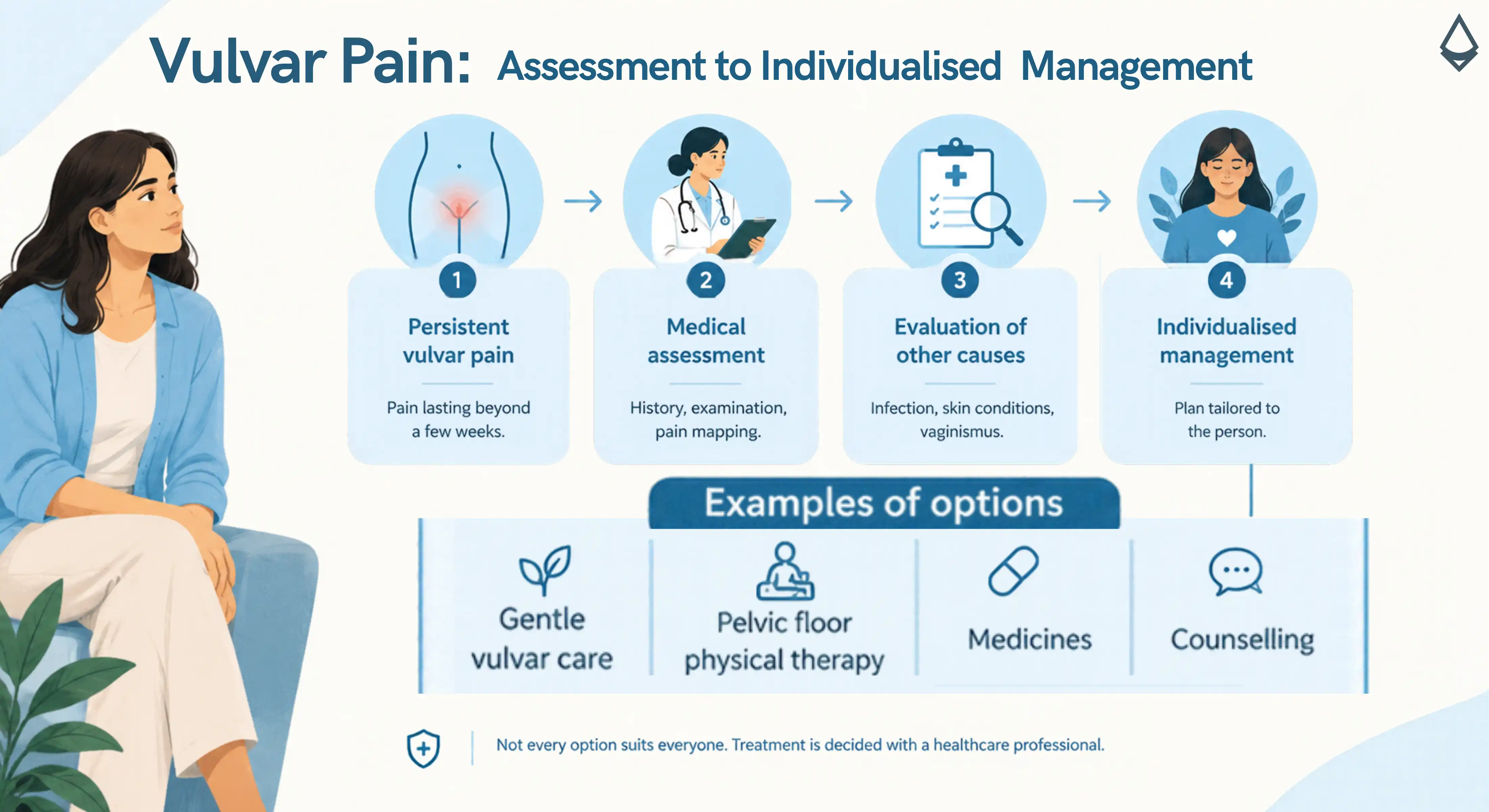
Vulvodynia is a clinical diagnosis. No single laboratory test confirms it. Assessment usually involves:
Medical history: when symptoms occur, treatments already tried and any allergies, chronic infections, or skin problems.
Examination: careful examination of the vulva and vagina.
Pain mapping: touching areas of the vulva with a cotton swab to find where pain is located and how severe it is.
Tests for other causes: swabs or samples to look for infection and occasionally a skin biopsy.
Other conditions can cause similar pain, including vaginitis, vaginismus, and some sexually transmitted infections. Vaginismus is involuntary tightening of the vaginal muscles. Skin conditions such as lichen sclerosus can also cause similar symptoms. These need to be assessed and, where present, treated in their own right. Some people have more than one condition at the same time.
What is the difference between vulvodynia and vaginismus?
Vulvodynia refers to persistent vulvar pain without a specific identifiable cause. Vaginismus involves involuntary tightening of the pelvic floor muscles around the vagina, which can make penetration painful or difficult. Both conditions can occur together.
How Is Vulvodynia Treated and Managed?
No single method works for everyone. Relief can take a few months and more than one approach is sometimes needed. Treatment is individualised and may involve several specialists. Options include:
Gentle vulvar care: Avoid irritants such as perfumes, dyes, detergents and douching; clean with water only and wear cotton underwear.
Pelvic floor physical therapy: To relax tight muscles and tissues.
Natural Therapies and Self-Care: Gentle self-care measures may help manage vulvodynia symptoms. Applying a cool gel pack wrapped in a soft cloth, wearing loose cotton underwear, washing the vulva with water only, and avoiding scented products and other irritants may reduce discomfort. Cannabinoid-based products are being explored for pain management. Medical advice is recommended before trying new therapies.
Psychological and sexual counselling: Such as cognitive behavioural therapy, to support coping with chronic pain.
Specialist procedures: Nerve blocks or surgery for pain limited to the vestibule (the area around the vaginal opening) when other treatments have not worked.
How can pelvic floor physical therapy help vulvodynia?
It uses specialised techniques to help relax and improve the coordination of pelvic floor muscles. It may reduce pain when muscle tension contributes to vulvodynia.
When Should Medical Advice Be Sought?
Medical assessment is advisable for persistent vulvar pain, particularly when pain makes tampon use or sex difficult. Pain from infections or skin conditions can resemble vulvodynia, and these conditions need their own treatment. Some people live with vulvar pain for years before receiving a diagnosis. Early assessment can shorten that delay and open the way to appropriate management.
Conclusion
Vulvodynia is a persistent pain condition that can affect daily activities, sexual health and emotional well-being. Although its exact cause remains unclear, appropriate assessment can help rule out other conditions and guide individualised treatment. With the right combination of care and support, symptoms may become more manageable. Persistent vulvar pain should not be ignored and seeking medical advice is an important step towards better pain management.
Key Takeaways
- - Vulvodynia is vulvar pain lasting at least three months with no specific identifiable cause.
- - Burning, stinging and rawness are common and pain patterns differ between individuals.
- - Diagnosis relies on history, examination and ruling out other conditions, as no single test exists.
- - Management is individualised and may combine skin care, physical therapy, medicines and counselling.
- - Persistent vulvar pain warrants medical assessment to exclude and treat other causes.