

Perimenopause vs Menopause: What Are the Differences?



Perimenopause and menopause are often used interchangeably, yet they describe different points in the reproductive transition. Perimenopause is the lead-up, when hormone levels fluctuate and periods change. Menopause is a single milestone, confirmed only in hindsight. Symptoms overlap and often continue after the final period, which makes the terms easy to confuse. Understanding perimenopause vs menopause, including symptoms, timelines and stages, helps women recognise what is happening and decide when to seek care.
Can pregnancy occur during perimenopause?
Yes. Ovulation can still occur in some months, even when periods are irregular or missed. Contraception is generally advised until menopause is confirmed.
What Is the Difference Between Perimenopause and Menopause?
Perimenopause is the transition leading up to the final menstrual period. Oestrogen and progesterone levels rise and fall unpredictably as ovulation becomes irregular. Periods may become lighter, heavier, shorter, longer or less frequent, and pregnancy remains possible.
Menopause is reached after 12 consecutive months without a period, provided no other cause such as pregnancy, medication or illness explains the absence. By then, oestrogen levels are persistently low. The years that follow are called postmenopause and last for the rest of life.
Symptoms do not necessarily stop with the last period. Vaginal dryness and joint pain, for example, can continue into postmenopause, while hot flashes ease gradually for many women.
How long does perimenopause usually last?
Duration varies. Symptoms commonly last several years, often around seven to nine in total, and sometimes longer.
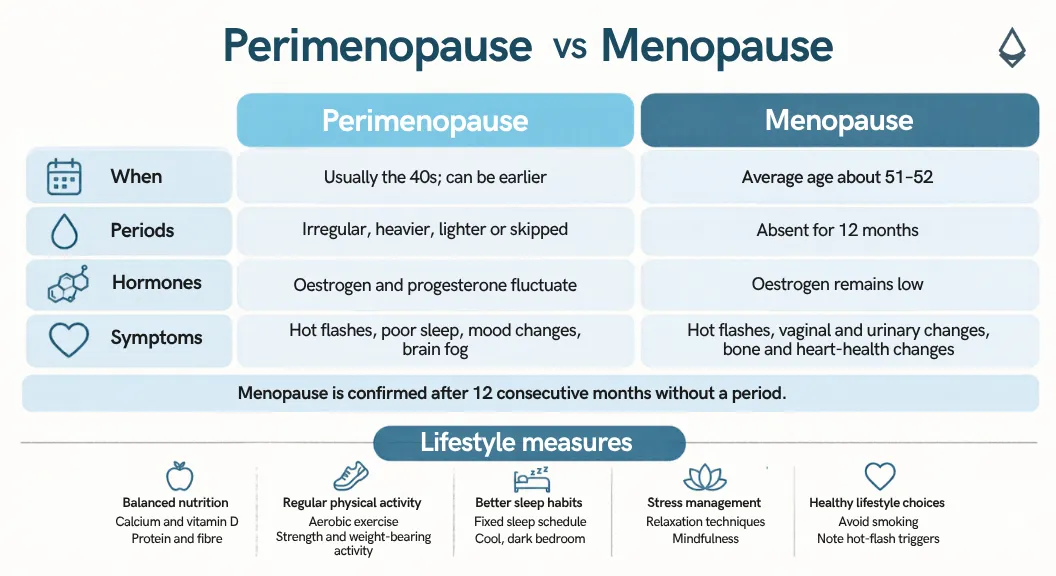
When Does Perimenopause Start and What Are Its Stages?
Perimenopause most often begins in the 40s. Timing is influenced by genetics, smoking, medical treatments such as chemotherapy, and surgical removal of the ovaries. No single age or duration applies to everyone, and the transition can last from a few years to a decade or more.
Perimenopause stages follow changes in the menstrual cycle:
Early menopausal transition: Cycles remain fairly regular but vary in length, and symptoms such as night sweats or poor sleep may appear.
Late menopausal transition: Periods are skipped more often, with gaps of two months or longer, and symptoms tend to intensify.
Transition into menopause: The final period occurs, and menopause is confirmed once 12 months pass without bleeding.
Can perimenopause begin in the 30s?
Yes. Perimenopause can begin in the mid-to-late 30s for some women, although the 40s is more typical. Menopausal symptoms before age 40 warrant medical assessment.
What Are the Symptoms of Perimenopause and Menopause?
Symptoms overlap because both stages involve changing oestrogen levels. Experience varies widely, and some women have few symptoms.
Perimenopause
Irregular menstrual cycles
Hot flashes and night sweats
Sleep disturbances
Mood changes and irritability
Vaginal dryness and changes in sexual function
Brain fog and concentration difficulties
Menopause and postmenopause
Hot flashes that may persist for years
Vaginal and urinary symptoms linked to declining oestrogen
Sleep disturbances
Reduced bone density, increasing osteoporosis risk
Changes in cardiovascular and metabolic health, including weight gain around the abdomen
Symptoms may begin years before the final period and continue after it.
Summarizing lifestyle measures for menopause symptom management
Can menopause symptoms continue after periods stop?
Yes. Hot flashes, vaginal dryness and joint pain can continue into postmenopause, and lower oestrogen also affects bone and cardiovascular health.
When Should Medical Advice Be Sought?
Professional assessment is important in the following situations:
Unusually heavy or prolonged menstrual bleeding
Severe or disruptive symptoms affecting daily functioning
Persistent urinary or vaginal discomfort
Symptoms starting unusually early, particularly before age 45
Conclusion
Understanding the difference between perimenopause and menopause can help women recognise changes and make informed decisions about their health. Healthy lifestyle habits and appropriate medical care can help manage symptoms and support long-term well-being.
Cannabinoid-based medicines may be explored for certain co-existing symptoms, but evidence for their use during perimenopause and menopause remains limited. Their suitability should be assessed by a healthcare professional.
Key Takeaways
- - Perimenopause is the transition; menopause is a single point confirmed after 12 months without a period.
- - Perimenopause often begins in the 40s, but timing and duration vary widely.
- - Symptoms overlap and can continue well beyond the final period.
- - Nutrition, exercise, sleep, stress management and healthy habits support well-being but do not reverse menopause.
- - Heavy bleeding, early symptoms or any bleeding after menopause needs medical assessment.