

Is PCOS dangerous?



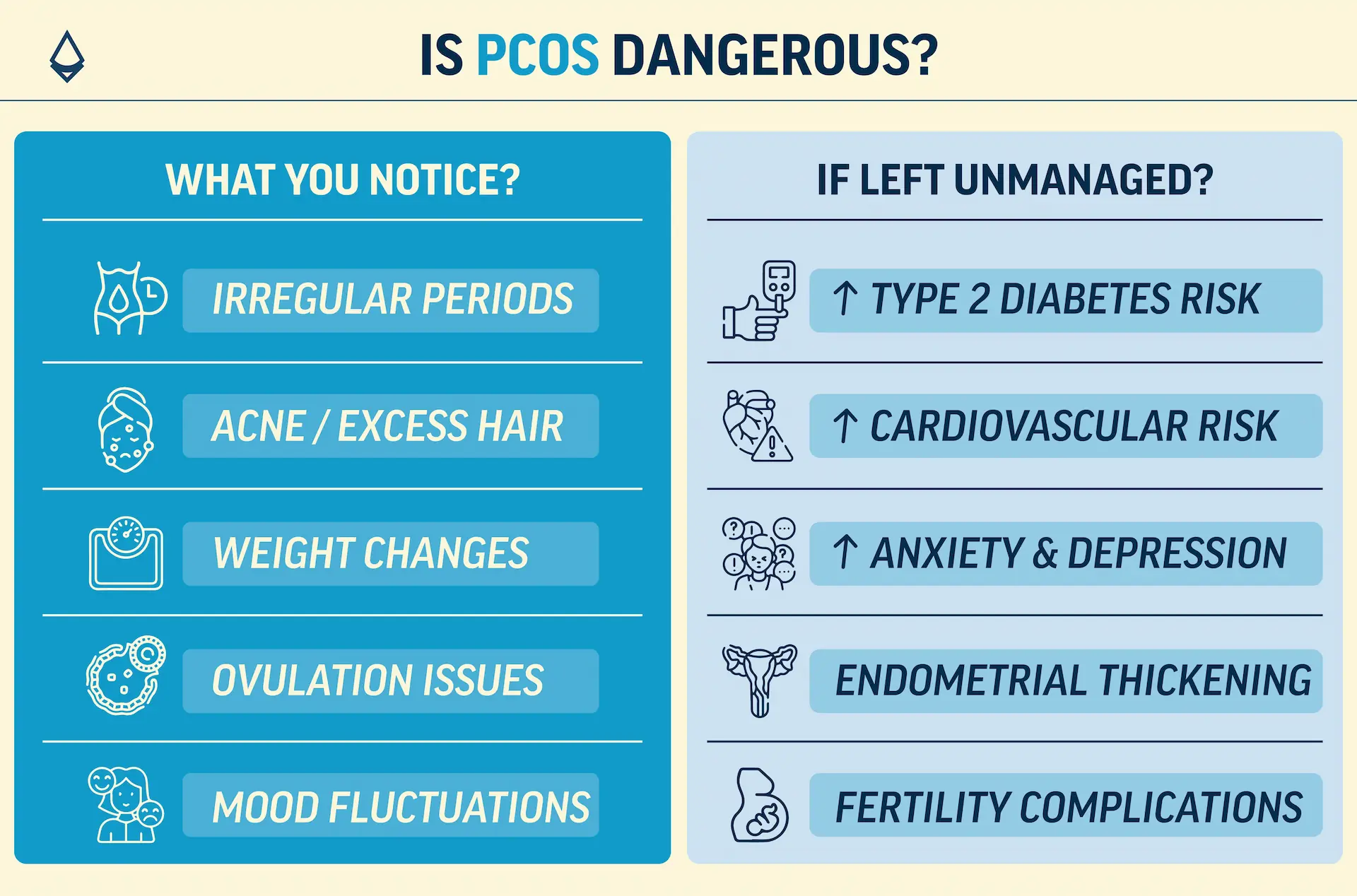
Polycystic Ovary Syndrome (PCOS) itself is not life-threatening. However, if left unmanaged, it can significantly increase the risk of long-term metabolic and cardiovascular complications.
The concern lies in the underlying drivers of the condition.
Is There A Link Between PCOS and Diabetes?
A large proportion of women with PCOS have insulin resistance. This means the body’s cells do not respond effectively to insulin, causing the pancreas to produce more of it. Elevated insulin levels stimulate androgen production and make weight gain more likely.
Over time, this increases the risk of:
Prediabetes
Gestational diabetes
Type 2 diabetes
What are prediabetes, gestational diabetes, and type 2 diabetes?
Prediabetes: Blood sugar is higher than normal but not yet diabetes. Gestational diabetes: High blood sugar that develops during pregnancy. Type 2 diabetes: A chronic condition where the body doesn’t use insulin properly, causing high blood sugar.
Women with PCOS often develop glucose intolerance earlier than women without the condition, making early blood sugar monitoring essential.
Can PCOS Cause Cardiovascular Health Risks?
PCOS is associated with several risk factors linked to heart disease. These include abdominal obesity, abnormal lipid profiles, elevated blood pressure and chronic low-grade inflammation.
What is a lipid profile?
A lipid profile measures the levels of fats in your blood, including cholesterol and triglycerides. It helps assess heart and metabolic health.
While not every woman with PCOS will develop cardiovascular disease, the clustering of these metabolic risk factors increases long-term vulnerability if not addressed. Early lifestyle intervention significantly reduces this risk.
What Risk Does PCOS Cause To the Uterine Lining?
Irregular ovulation means progesterone levels may remain low for extended periods. Without adequate progesterone, the endometrium is exposed to unopposed estrogen.
What is the endometrium?
The endometrium is the inner lining of the uterus that thickens each month to prepare for a possible pregnancy.
This can lead to:
Endometrial thickening
Endometrial hyperplasia
Increased long-term risk of endometrial cancer
Women who experience prolonged gaps between periods should seek medical evaluation, as regular menstrual cycles help protect the uterine lining.
Does PCOS Affect Fertility?
PCOS does not equal infertility. It means ovulation may be irregular or absent in some cycles. With appropriate medical care and lifestyle changes, many women with PCOS conceive successfully.
Early diagnosis improves ovulation regulation and reproductive outcomes.
Does PCOS Affect Mental Health?
PCOS also has a psychological impact. Studies show higher rates of anxiety and depression among women with the condition. Hormonal fluctuations, insulin resistance, weight changes, acne and excess hair growth can all contribute to emotional distress.
Addressing mental well-being is an important part of comprehensive PCOS care.
Why Early Management of PCOS Changes Outcomes?
The long-term risks of PCOS are largely preventable with consistent management. Research shows that even modest lifestyle changes can significantly improve metabolic and hormonal parameters.
Effective strategies include:
Regular strength and aerobic exercise to improve insulin sensitivity
Balanced meals rich in fibre, protein, and low-glycaemic carbohydrates
Weight reduction of 5-10% in overweight individuals
Adequate sleep and stress management
What are low-glycaemic carbohydrates and which foods have them?
Low-glycaemic carbohydrates release sugar slowly into the blood, helping control insulin levels. Examples include oats, lentils, beans, whole grains and most vegetables.
In addition, supporting inflammatory balance with lifestyle changes and under professional guidance, cannabinoid-based formulations may complement these strategies by modulating the body’s endocannabinoid system and supporting hormonal and metabolic health. Regular monitoring of fasting glucose, HbA1c, lipid profile, blood pressure, and menstrual patterns is also recommended for women diagnosed with PCOS. Even small, sustained changes can reduce the risk of diabetes, cardiovascular disease and reproductive complications.
What is HbA1c?
HbA1c is a blood test that shows your average blood sugar levels over the past 2–3 months. It helps monitor long-term glucose control.
Conclusion
So, is PCOS dangerous? The answer is - PCOS is not immediately life-threatening, but it is a metabolic warning sign. When ignored, it can increase the risk of serious long-term conditions. When recognised early and managed consistently, most of these risks can be significantly reduced.
PCOS is common. It is manageable. And with timely care, it does not have to become dangerous.
Key Takeaways
- - PCOS itself is not life-threatening, but unmanaged PCOS can increase the risk of long-term metabolic and cardiovascular complications.
- - Insulin resistance in PCOS raises the likelihood of prediabetes, gestational diabetes, and type 2 diabetes.
- - PCOS is associated with heart-related risk factors such as abdominal obesity, abnormal lipid levels, high blood pressure, and chronic inflammation.
- - Irregular ovulation can expose the uterine lining to prolonged estrogen, increasing the risk of endometrial thickening and hyperplasia.
- - PCOS may affect fertility and mental health, but many women conceive successfully with proper management.
- - Early diagnosis, lifestyle changes, and regular monitoring can significantly reduce long-term health risks.