

How to Lose Weight During Menopause?



Menopause can feel like the body suddenly starts operating by a completely different set of rules. One may notice weight creeping up, especially around the abdomen, even if the diet and activity levels haven’t changed much. This isn’t imagined. Hormonal shifts, a slower metabolism and changes in muscle mass all work together to make weight loss trickier.
The good part? It’s absolutely possible to lose weight during menopause and we need a slightly smarter, more targeted approach.
Why Does Weight Gain Happen During Menopause?
A major shift happens with declining estrogen levels. This doesn’t just affect one’s cycle; it changes how our body stores fat, often pushing it toward the abdominal area. At the same time, muscle mass naturally declines with age, which slows down metabolism.
This combination means that the body burns fewer calories at rest while becoming more efficient at storing fat. So the goal isn’t just eating less, it’s supporting the metabolism and preserving muscle.
Are We Eating Enough Protein for This Phase?
Protein becomes far more important during menopause than most people realise.
Why does protein become far more important during menopause?
It helps maintain muscle mass, control hunger and prevent blood sugar spikes that can lead to fat storage.
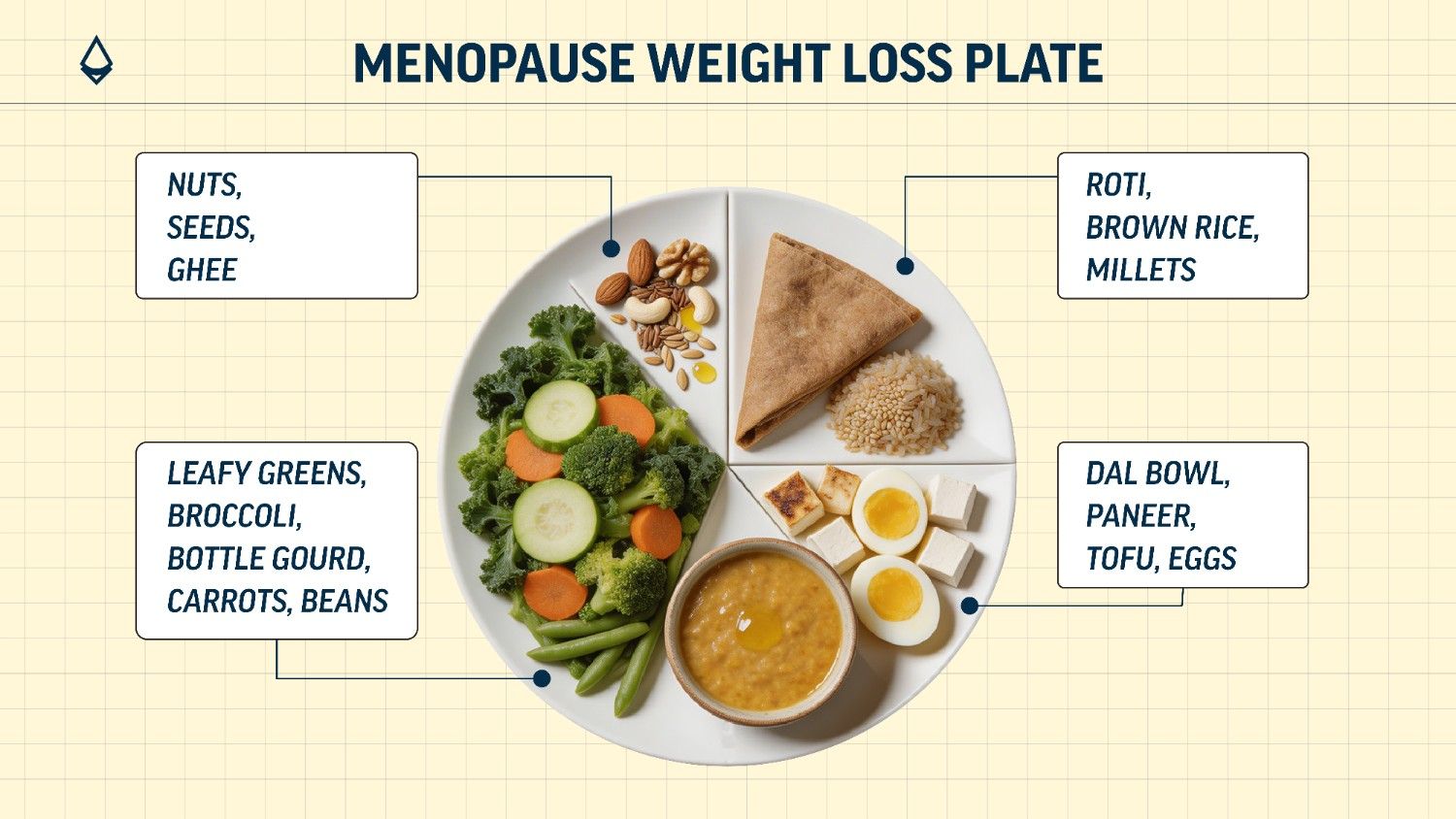
Instead of drastically cutting calories, one should think about upgrading their meals. A simple shift like adding protein to every meal can make a noticeable difference.
Helpful ways to increase intake:
Add flaxseeds or chia seeds to the meals
Include dal, paneer, or tofu regularly
Choose snacks like roasted chana or nuts over processed options
Are We Following the Right Workout Routine?
If our daily routine mostly covers cardio, it may not be enough anymore. During menopause, strength training becomes essential and not optional.
It helps build and preserve muscle, which directly supports metabolism and fat loss. It also plays a crucial role in maintaining bone density, which becomes increasingly important post-menopause.
A balanced approach works best:
Strength training 2-3 times a week
Daily low-impact movement like walking, yoga or stretching
What are the right ways to include strength training during menopause?
Aim for strength training 2-3 times a week, supported by daily low-impact movement like walking, yoga, or stretching.
What is Slowing the Progress?
This is one of the most overlooked factors. Menopause often brings sleep disturbances and increased stress levels, both of which elevate cortisol, which is a hormone linked to belly fat and cravings.
What’s lesser-known is that even mild sleep deprivation can slow fat loss significantly, sometimes more than diet alone.
How can even mild sleep deprivation slow fat loss during menopause?
It raises cortisol levels, increasing cravings and fat storage while slowing overall fat loss.
In some cases, natural approaches, such as cannabinoid-based formulations, can support better sleep, stress regulation and overall hormonal balance. By interacting with the body’s endocannabinoid system, they may help stabilise mood and improve sleep quality, both of which indirectly support weight management.
Simple shifts can help:
Stick to consistent sleep and wake timings
Include magnesium-rich foods like seeds and leafy greens
Try slow breathing or calming routines before bed
Are the Blood Sugar Levels Balanced Throughout the Day?
During menopause, insulin sensitivity tends to decline. This means our body is more likely to store fat, especially if our meals cause rapid spikes and crashes in blood sugar.
Instead of cutting carbs completely, one should focus on how to combine them.
A few smart habits:
Pair carbs with protein or healthy fats
Choose low-glycaemic options
Avoid long gaps between meals
What are some low-glycaemic food options to manage blood sugar during menopause?
Millets, oats, legumes, nuts, seeds and whole fruits help prevent spikes and keep energy stable.
This helps reduce sudden hunger, cravings and energy dips.
Could Hidden Inflammation be Making Weight Loss Difficult?
Low-grade, chronic inflammation is often an invisible barrier during menopause. It can slow metabolism, increase fat storage and make it harder for the body to respond to healthy changes.
Common triggers include processed foods, excess sugar and poor gut health.
Adding anti-inflammatory foods can support the system:
Turmeric with a pinch of black pepper
Omega-3-rich foods like flaxseeds and walnuts
Fermented foods like homemade curd
Why turmeric should be paired with black pepper?
Black pepper enhances curcumin absorption, making turmeric far more effective in reducing inflammation.
Conclusion
Menopause isn’t a setback but a shift and the body is simply asking for a more thoughtful, aligned approach. When we start working with these changes instead of against them, weight loss stops feeling like a constant struggle and becomes more intuitive. It’s also important to remember that weight loss during this phase tends to be slower but far more stable and sustainable when done right.
Instead of chasing quick fixes, the focus needs to shift towards consistency over intensity, building strength and energy rather than obsessing over the scale and creating long-term habits that one’s body can rely on. That’s where the real change lies and not just in how the body looks, but in how it feels and functions over time.
Key Takeaways
- - Weight gain during menopause is driven more by hormones and muscle loss than just calories.
- - Protein and strength training are the biggest allies for fat loss.
- - Poor sleep and stress can silently slow down weight loss.
- - Stable blood sugar is key to managing cravings and fat storage.
- - Sustainable, slow changes work better than extreme diets during menopause.