

How Can Diet Support Endometriosis Management?



Endometriosis can make everyday life difficult, with pelvic pain, digestive discomfort and painful bowel movements. Food choices cannot treat the disease. An endometriosis diet built on balanced, minimally processed meals does offer a practical way to support overall health and day-to-day comfort.
Knowing which foods to include, which to limit and how to make everyday food choices more manageable can help build a balanced endometriosis diet.
What Is the Role of Diet in Endometriosis Management?
Endometriosis occurs when tissue similar to the uterine lining grows outside the uterus, causing inflammation and scar tissue. Endometriosis and inflammation are closely linked and symptoms range from pelvic pain to painful bowel movements and fatigue.
Medical care helps manage endometriosis, while a balanced diet can support overall health and complement treatment.
A healthy, balanced eating pattern is a reasonable recommendation, as it supports general long-term health. People respond differently to individual foods, so personal observation matters more than rigid rules.
Which Foods Fit an Endometriosis Diet?
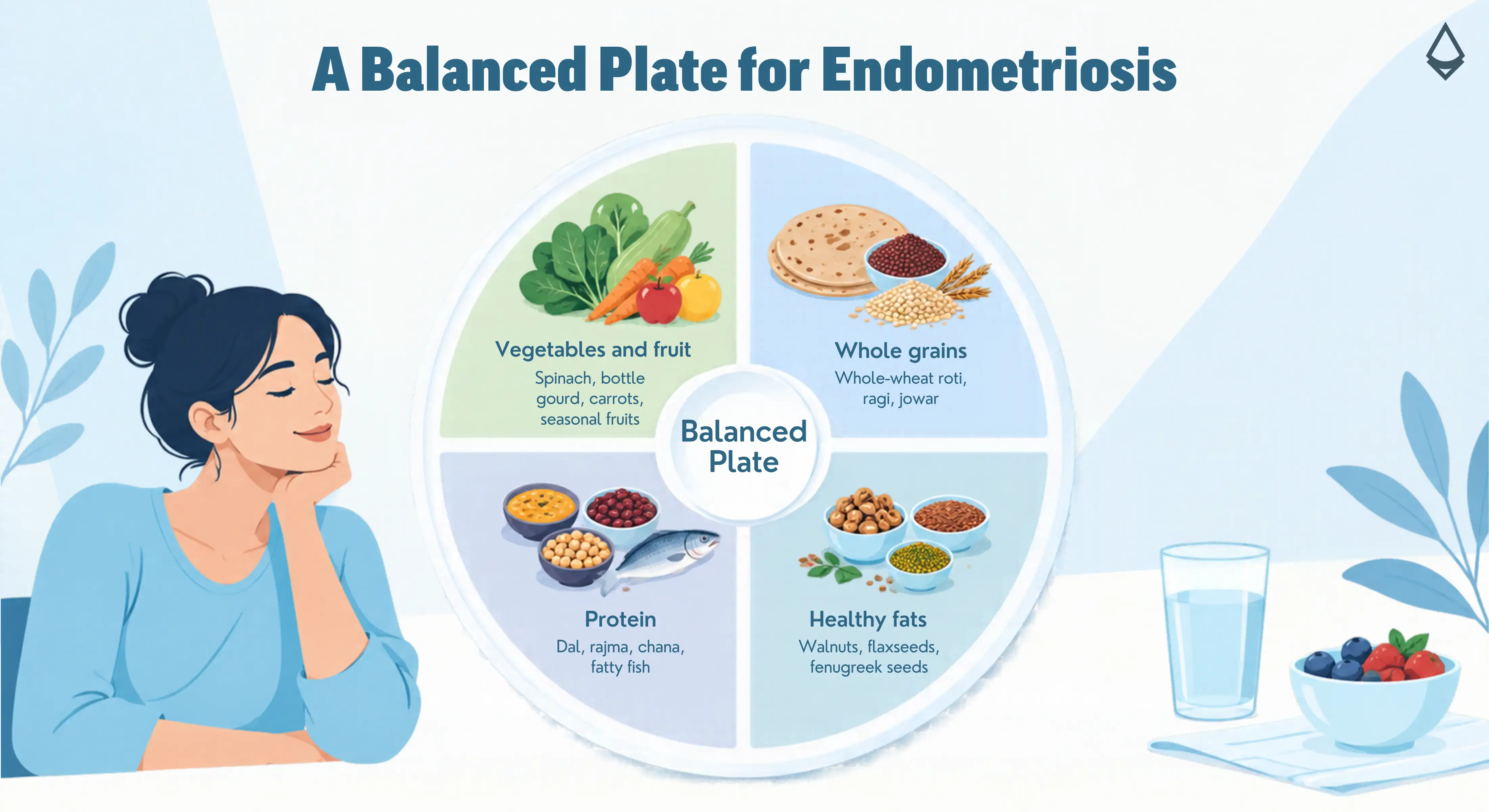
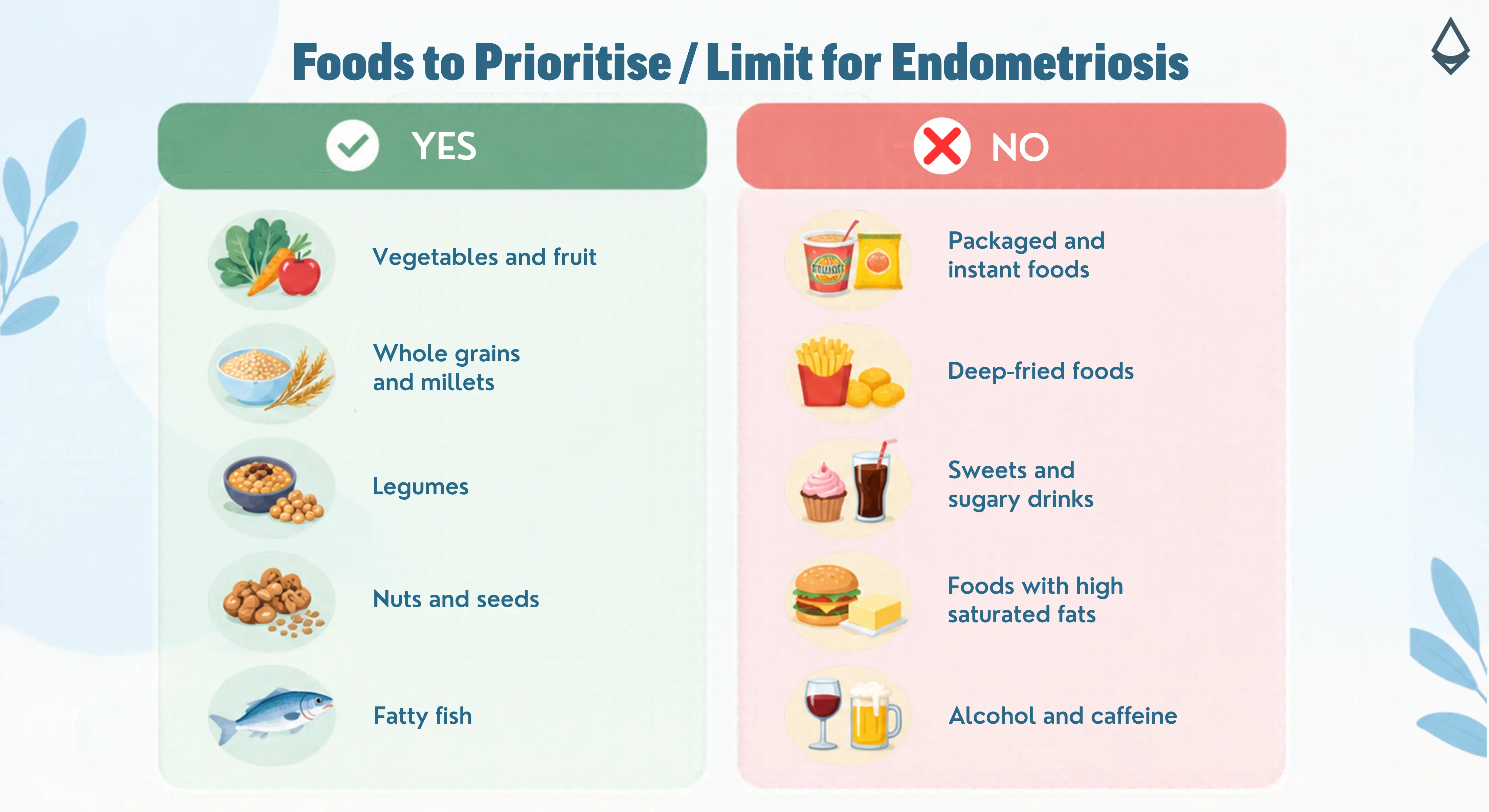
The following food groups can form part of a balanced endometriosis diet, supporting overall health and nutritional needs:
Vegetables and fruits: Seasonal sabzi, leafy greens and fruit supply fibre and micronutrients. WHO advises at least 400 grams daily.
Whole grains and millets: Whole-wheat roti, ragi, jowar and bajra add fibre.
Legumes: Dal, rajma and chana provide protein and fibre. Combining cereals with pulses improves protein quality.
Nuts and seeds: Walnuts, flaxseeds, methi seeds and leafy greens supply plant omega-3 fats.
Fatty fish: Mackerel and similar fish provide long-chain omega-3 fats.
What are the vegetarian alternatives to fatty fish?
Flaxseeds, chia seeds, walnuts, lentils, beans, tofu and paneer are good vegetarian options for omega-3 or protein.
Which Foods Should Be Limited With Endometriosis?
Certain dietary choices may be worth limiting when managing endometriosis as part of a balanced eating pattern. Making mindful food choices can support overall health and help maintain nutritional balance.
Highly processed and deep-fried foods: Packaged snacks, instant foods and fried items can be high in energy, saturated fat, salt and sugar.
Free sugars: Mithai, sweetened drinks and foods with added sugars are best limited. Keeping free sugars below 10% of daily energy intake, ideally below 5%, is a useful target.
Saturated fat: Limit foods high in saturated fat as part of a balanced eating pattern, keeping intake below 10% of daily energy intake.
Alcohol: Limiting alcohol can support overall health and well-being.
Dairy, gluten, soy, red meat and caffeine do not need to be eliminated from an endometriosis diet as a general rule. A balanced diet is recommended, and specific food restrictions should be based on diagnosed intolerances or individual dietary needs.
How do individual dietary needs differ when it comes to endometriosis management?
Dietary needs vary based on individual symptoms, food intolerances, nutritional requirements and personal preferences. Tracking symptoms can help identify triggers and guide suitable food choices.
How Can an Anti-Inflammatory Diet for Endometriosis Help?
An anti-inflammatory dietary pattern emphasises vegetables, fruits, whole grains, legumes, nuts, seeds and fish. It limits highly processed foods, added sugars and saturated fat. In practice, it closely mirrors standard healthy-eating guidance.
Established principle: This pattern supports general health.
Endometriosis-specific benefits: This dietary pattern prioritises nutrient-rich foods that support overall health and may help with day-to-day symptom management alongside appropriate medical care.
An anti-inflammatory diet for endometriosis is best treated as a healthy baseline, with prescribed treatment continuing alongside it.
What is an anti-inflammatory diet?
It emphasises vegetables, fruits, whole grains, legumes, nuts, seeds and fish while limiting highly processed foods.
How Can Dietary Changes Be Made Practical and Sustainable?
Build meals simply: Base each meal on vegetables, dal or another protein and a whole grain.
Swap gradually: Replace refined flour with whole wheat or millets, fried snacks with roasted chana, nuts, or fruit and sweetened drinks with unsweetened options.
Change one meal at a time: Gradual shifts are easier to maintain than sudden overhauls.
Track patterns: A simple diary of meals, pain, bloating and bowel changes over several weeks can be shared with a clinician. Symptom diaries help communicate pain patterns.
Seek assessment when needed: Digestive symptoms that persist may have causes other than endometriosis and warrant clinical review.
Avoid restrictive diets: Exclusion diets should only be started with a dietitian’s guidance to prevent deficiencies.
How can whole wheat and millets benefit an endometriosis diet?
Whole wheat and millets provide more fibre than refined flour, supporting digestive health and regular bowel movements.
Alongside dietary changes and medical guidance, cannabinoid-based products are being explored for their potential role in pain management. Consultation with a qualified healthcare professional is essential before incorporating them into a symptom-management plan.
Conclusion
A balanced endometriosis diet can support overall health and day-to-day comfort, but it cannot treat the disease or replace medical care. Consistent, sustainable food choices and symptom tracking can help identify individual dietary triggers without unnecessary restrictions.
Key Takeaways
- - Diet supports overall health and does not cure endometriosis or replace medical treatment.
- - Meals built on vegetables, fruit, whole grains, legumes, nuts and fish follow established healthy-eating guidance.
- - Highly processed foods, added sugars and saturated fat are worth moderating for general health.
- - No food group needs blanket elimination and individual triggers are best assessed one at a time.
- - A food and symptom diary, plus clinical review, guides safe and sustainable changes.