

From PCOS to PMOS: What Does the New Name Mean?



For decades, Polycystic Ovary Syndrome (PCOS) has been one of the most commonly recognised hormonal conditions affecting women of reproductive age. However, a significant change in women's healthcare terminology was announced in May 2026. PCOS has officially been given a new name: Polyendocrine Metabolic Ovarian Syndrome (PMOS).
The change follows an international consensus involving medical experts, researchers and patient organisations. It aims to address a long-standing problem with the earlier name, which did not accurately represent the condition's hormonal and metabolic effects.
But what does the new name mean? Is PMOS different from PCOS and will the change affect diagnosis or treatment?
Is PMOS a new medical condition?
No. PMOS is the updated name for the condition previously known as PCOS. It is not a separate disorder.
Here is what the updated terminology means and why it matters.
What Is the New Name for Polycystic Ovary Syndrome?
The new name for Polycystic Ovary Syndrome is Polyendocrine Metabolic Ovarian Syndrome (PMOS).
PCOS and PMOS refer to the same underlying medical condition. The change does not indicate the discovery of a new disorder. Instead, it reflects a more comprehensive understanding of its effects on the body.
Why was the word 'cystic' removed from the name?
The term was considered misleading because the ovarian structures associated with the condition are generally immature follicles rather than pathological cysts.
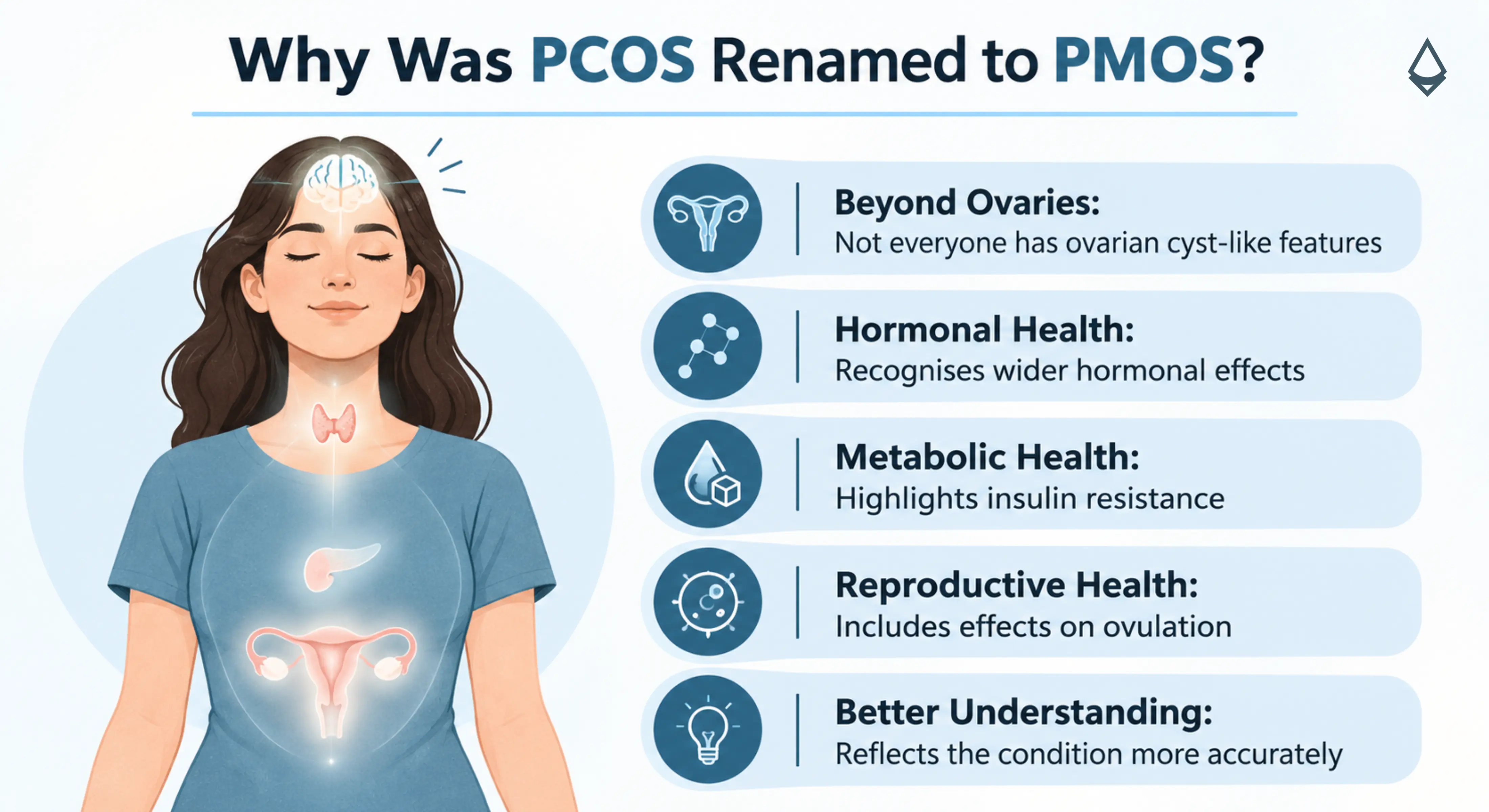
The new name highlights three important aspects:
Polyendocrine: Recognises the involvement of multiple hormonal pathways and endocrine functions.
Metabolic: Highlights the condition's association with insulin resistance, blood sugar regulation and other metabolic changes.
Ovarian: Acknowledges its effects on ovarian function, menstrual cycles and ovulation.
Unlike the earlier terminology, PMOS recognises that the condition involves interconnected hormonal, metabolic and reproductive systems rather than being limited to the ovaries.
Why Was PCOS Renamed to PMOS?
The earlier name, Polycystic Ovary Syndrome, dates back to the 1930s, when the condition was identified based on the appearance of the ovaries.
However, decades of research have established that its effects extend well beyond ovarian function.
There were three major concerns with the earlier name:
The term 'polycystic' was misleading: The small structures sometimes visible on an ultrasound are generally immature ovarian follicles, not pathological ovarian cysts. Additionally, not everyone with the condition has this ovarian appearance.
It overlooked metabolic and hormonal changes: PCOS is associated with insulin resistance, increased androgen levels and other endocrine abnormalities. The earlier name did not adequately represent these features.
It contributed to misconceptions and delayed diagnosis: The emphasis on ovarian cysts and reproductive health sometimes overshadowed other symptoms and long-term health concerns.
A more accurate name was therefore needed to improve awareness, communication, and medical care.
How Was the New Name PMOS Decided?
The decision to rename PCOS was driven by the need for a term that better represents the condition and its effects on overall health.
An international consultation brought together healthcare professionals, researchers, and people living with the condition to identify a more scientifically accurate, easier-to-understand name.
The process highlighted a few important considerations:
A broader understanding of the condition: The new name needed to reflect its hormonal, metabolic and ovarian effects rather than focusing primarily on ovarian appearance.
Patient perspectives: Feedback from people living with PCOS helped identify the misconceptions and confusion associated with the earlier name.
Medical accuracy: Experts evaluated potential names to ensure they represented current scientific understanding of the condition.
Following this consultation, Polyendocrine Metabolic Ovarian Syndrome (PMOS) was selected as the updated name and announced in May 2026.
The change aims to make the condition easier to understand, improve awareness and encourage a more comprehensive approach to women's hormonal and metabolic health.
Does the Name Change Affect Symptoms, Diagnosis or Treatment?
No. The name change does not alter the symptoms, diagnostic criteria or established treatment recommendations.
The condition previously known as PCOS continues to involve features such as irregular menstrual cycles, increased androgen levels, acne, excess facial hair, hair thinning and metabolic changes.
Can PMOS affect health beyond menstrual cycles and fertility?
Yes. The condition can also be associated with insulin resistance, altered cholesterol levels, increased androgen levels and long-term metabolic health concerns.
Similarly, diagnosis continues to rely on established clinical criteria, including ovulatory dysfunction, hyperandrogenism and polycystic ovarian features or elevated anti-Müllerian hormone levels in appropriate adults.
Management also remains focused on individual symptoms and health concerns. It may include lifestyle modifications, hormonal treatment, metabolic monitoring and fertility support, depending on individual needs.
Cannabinoid-based medicines may also be explored by healthcare professionals for certain co-existing pain-related conditions. However, their use should be assessed individually and guided by medical supervision.
The updated international guideline recommendations retain their existing clinical content. The next full International Guideline update is expected in 2028, when PMOS will become the standard terminology.
Will PCOS Still Be Used as a Medical Term?
Yes. Since PCOS has been widely used in medical records, research publications and clinical practice for decades, the transition to PMOS will take time.
A three-year transition period has been proposed to support the adoption of the new name across healthcare systems, research institutions, medical education and public health communication.
During this period, both terms may appear in medical literature and healthcare discussions. The terminology PMOS/PCOS may also be used to help people recognise that both names refer to the same condition.
Conclusion
The change from PCOS to PMOS marks an important step towards improving how this condition is understood and discussed. By moving away from a name centred on ovarian appearance, the updated terminology acknowledges its wider hormonal and metabolic effects.
Although the name has changed, the underlying condition and established approaches to diagnosis and management remain the same. The transition is expected to improve awareness, encourage more comprehensive healthcare and support better recognition of the condition beyond reproductive health alone.
Key Takeaways
- - The updated terminology aims to improve awareness, reduce misconceptions and encourage more comprehensive care.
- - The name change does not alter existing diagnostic criteria or treatment recommendations.
- - The new name highlights the hormonal, metabolic and ovarian aspects of the condition.
- - PMOS and PCOS refer to the same underlying condition, not two different disorders.
- - PCOS has been renamed PMOS (Polyendocrine Metabolic Ovarian Syndrome) to better reflect its wider effects on health.