

What are CGRP Inhibitors for Migraine?



For decades, migraine treatment focused mainly on managing symptoms after an attack had already begun. Painkillers, anti-inflammatory drugs and other medications could provide relief, but they didn't address what was actually causing migraine.
Researchers now know that migraine is a complex neurological condition involving several pathways in the brain. One of the most important discoveries has been the role of a protein called calcitonin gene-related peptide (CGRP). This finding has led to the development of CGRP inhibitors, the first class of medications designed specifically to prevent or treat migraine by targeting one of its key drivers.
What Is CGRP and Why Is It Important?
CGRP is a naturally occurring protein found throughout the brain and nervous system. During a migraine attack, levels of this protein rise. CGRP helps transmit pain signals, promotes inflammation around nerves and causes blood vessels to widen, all of which contribute to migraine symptoms.
Because CGRP plays such an important role in migraine, blocking its activity can help stop the chain of events that leads to an attack or make attacks less frequent and severe.
What Are CGRP Inhibitors?
CGRP inhibitors are medications that target the biological processes involved in migraine rather than simply masking pain. They can be used to prevent migraine attacks or, in some cases, treat an attack once it has started.
These medications fall into two main categories.
Monoclonal Antibodies: Long-Term Prevention
Monoclonal antibodies are mainly used to prevent migraine and are usually taken once a month or every few months through an injection or infusion.
Examples include:
Erenumab
Fremanezumab
Galcanezumab
Eptinezumab
These medicines work by blocking either CGRP itself or the receptor it binds to. Many people start noticing fewer migraine days within the first month, although the full benefits may take two to three months to become apparent.
Gepants: For Acute Treatment and Prevention
Gepants are a newer group of CGRP-blocking medicines available as tablets and in some cases, nasal sprays. Depending on the medication, they may be used to stop a migraine attack or to prevent future attacks.
Examples include:
Ubrogepant
Rimegepant
Atogepant
Zavegepant
Unlike triptans, gepants do not constrict blood vessels. This makes them a useful option for some people who cannot take triptans because of cardiovascular risk factors.
Who May Benefit From CGRP Inhibitors?
A healthcare expert may recommend these treatments if one experiences:
Frequent migraine attacks
Have chronic migraine, which means 15 or more headache days a month
Do not get enough relief from conventional preventive medications
Cannot tolerate the side effects of older migraine medicines
Need a treatment specifically developed for migraine
They may be especially helpful for people whose migraine attacks interfere with work, sleep, or everyday activities.
How Effective Are CGRP Inhibitors?
Studies have shown that CGRP inhibitors can:
Reduce the number of migraine days each month
Lower the severity of attacks
Reduce the need for pain-relieving medications
Improve daily functioning and quality of life
Decrease the risk of medication-overuse headaches caused by frequent painkiller use
Some people experience improvement within weeks, while others may need a few months before seeing the full effect. These medications are not a cure, but they can significantly reduce the burden of migraine for many people.
How quickly do CGRP inhibitors start working?
Some people notice improvement within days to weeks, but the full benefits often become apparent after two to three months of treatment.
Are There Any Side Effects?
CGRP inhibitors are generally well tolerated and most side effects are mild. The most commonly reported ones include:
Pain or redness at the injection site
Constipation
Nausea
Fatigue
Mild cold-like symptoms
Serious side effects are uncommon, but because these medications are relatively new, their long-term effects are still being studied. People who are pregnant, breastfeeding, or have other medical conditions should discuss the risks and benefits with their healthcare provider.
Are CGRP Inhibitors Better Than Older Migraine Treatments?
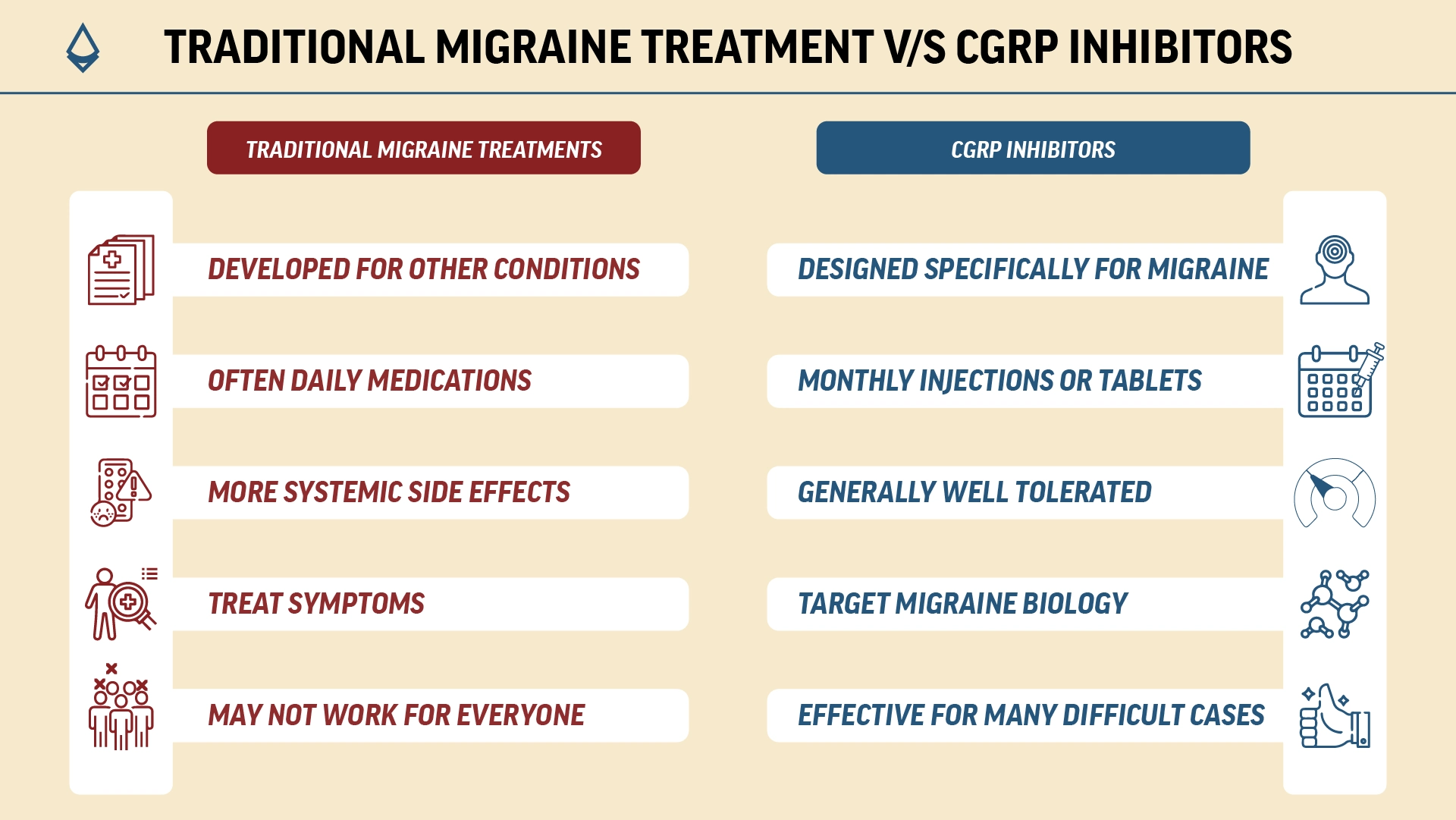
Traditional preventive medications, such as beta-blockers, antidepressants and anti-seizure drugs, were originally developed to treat other conditions and were later found to help reduce migraine frequency. Although they can be effective, they may cause side effects that make long-term treatment difficult for some people.
CGRP inhibitors, in contrast, were developed specifically for migraine. They target one of the main pathways involved in migraine, are generally easier to tolerate and often require less frequent dosing.
Can CGRP inhibitors be taken with other migraine treatments?
In many cases, yes, but treatment combinations should always be discussed with a healthcare professional.
In addition, cannabinoid-based medications containing compounds such as CBD and THC may help regulate pain signalling and inflammation. These therapies are being explored as complementary options under medical supervision, particularly in people with difficult-to-manage migraines.
Migraine Management Goes Beyond Medication
Even the most effective medicines work best when combined with healthy habits. Helpful strategies include:
Maintaining a regular sleep schedule
Staying well hydrated
Managing stress
Exercising regularly
Identifying and avoiding personal triggers
Keeping a migraine diary to track symptoms and patterns
Triggers such as skipped meals, dehydration, hormonal fluctuations, poor sleep, stress and certain foods are common but often overlooked.
Conclusion
CGRP inhibitors represent one of the biggest advances in migraine treatment in decades. Instead of simply treating pain, they target one of the key molecules involved in migraine itself. For people living with frequent or disabling attacks, these medications offer a more targeted and often better-tolerated approach than many older therapies.
Do CGRP inhibitors cure migraine?
No, they do not cure migraine, but they can significantly reduce the frequency, severity and impact of attacks.
While they are not a cure and may not work for everyone, CGRP inhibitors have helped many people experience fewer migraine days, rely less on pain medications and regain control over their daily lives.
Key Takeaways
- - CGRP inhibitors are migraine-specific treatments that target a protein involved in migraine attacks.
- - They are available as monthly injections, infusions, or oral tablets.
- - They can help reduce the number and severity of migraine attacks.
- - Most people tolerate them well, with relatively few side effects.
- - Lifestyle measures and complementary approaches remain important for long-term migraine management.