

What Is Status Migrainosus?



Most people associate migraine with a severe headache that lasts for a few hours or perhaps a day. But for some individuals, the pain and accompanying symptoms can continue for days with little relief. This condition, known as status migrainosus, is one of the most debilitating forms of migraine and can significantly affect a person's physical, emotional and cognitive well-being.
A prolonged migraine attack can interfere with sleep, hydration, nutrition, work and daily functioning, often leaving people feeling exhausted and helpless. Understanding what status migrainosus is and how it differs from a typical migraine can help individuals recognise when professional medical care is needed.
What Is Status Migrainosus?
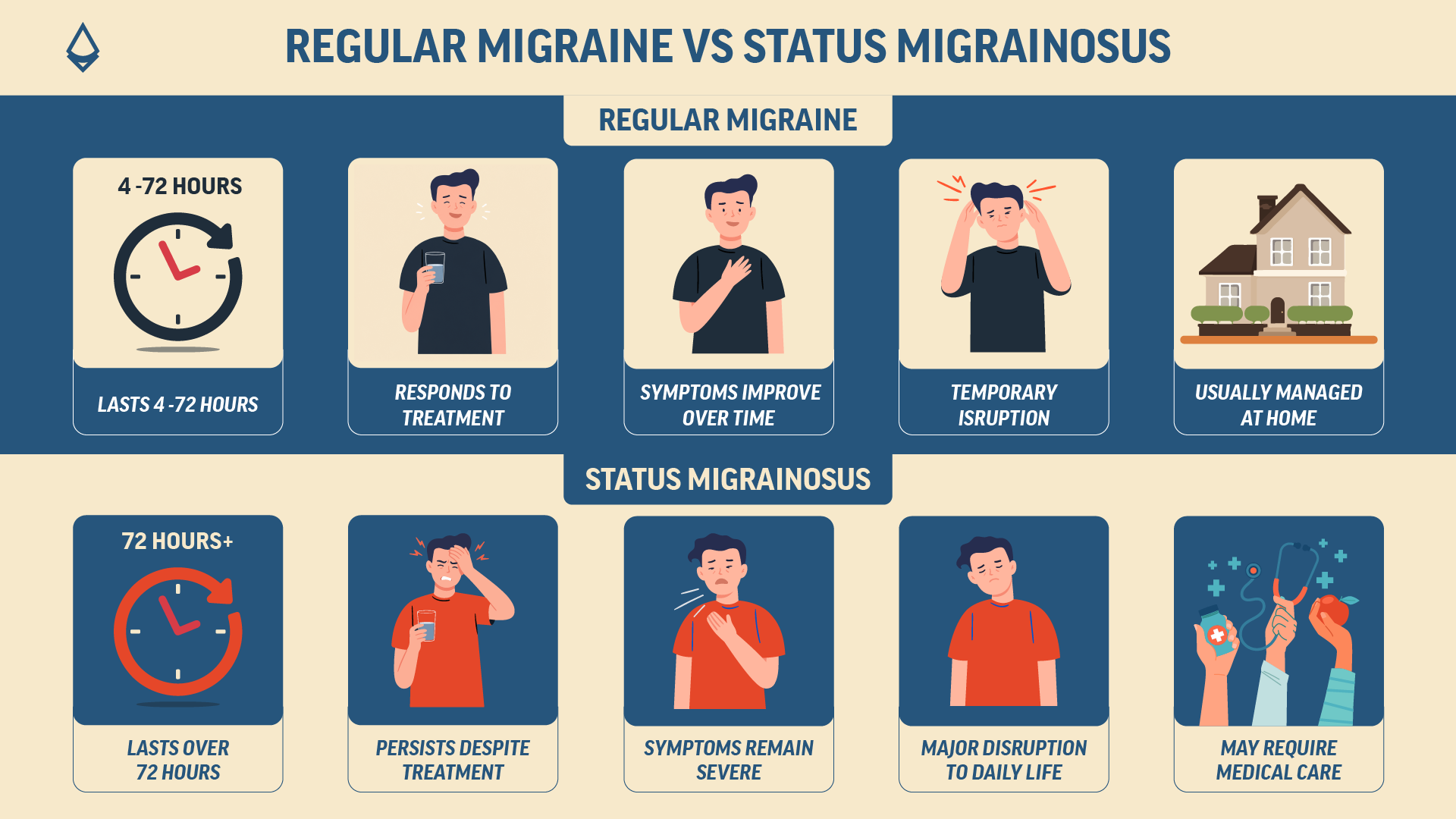
Status migrainosus is a migraine attack that persists for more than 72 hours. While the intensity of the pain may fluctuate during this period, the migraine symptoms continue to be disabling and do not fully resolve.
The condition can occur in people who have a history of migraine, particularly those with chronic migraine or frequent attacks. Unlike an ordinary migraine episode, status migrainosus is often resistant to the treatments that would normally provide relief.
Why Can a Migraine Last for More Than Three Days?
A migraine is far more complex than a headache. It involves changes in brain activity, nerve signalling, blood vessels and inflammatory pathways. When these processes remain active for an extended period, the migraine cycle can become difficult to break.
Several factors have been linked to status migrainosus. Delaying treatment during the early stages of a migraine attack is one of the most common contributors. Other triggers include sleep deprivation, significant stress, hormonal fluctuations, dehydration, illness and excessive use of pain-relief medications.
In some cases, people are unable to identify a specific trigger, which can make prevention particularly challenging.
How Does Status Migrainosus Feel Different From a Typical Migraine?
The symptoms are often similar to those of a regular migraine, but they tend to be more persistent and disabling.
People may experience:
Intense throbbing or pulsating head pain
Nausea and vomiting
Sensitivity to light, sound, or smell
Fatigue and exhaustion
Dizziness or vertigo
Difficulty concentrating
Visual disturbances in those who experience migraine with aura
Because these symptoms continue for several days, many individuals struggle to maintain hydration, eat properly, or get restorative sleep, which can further worsen the attack.
Can status migrainosus occur without severe head pain?
In some cases, symptoms such as nausea, light sensitivity, dizziness and cognitive difficulties may persist even when the headache itself fluctuates or partially improves.
Who Is Most at Risk of Developing Status Migrainosus?
Anyone with migraine can develop status migrainosus, but certain groups appear to be at greater risk.
People who experience chronic migraine, frequent headache days, medication-overuse headaches, or significant stress may be more susceptible. Women are also more commonly affected, partly because hormonal fluctuations can influence migraine activity.
What is medication-overuse headache?
It is a headache that develops from frequent use of pain-relief medications, creating a cycle where headaches become more frequent and harder to treat.
A history of severe or difficult-to-treat migraine attacks may further increase the likelihood of experiencing a prolonged episode.
How Is Status Migrainosus Diagnosed?
There is no single laboratory test or scan that confirms status migrainosus. Instead, healthcare professionals rely on a person's migraine history, symptom pattern and the duration of the attack.
Because other serious neurological conditions can sometimes resemble migraine, additional investigations may be recommended when symptoms are unusual or when warning signs are present. This helps rule out conditions such as stroke, meningitis, brain haemorrhage, or other medical emergencies.
Can status migrainosus cause long-term brain damage?
While the condition is extremely debilitating, status migrainosus itself does not typically cause brain damage, though prolonged symptoms warrant medical evaluation to rule out other neurological conditions.
What Treatments Can Help Break a Prolonged Migraine Attack?
Status migrainosus often requires more aggressive treatment than a typical migraine attack. The primary goal is to break the migraine cycle, relieve symptoms and prevent complications such as dehydration.
What does it mean to 'break the migraine cycle'?
Breaking the migraine cycle refers to stopping the biological processes driving the attack so that symptoms resolve and the migraine does not continue or quickly return.
While not every prolonged migraine is an emergency, certain warning signs require immediate medical attention. These include a migraine lasting longer than 72 hours, persistent vomiting that prevents adequate hydration, sudden confusion, difficulty speaking, weakness or numbness on one side of the body, or a sudden severe headache that feels different from previous migraine attacks.
These symptoms may indicate a more serious neurological condition and should be evaluated promptly.
Can Future Status Migrainosus Episodes Be Prevented?
Although status migrainosus cannot always be prevented, effective migraine management can significantly reduce the risk. Identifying personal triggers, maintaining consistent sleep patterns, staying hydrated, eating regular meals and managing stress are all important preventive strategies.
For individuals with frequent or severe migraines, preventive therapies recommended by a healthcare professional may help reduce attack frequency and lessen the likelihood of prolonged episodes. Early treatment of migraine symptoms is also crucial, as delaying treatment may increase the risk of an attack progressing into status migrainosus.
Emerging research has also explored the role of cannabinoid-based medications in migraine management. By interacting with the body's endocannabinoid system, cannabinoids may help modulate pain pathways, reduce nausea, and improve overall symptom control in some individuals.
Conclusion
One of the biggest misconceptions about migraine is that it is simply a headache that will eventually pass. Status migrainosus highlights why that belief can be problematic. A migraine that continues for days can lead to dehydration, severe exhaustion, reduced quality of life and repeated healthcare visits.
Recognising the signs early and seeking appropriate care can often shorten the duration of an attack and prevent complications. For people living with migraine, understanding status migrainosus is an important step toward better management and improved long-term outcomes.
Key Takeaways
- - Status migrainosus is a migraine attack that lasts longer than 72 hours.
- - It often causes severe, persistent symptoms that significantly disrupt daily life.
- - Delayed treatment, stress, dehydration and medication overuse can contribute to prolonged attacks.
- - Medical evaluation may be necessary to rule out other serious neurological conditions.
- - Early treatment and preventive migraine management can help reduce the risk of recurrence.