

How To Manage Anxiety at Night?


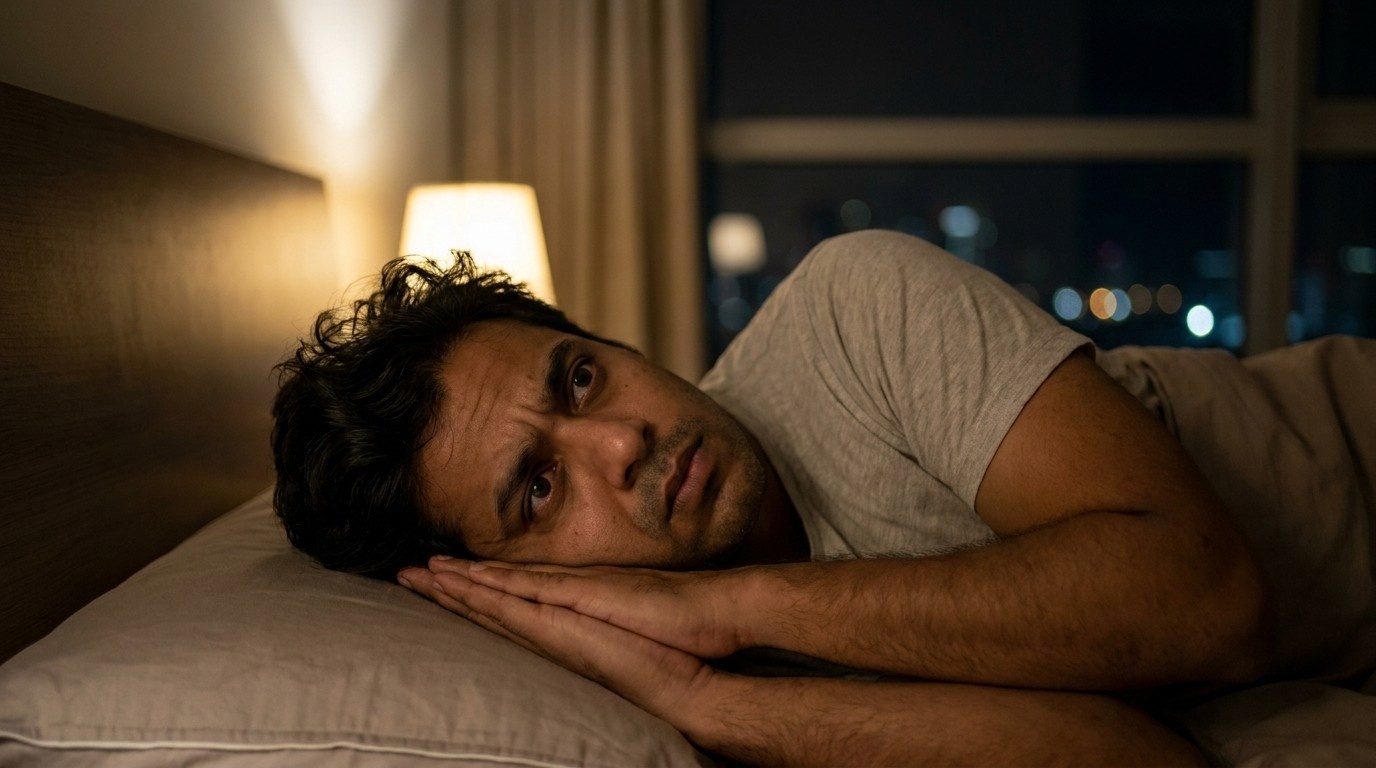
It’s a pattern many people quietly experience - fatigue sets in, the body is ready to rest, but the mind becomes unusually alert. Thoughts that felt manageable during the day begin to spiral at night, making sleep feel distant and fragmented. This intensification of stress and anxiety after dark is not accidental; it reflects how the brain processes emotions, stimuli and rest cycles.
Understanding this shift can make it easier to manage.
Why Anxiety Tends to Worsen at Night?
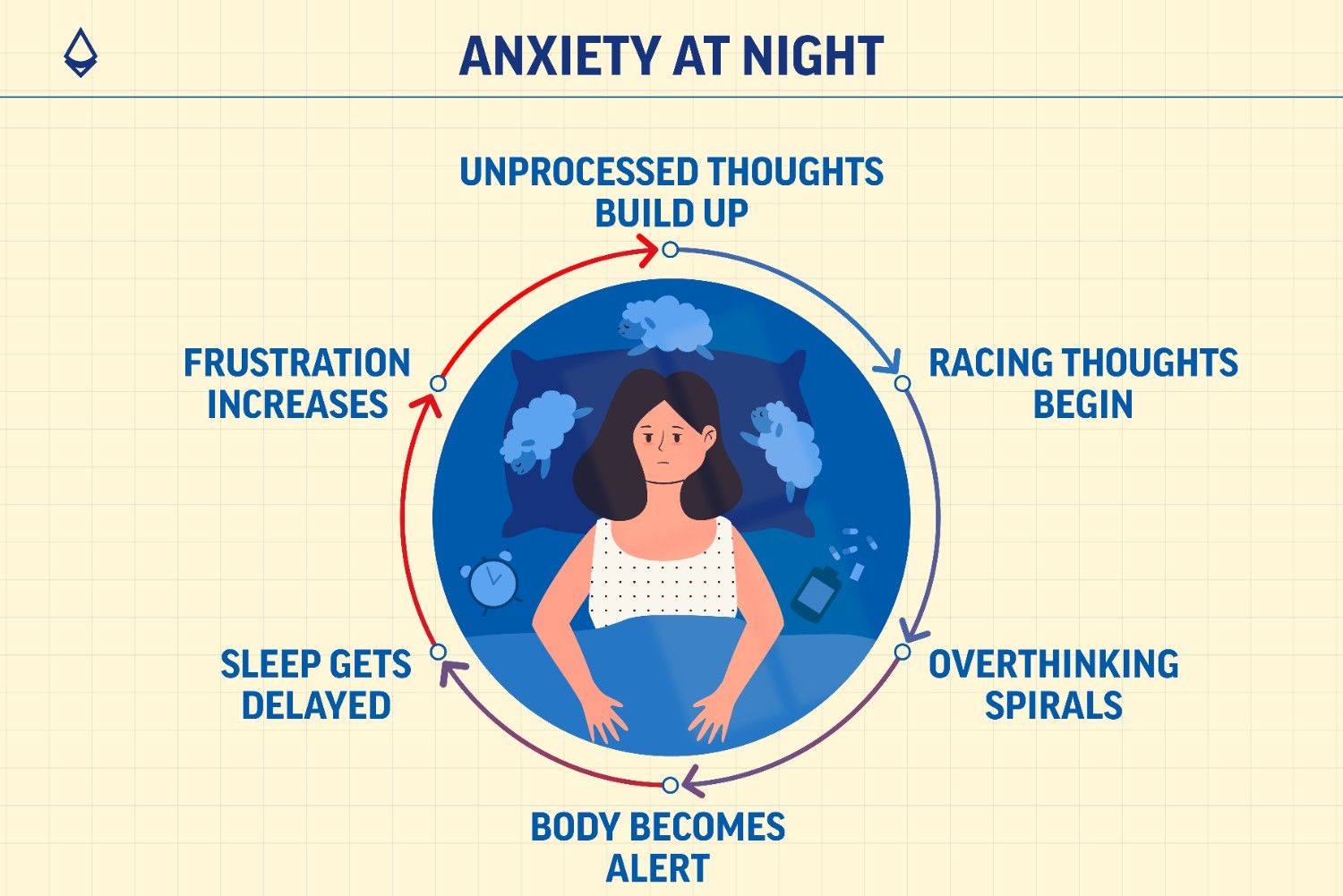
Throughout the day, the brain is occupied with tasks, conversations and constant sensory input. By night, that stimulation reduces significantly, leaving space for internal thoughts to surface.
Several physiological and psychological factors contribute to this:
Reduced external distraction: The absence of activity allows unresolved thoughts to take centre stage
Circadian rhythm changes: Natural fluctuations in cortisol and melatonin can influence emotional regulation
Accumulated mental load: Unprocessed stress from the day often resurfaces when the mind slows down
Heightened default mode network activity: The brain’s introspective system becomes more active, often leading to overthinking
Does overthinking at night indicate an anxiety disorder?
Not always. Occasional racing thoughts are common, but persistent patterns that interfere with sleep regularly may need deeper attention.
Rather than shutting down, the brain attempts to process pending emotions, sometimes resulting in a loop of racing thoughts.
Why does anxiety feel more physical at night?
At night, the body is resting, making internal sensations like heart rate, breathing or muscle tension more noticeable, which can amplify perceived anxiety.
Why Do Racing Thoughts Feel More Intense in Bed?
The transition to bed creates a sudden contrast: physical stillness paired with mental activity. This mismatch can make thoughts feel louder and more intrusive.
Common contributors include:
Late-night screen exposure disrupts melatonin production
Irregular sleep timing confuses the body’s internal clock
Stimulants consumed later in the day, such as caffeine
Emotional suppression, leading to delayed processing
When combined, these factors can prevent the nervous system from shifting into a restful state.
Can eating patterns affect nighttime anxiety?
Yes, late heavy meals or long gaps without food can impact blood sugar levels, which may trigger restlessness or heightened alertness at night.
What are Some Practical Ways to Calm Racing Thoughts at Night?
Instead of attempting to suppress thoughts, gentle redirection and nervous system regulation tend to be more effective.
1. Pre-sleep cognitive offloading Writing down pending tasks or lingering worries helps reduce repetitive thinking by signalling closure to the brain.
2. Cognitive shuffling technique Thinking of neutral, unrelated words or images in sequence can disrupt anxious thought patterns and support the transition into sleep.
3. Breath pattern regulation Structured breathing:
Inhale for 4 seconds
Hold for 2 seconds
Exhale for 6 seconds
This helps activate the parasympathetic nervous system, which promotes relaxation.
4. Thermal regulation A warm shower or slight body warming followed by cooling can signal the brain to initiate sleep.
5. Resetting the sleep association If wakefulness persists, stepping out of bed briefly and returning only when drowsy can prevent the mind from linking the bed with stress.
Can the way one wakes up influence nighttime anxiety?
Yes, irregular wake-up times can disrupt circadian rhythm, making it harder for the brain to transition into restful states at night.
What are Daytime Habits that Influence Nighttime Anxiety?
Nighttime anxiety is often shaped by daytime patterns. Small adjustments can create noticeable changes:
Early morning sunlight exposure supports circadian alignment
Regular movement throughout the day reduces accumulated stress
Processing emotional experiences in real-time prevents mental buildup
Limiting overstimulation at night, especially through digital content
These changes help the brain transition more smoothly from activity to rest.
When Additional Support May Be Needed?
In some cases, persistent stress and anxiety reflect deeper nervous system dysregulation rather than situational worry. This can make it difficult for the body to naturally shift into a calm state at night.
Emerging research around cannabinoid-based medication suggests that it may support relaxation and sleep by interacting with the body’s endocannabinoid system, which plays a role in stress regulation and emotional balance. When used responsibly and under professional guidance, it may serve as a supportive addition for individuals experiencing chronic nighttime anxiety.
Conclusion
The aim is not to eliminate thoughts, but to create a state where the mind does not feel threatened by them.
When the nervous system is regulated:
Thought intensity reduces naturally
Breathing patterns stabilize
Sleep onset becomes smoother
Nighttime anxiety is often a reflection of an overactive, unprocessed system rather than a malfunction. With the right interventions, it is possible to gradually retrain the mind and body to associate night with rest instead of restlessness.
Key Takeaways
- - Nighttime anxiety is often a result of reduced distractions, not increased stress.
- - The brain uses quiet hours to process unaddressed emotions from the day.
- - Racing thoughts are a sign of mental backlog, not loss of control.
- - Regulating the nervous system works better than trying to “stop thinking.”
- - Daytime habits play a direct role in how the mind behaves at night.