

What Symptoms Signal Joint Pain?



Joint pain is one of the most common health complaints across all age groups, yet its symptoms are often misunderstood. Many people assume that any joint discomfort is simply “wear and tear” or ageing. In reality, joint pain can signal mechanical strain, inflammation, nerve irritation, nutritional deficiencies, autoimmune disease or even infection. The key lies not just in the pain itself - but in how it presents.
The Primary Symptoms of Joint Pain
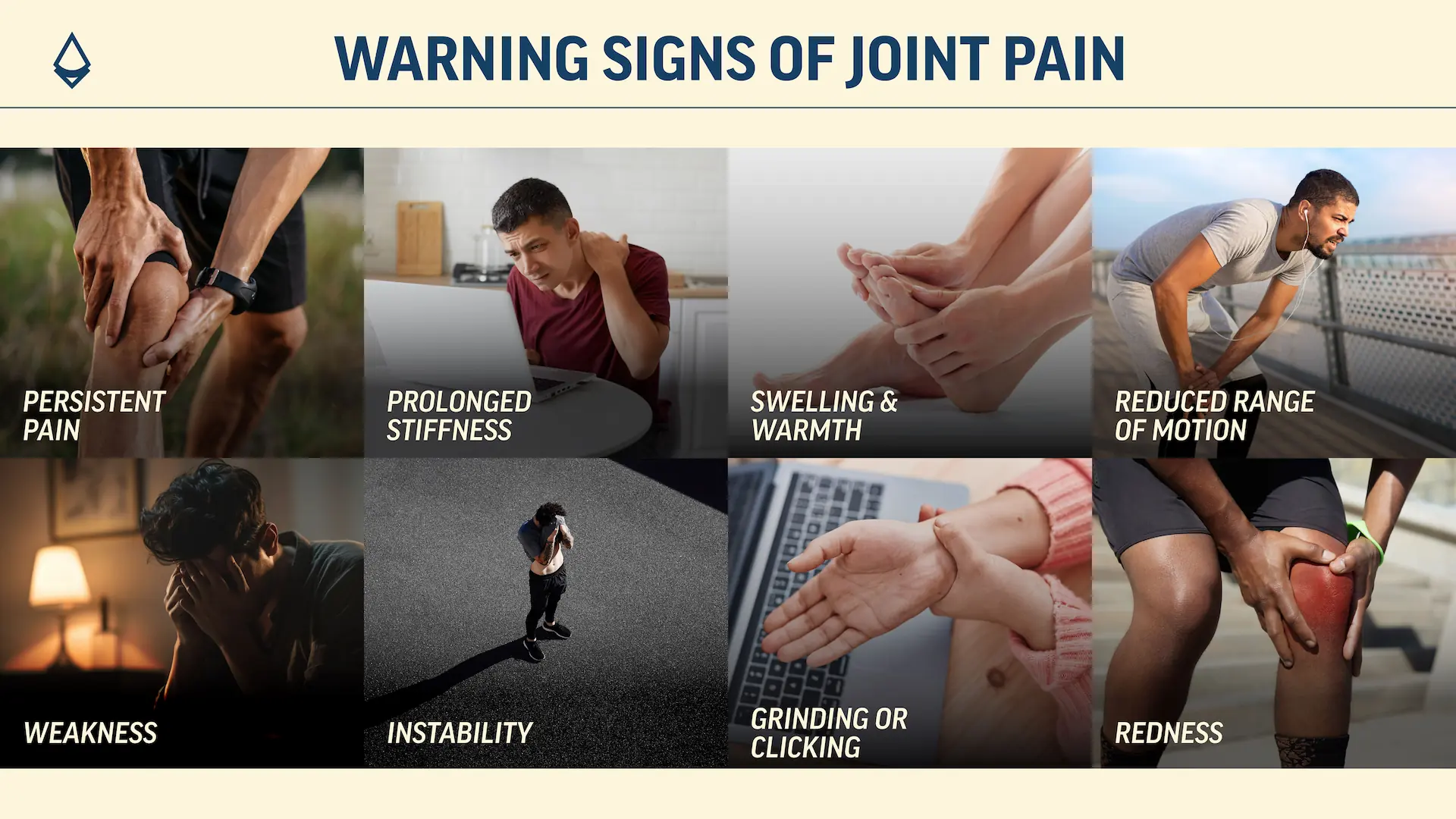
Pain is the most obvious symptom, but its quality and pattern provide important clues. Sharp, stabbing pain often points to an injury such as a ligament sprain or cartilage tear. A dull, deep ache may suggest degenerative changes or even vitamin D deficiency. Throbbing pain is commonly linked to inflammation, while a burning sensation may indicate nerve involvement rather than true joint damage.
What are degenerative changes in joints?
Degenerative changes refer to the gradual breakdown of cartilage and joint structures over time, often due to ageing, repeated stress or long-term wear.
Swelling may be visible or subtle. A joint can appear enlarged, puffy or warm to the touch when inflammation is present. In some cases, there may only be a sensation of pressure or tightness within the joint capsule. Persistent swelling should not be ignored.
Reduced range of motion is also significant. Difficulty bending the knee fully, turning the neck or gripping objects can signal cartilage damage, ligament strain or chronic inflammation. Over time, untreated joint issues can gradually limit mobility.
What is chronic inflammation in a joint?
Persistent internal irritation gradually damages joint tissues, leading to stiffness and limited movement over time.
Weakness around the joint often develops secondary to pain. When movement hurts, surrounding muscles become inhibited and weaken, further destabilising the joint and increasing stress on it.
Secondary and Associated Symptoms
Joint pain is not always an isolated problem. Sometimes the body sends additional signals that indicate a deeper issue.
Fatigue commonly accompanies inflammatory or deficiency-related joint pain. Low vitamin D, vitamin B12 deficiency, autoimmune conditions or chronic inflammation can all contribute to persistent tiredness alongside joint discomfort.
Tingling, numbness, or burning sensations suggest nerve involvement. For example, vitamin B12 deficiency affects the myelin sheath, the protective covering around nerves, which can cause sensations that feel like joint pain but are neurological in origin. Similarly, nerve compression such as sciatica may mimic hip or knee pain.
What does a burning joint pain usually mean?
Burning pain often suggests nerve involvement rather than direct joint damage.
Muscle aches that occur alongside joint pain may indicate systemic inflammation, viral infections, or metabolic imbalances. Fever combined with joint pain is a red flag and may signal infection or an autoimmune flare.
Less Common but Important Symptoms
Some symptoms occur less frequently but are clinically significant.
Joint redness, especially when accompanied by warmth and swelling, may indicate gout or septic arthritis - the latter being a medical emergency. Gradual joint deformity over time may occur in chronic inflammatory arthritis. Grinding or crackling sensations (crepitus) during movement can suggest cartilage thinning if accompanied by pain.
What is “crepitus”?
Crepitus is a grinding or crackling sensation in a joint during movement, often linked to cartilage thinning when accompanied by pain.
Skin rashes appearing with joint pain may point toward autoimmune conditions such as lupus or psoriatic arthritis. Some individuals also report weather-related worsening of symptoms, possibly due to changes in atmospheric pressure affecting joint tissues.
How Deficiency-Related Joint Pain Feels Different
Joint pain linked to micronutrient deficiencies often presents differently from mechanical injury. It may feel diffuse rather than isolated to one joint. The discomfort is often persistent, deep, and dull, sometimes without visible swelling. Fatigue, muscle weakness, brain fog, or tingling sensations may coexist.
Low vitamin D can lead to deep bone aches due to impaired mineralisation. Vitamin C deficiency may affect collagen production, slowing cartilage repair. Low vitamin K can impact bone density, while inadequate vitamin E may increase oxidative stress in joint tissues. These biochemical contributors are frequently overlooked.
Alongside correcting nutrient deficiencies, cannabinoid-based topical oils, particularly those formulated with plant-derived cannabinoids, play a potential role in modulating local inflammation and supporting pain relief.
Patterns That Help Identify the Cause
The distribution of pain offers additional clues:
Pain in a single joint often suggests injury, gout, or infection.
Pain in multiple joints may indicate autoimmune or systemic conditions.
Symmetrical joint pain (both hands or both knees) is commonly inflammatory.
Pain mainly in weight-bearing joints often reflects degenerative changes.
What are weight-bearing joints?
They are joints that carry body weight - mainly the knees, hips, ankles and spine, making them more prone to stress and wear over time.
Understanding these patterns helps differentiate between structural, inflammatory, neurological, and metabolic causes.
Red Flag Symptoms That Need Immediate Attention
Seek medical evaluation if joint pain is accompanied by:
Sudden severe pain
High fever
Marked swelling with redness and warmth
Inability to bear weight
Rapid joint deformity
Unexplained weight loss
These symptoms may indicate infection, advanced inflammatory disease, or other serious conditions.
The Bigger Picture
Joint pain is not simply a sign of ageing. It can reflect mechanical stress, inflammation, hormonal changes, nutrient deficiencies, nerve irritation or systemic illness. Paying attention to the quality, timing, and associated symptoms allows for earlier and more accurate intervention.
Joint health is both structural and biochemical. Cartilage depends on collagen. Bones rely on adequate mineral support. Nerves require proper insulation. Inflammation is influenced by diet, sleep, stress, and metabolic balance.
Why does cartilage depend on collagen?
Collagen provides the structural framework that keeps cartilage strong, flexible, and able to absorb shock inside the joint.
When we look beyond the pain and examine the full symptom picture, joint discomfort becomes less mysterious and far more manageable.
Key Takeaways
- - Joint pain isn’t always ageing — it can signal inflammation, nerve issues, deficiencies, or systemic illness.
- - The type of pain matters: sharp (injury), dull/deep (degeneration or deficiency), burning (nerve-related).
- - Fatigue, tingling, fever, or swelling alongside pain suggest a deeper cause.
- - Deficiency-related pain is often diffuse, persistent, and without obvious swelling.
- - Sudden severe pain, high fever, or marked swelling needs urgent medical attention.