

What Is the Difference Between Acute and Chronic Insomnia?


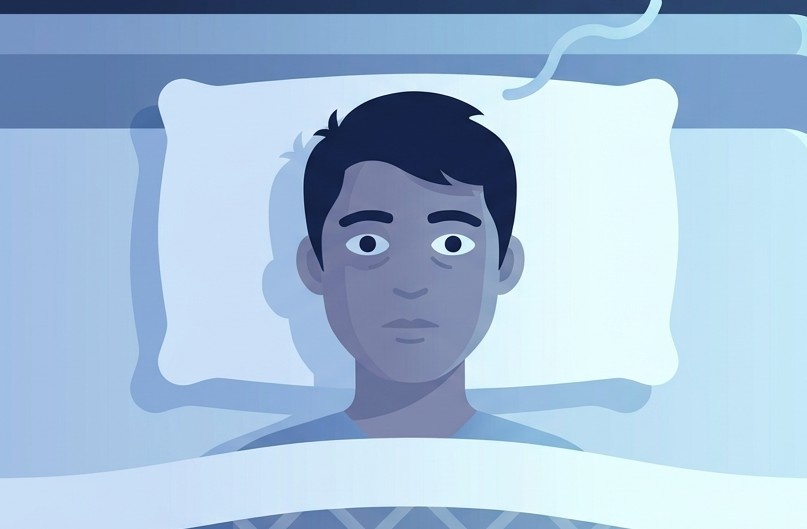
Sleep doesn’t usually break all at once - it starts with a few restless nights, a slightly overactive mind or a shift in routine. What often goes unnoticed is how quickly this can move from a temporary phase into a pattern. This is where the difference between acute and chronic insomnia becomes important, because the earlier it’s understood, the easier it is to manage.
What is Acute Insomnia?
Acute insomnia is the body’s immediate response to disruption. It could be triggered by stress, travel, emotional shifts or even irregular meal and sleep timings. In this phase, the nervous system is slightly heightened, but still responsive. Sleep feels delayed but not lost.
How does travel affect our sleep?
It disrupts circadian rhythm, making it harder to fall and stay asleep.
What is Chronic Insomnia?
Chronic insomnia, on the other hand, develops gradually. It’s less about the original trigger and more about what follows. Over time, the brain begins to associate bedtime with effort, alertness or even frustration. The body doesn’t switch off as easily, not because it can’t, but because it has learned not to.
In many ways, acute insomnia is a signal, while chronic insomnia is a pattern.
What Separates Acute from Chronic Insomnia?
A clearer distinction helps in responding appropriately:
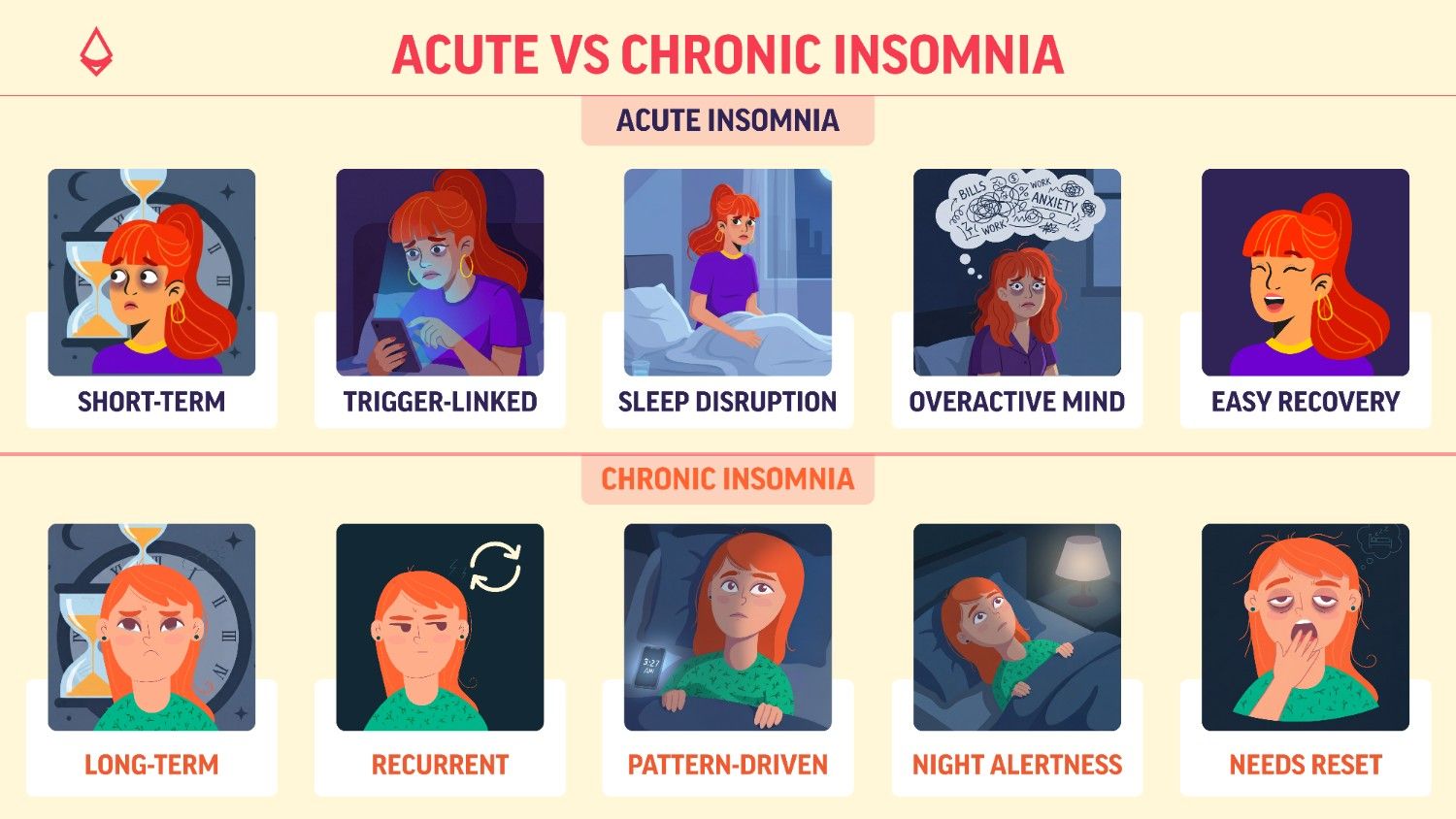
Acute Insomnia:
Short-term and situational
Often linked to identifiable triggers
The nervous system is temporarily activated
Sleep can return quickly with the right cues
Chronic Insomnia:
Persists for weeks or months
Less about triggers, more about conditioning
Heightened mental alertness at night
Requires a consistent behavioural reset
The most important insight here is that acute insomnia is highly reversible. With small, intentional changes, the body can be guided back into its natural sleep rhythm before the pattern deepens.
How Can the Body Be Reset for Sleep Faster?
When sleep feels delayed, the focus shifts from forcing rest to reducing internal stimulation. The body already knows how to sleep - it just needs the right conditions.
A simple sequence can help the transition:
Physical stillness: Allowing the body to remain completely relaxed, especially in the face and shoulders, reduces subtle tension signals.
Extended exhalation breathing: Slower, longer exhales help shift the nervous system toward a resting state.
Gradual muscle release: Releasing tension step-by-step creates a sense of heaviness and ease.
Mental neutralisation: Focusing on repetitive or neutral imagery helps reduce cognitive activity.
What is meant by neutral imagery?
It involves visualising calm, non-stimulating scenes to quiet the mind.
These shifts are particularly effective in acute insomnia, where the system is still flexible and responsive.
What Techniques Support Faster Sleep Onset?
The Military Sleep Method
This technique works by systematically shutting down physical tension. Starting with the face and moving downward, each muscle group is relaxed to signal safety to the brain. As the body softens, mental activity naturally begins to slow, making it easier to drift into sleep, especially during short-term sleep disruptions.
The 4-7-8 Breathing Technique
A controlled breathing pattern that directly calms the nervous system:
Inhale for 4 seconds
Hold for 7 seconds
Exhale for 8 seconds
The extended exhale is key as it reduces heart rate and quiets internal alertness, helping the body transition from a state of activity to rest.
The Paradoxical Intention
Sleep often becomes harder when there’s pressure to achieve it. This technique of trying not to sleep removes that pressure by allowing wakefulness instead of resisting it. When the effort to sleep drops, mental tension reduces, breaking the cycle that keeps the mind alert at night.
How Can the Sleep Environment Be Optimised?
Sleep quality is deeply influenced by external cues, often more than expected.
Small adjustments that can make a noticeable difference:
Maintaining a slightly cooler room temperature.
Reducing light exposure in the hour before bed.
Removing visible clocks to avoid time-related stress.
Minimising stimulation from screens or conversations late at night.
Supporting circulation by keeping the body comfortably warm, especially the extremities.
These changes create an environment where sleep feels more like a natural outcome rather than an effort.
What to Do When Sleep Doesn’t Come Easily?
Lying awake for long periods can unintentionally reinforce wakefulness. Instead of staying in bed, a brief reset can help:
Step out of bed if sleep feels distant
Engage in a low-effort, calming activity in dim light
Return only when the body begins to feel sleepy again
This helps maintain a strong mental association between bed and sleep, something that becomes especially important in preventing chronic insomnia.
How does the mental association between bed and sleep help with insomnia?
It trains the brain to link bed only with sleep, reducing wakefulness.
Can Natural Support Help Improve Sleep?
For recurring sleep disturbances, combining behavioural shifts with natural support systems can be beneficial. Nutrient-dense foods, calming herbs and adaptogenic plant-based medications or supplements can support the body’s ability to regulate stress and rest cycles over time.
What are some adaptogenic herbs for insomnia?
Ashwagandha, Brahmi and Jatamansi help reduce stress and support sleep.
The body’s endocannabinoid system, which plays a role in maintaining internal balance, is also being explored for its connection to sleep. Plant-based cannabinoid formulations may support relaxation and sleep quality as part of a broader, balanced approach.
Conclusion
Insomnia often begins as a temporary imbalance. When addressed early, especially in its acute phase, it can be reversed with simple, consistent cues. Left unaddressed, it can evolve into a pattern that feels harder to break. But even then, the body remains capable of relearning rest.
The shift lies in moving away from forcing sleep and toward creating the conditions where sleep can return naturally.
Key Takeaways
- - Acute insomnia is short-term and reversible, while chronic insomnia is a learned sleep pattern.
- - Early intervention can prevent temporary sleep issues from becoming long-term.
- - Relaxation and breathing techniques help reduce internal stimulation and support faster sleep onset.
- - Environmental cues play a critical role in how easily the body transitions into sleep.
- - Natural, plant-based approaches can support long-term sleep regulation alongside lifestyle changes.