

What Is Sciatica and Why Does It Happen?



Sciatica is a type of nerve pain that occurs when the sciatic nerve or one of its nerve roots becomes irritated or compressed. Unlike general lower back pain, sciatica often travels from the lower back or buttock into the leg, sometimes reaching the calf or foot.
Is sciatica the same as lower back pain?
No. Sciatica specifically involves irritation or compression of a sciatic nerve root and typically causes pain that radiates into the leg.
The pain can be mild or severe and may feel sharp, burning or like an electric shock. Tingling, numbness and weakness can also occur. While many cases improve with appropriate care, persistent or severe symptoms may require medical evaluation.
What Is Sciatica?
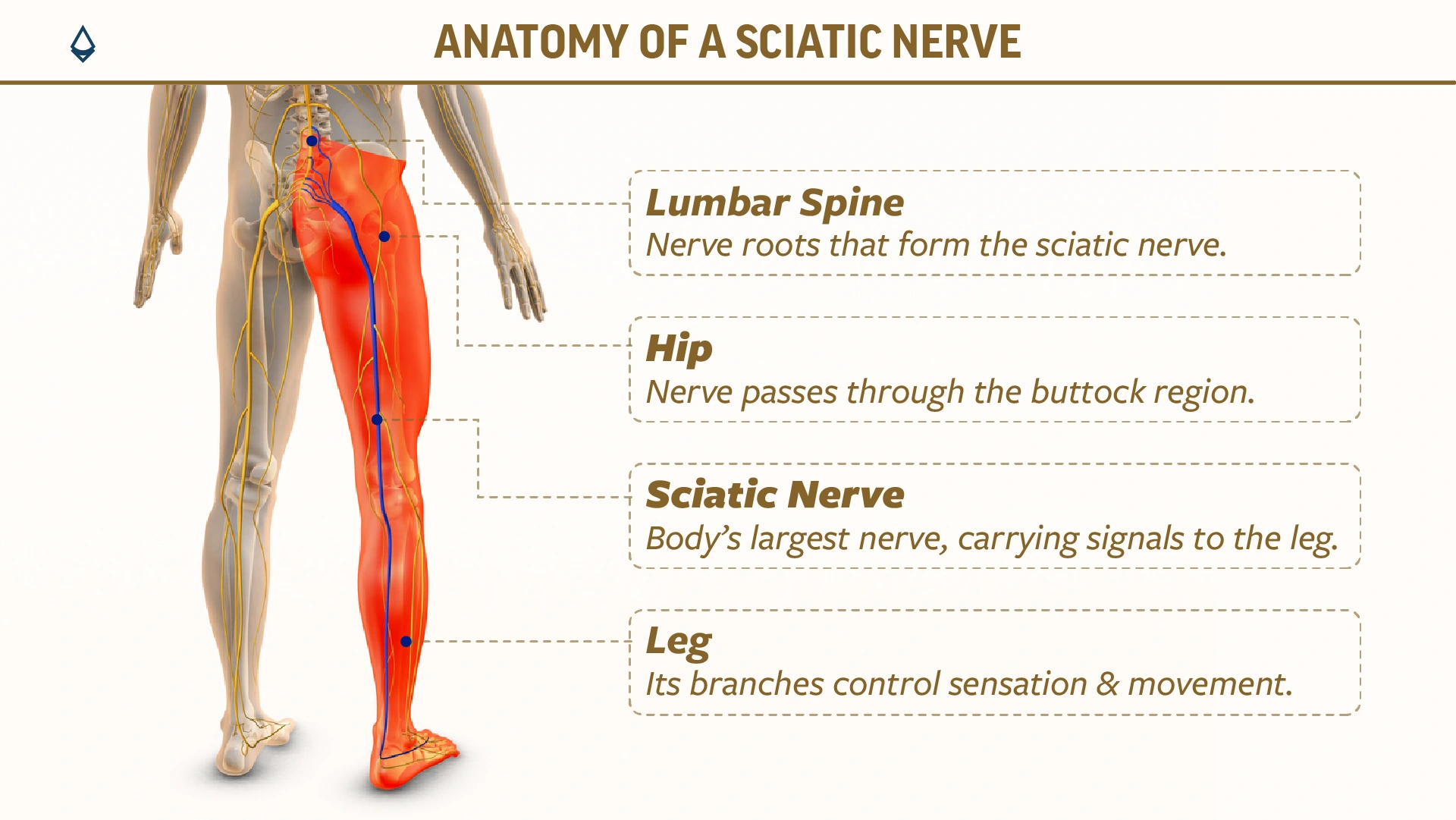
The sciatic nerve is the largest in the body. It is formed by nerve roots emerging from the lower spine and travels through the buttocks and down the back of each leg.
Sciatica develops when these nerve roots become compressed, irritated or inflamed. It usually affects one side of the body and can cause symptoms along the path of the nerve rather than only at the site of the underlying spinal problem.
How can I tell if hip pain is from the hip or sciatica?
Hip pain often starts in the groin and worsens with movement or weight-bearing. Sciatica usually starts in the lower back and may radiate down the leg, with tingling, numbness or weakness.
What Are the Symptoms of Sciatica?
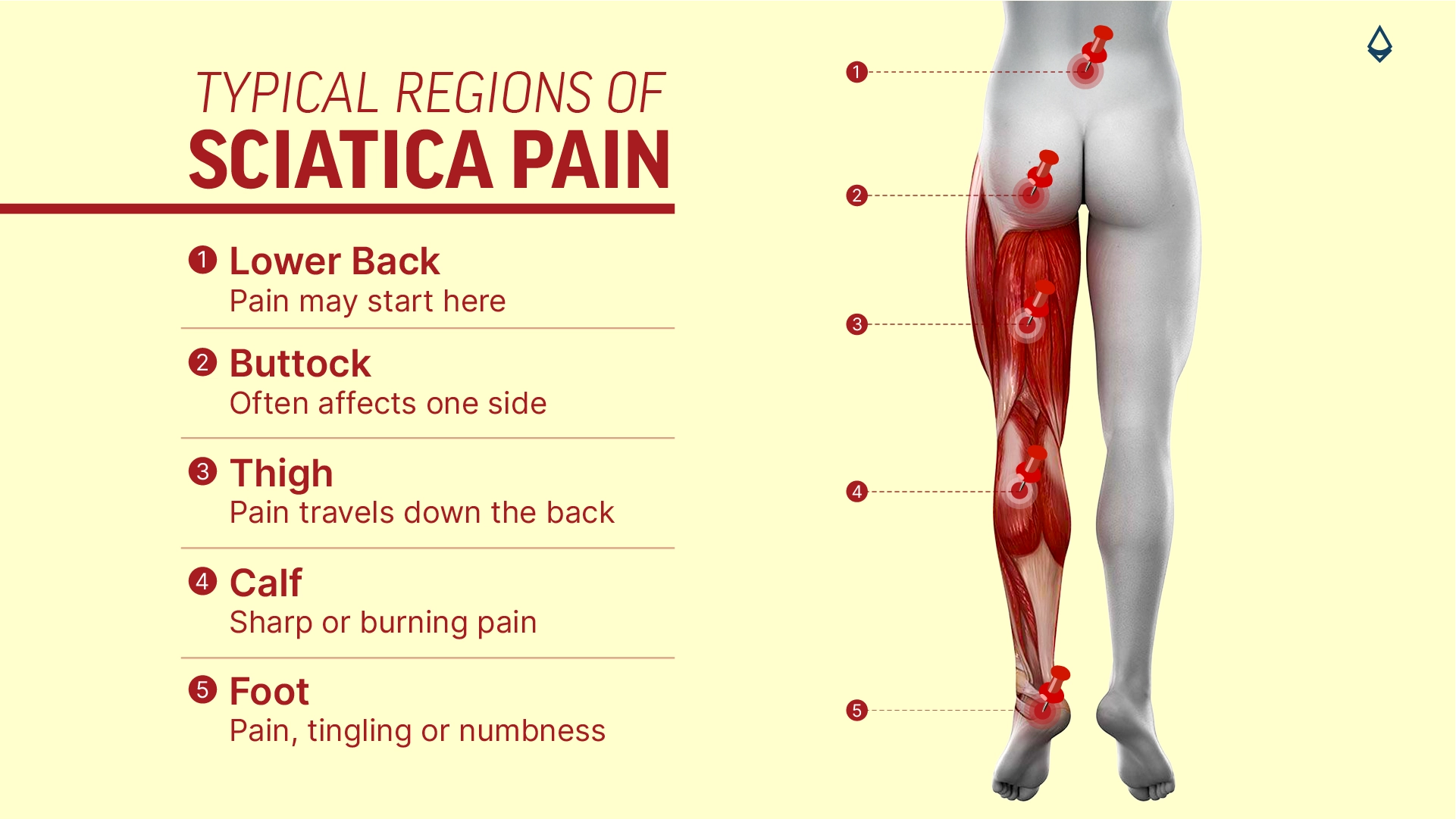
The most characteristic symptom is pain that radiates from the lower back or buttock into the leg. The exact symptoms depend on which nerve root is affected and the degree of irritation.
Common symptoms include:
Sharp, shooting or burning pain
Pain extending into the thigh, calf or foot
Tingling or pins-and-needles sensations
Numbness in the leg or foot
Weakness in the affected leg
Pain that worsens after prolonged sitting
Increased pain with coughing, sneezing or certain movements
Some people experience significant leg pain with little lower back pain.
How long does sciatica usually last?
Many episodes improve within a few weeks, although recovery varies depending on the underlying cause and severity.
What Causes Sciatica?
Sciatica is usually caused by pressure on a nerve root in the lower spine. A herniated disc is one of the most common causes. When the inner material of a spinal disc pushes through its outer layer, it can irritate a nearby nerve.
What is a herniated disc?
A herniated disc occurs when the softer inner material of a spinal disc pushes through its outer layer and may press on a nearby nerve.
Other causes include:
Spinal stenosis: Narrowing of the spinal canal can compress nerves.
Bone spurs: Osteoarthritis-related changes can create extra bone that puts pressure on nerves.
Spondylolisthesis: One vertebra slips forward relative to another, potentially narrowing the space around a nerve.
Spinal injuries: Trauma can affect structures surrounding the nerve.
What is spinal stenosis?
Spinal stenosis is a narrowing of the spaces within the spine that can put pressure on the spinal cord or nerve roots.
Age-related changes, excess body weight, prolonged sitting and physically demanding activities can also increase the likelihood of developing sciatica.
Who Is More Likely to Develop Sciatica?
Sciatica can occur at any age, but the risk tends to increase with age as spinal discs and joints undergo degenerative changes.
Other factors that may contribute include being overweight, having a physically demanding job, frequently lifting heavy objects, prolonged sitting and low levels of physical activity.
Poor physical conditioning can also reduce the strength and mobility needed to support normal spinal movement.
How Is Sciatica Diagnosed?
Diagnosis generally begins with the symptoms, medical history and a physical examination. A healthcare professional may assess muscle strength, reflexes, sensation and range of movement while looking at how pain travels through the leg.
Imaging is not routinely required when symptoms are mild and improving. An MRI may be considered when symptoms are severe, persistent or accompanied by neurological changes. In selected cases, nerve conduction studies or electromyography may help assess nerve function.
How Is Sciatica Treated?
Treatment depends on the underlying cause and severity of symptoms. Many people improve with non-surgical management.
Staying Active:
Although severe pain may temporarily limit movement, prolonged bed rest is generally discouraged. Gentle activity can help maintain mobility and prevent deconditioning. A gradual return to normal activities is usually preferable to remaining inactive for extended periods.
Physiotherapy:
Physiotherapy can help improve mobility, strength and movement patterns. A personalised programme may include:
Lower-back and hip mobility exercises
Core, hip and leg strengthening
Flexibility exercises
Movement and posture training
Gradual return to everyday or athletic activities
Exercises should be adapted to the individual, particularly when nerve symptoms are present.
Other Treatments:
Pain-relieving medicines may be considered when symptoms interfere with daily activities, although their suitability varies between individuals. For persistent or severe symptoms, clinicians may consider other interventions, including targeted injections.
Because sciatica may involve neuropathic pain, cannabinoid-based medicines are also prescribed as a potential option within broader pain management. However, these medicines should be considered under medical supervision.
Surgery is generally reserved for selected cases, particularly when there is significant or progressive nerve weakness or persistent symptoms despite appropriate non-surgical treatment.
When To Seek Medical Attention?
Most cases of sciatica are not emergencies. However, certain symptoms can indicate serious nerve compression and require urgent assessment.
Seek medical attention promptly if experiencing:
New or worsening weakness in the leg
Numbness around the groin, inner thighs or buttocks
Loss of bladder or bowel control
Severe symptoms following a significant injury
Rapidly worsening neurological symptoms
These symptoms should not be managed at home without medical evaluation.
Can Sciatica Be Prevented?
Not every case can be prevented, particularly when structural problems in the spine are involved. However, maintaining regular physical activity and good muscle strength can support spinal health.
Can sciatica come back after it improves?
Yes. Recurrence is possible, particularly when underlying spinal changes or risk factors remain. Staying active and maintaining strength can help support long-term spinal health.
Avoiding prolonged sitting, maintaining a healthy weight, strengthening the core and lower body and using safe lifting techniques may help reduce strain on the lower back.
The focus of long-term management should be more than temporary pain relief. Restoring mobility, strength and everyday function while addressing the underlying cause can help support recovery and reduce the impact of future episodes.
Key Takeaways
- - Sciatica is nerve-related pain, usually felt along the path of the sciatic nerve from the lower back or buttock into the leg.
- - A herniated disc is a common cause, but spinal stenosis, bone spurs and other conditions affecting the spine can also irritate or compress the nerve.
- - Staying appropriately active is important. Prolonged bed rest can contribute to stiffness and reduced strength, while gradual movement and physiotherapy can support recovery.
- - New weakness, significant numbness or changes in bladder or bowel control require prompt medical attention.
- - Effective management focuses on restoring function by combining appropriate activity, exercise, physiotherapy, and medical treatment.