

What is Postdormitional Insomnia?



Postdormitional insomnia, also known as early morning awakening insomnia, is a form of insomnia in which an individual wakes up earlier than intended and is unable to fall back asleep despite still feeling tired. Unlike sleep-onset insomnia, which involves difficulty falling asleep, or sleep-maintenance insomnia, which causes repeated awakenings during the night, postdormitional insomnia occurs during the final part of the sleep period. The resulting loss of sleep can lead to daytime fatigue, poor concentration, irritability and reduced productivity.
Is postdormitional insomnia the same as insomnia?
No. Postdormitional insomnia is a subtype of insomnia in which the primary problem is waking up too early and being unable to return to sleep.
Why Does Postdormitional Insomnia Happen?
Early morning awakening is not a disease in itself but often reflects an underlying physical, psychological, or lifestyle-related issue.
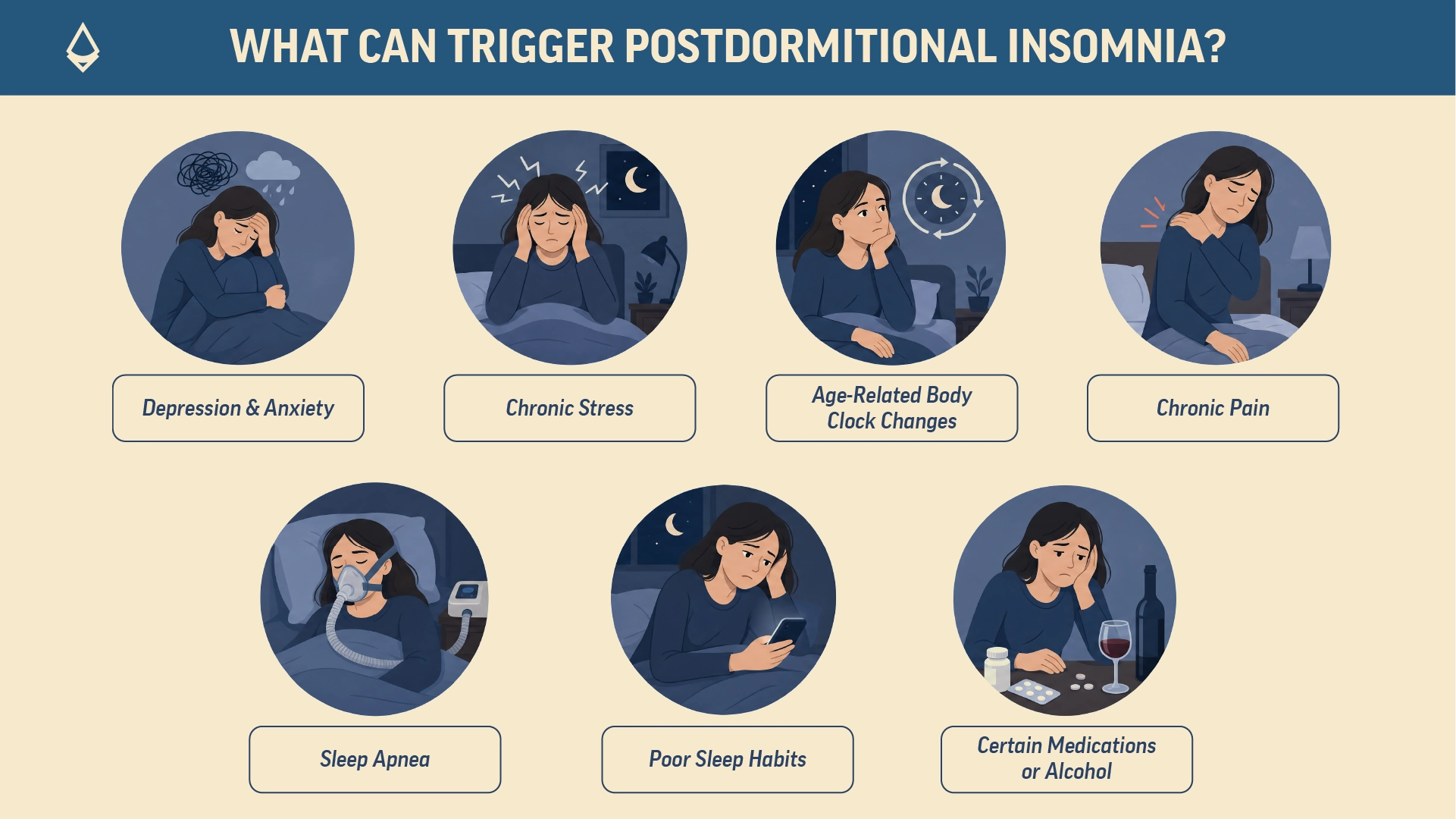
Common causes include:
Depression and other mood disorders
Chronic stress or anxiety
Ageing and changes in the body's internal clock
Chronic pain and other medical conditions
Sleep disorders such as obstructive sleep apnea
Certain medications or excessive alcohol consumption
Irregular sleep schedules and poor sleep hygiene
Can ageing increase the risk of postdormitional insomnia?
Yes. As people age, natural changes in circadian rhythm often lead to earlier sleep and wake times, making early morning awakenings more common.
The body's circadian rhythm naturally increases cortisol levels during the early morning hours to prepare for wakefulness. When this internal clock becomes disrupted, wakefulness may occur much earlier than intended.
What Are the Signs of Postdormitional Insomnia?
Occasional early waking is common and is not usually a cause for concern. However, persistent early morning awakening that occurs several times a week for at least three months and interferes with daily functioning may indicate chronic insomnia.
Common symptoms include:
Waking one to two hours earlier than intended
Difficulty returning to sleep
Feeling unrefreshed despite adequate time in bed
Daytime sleepiness or fatigue
Difficulty concentrating or remembering information
Irritability and mood changes
Reduced work or academic performance
Is Postdormitional Insomnia Linked to Mental Health?
Yes. One of the strongest associations with postdormitional insomnia is depression, where early morning awakening is considered a characteristic symptom. Anxiety, prolonged psychological stress and burnout can also increase brain arousal, making it difficult to resume sleep after waking.
Can stress alone cause early morning awakening?
Yes. Chronic stress can keep the brain in a heightened state of alertness, increasing the likelihood of waking up too early and making it difficult to return to sleep.
However, postdormitional insomnia is not always caused by a mental health condition. Hormonal changes, chronic pain, neurological disorders, certain medications and environmental factors may produce similar symptoms.
How Is Postdormitional Insomnia Treated?
Treatment focuses on identifying and addressing the underlying cause rather than simply increasing sleep duration.
Depending on the individual's condition, management may include:
Cognitive Behavioural Therapy for Insomnia (CBT-I) to improve sleep behaviours and address unhelpful sleep-related thoughts
Treatment of underlying medical or psychiatric conditions
Effective management of chronic pain
Improving sleep hygiene and maintaining a consistent sleep schedule
Short-term use of sleep medications when medically appropriate
Emerging studies are also exploring the role of cannabinoid-based medications in improving sleep quality, particularly among individuals whose insomnia is associated with chronic pain, anxiety, or certain neurological conditions.
What Lifestyle Changes May Help in Postdormitional Insomnia?
Simple, consistent lifestyle measures can support better sleep and complement medical treatment.
These include maintaining regular sleep and wake times, obtaining morning exposure to natural sunlight, limiting caffeine later in the day, avoiding alcohol as a sleep aid, exercising regularly while avoiding intense workouts close to bedtime and creating a cool, dark, quiet sleep environment. If wakefulness persists for more than 20 minutes after an early awakening, leaving the bed to engage in a quiet, relaxing activity before attempting sleep again may be beneficial.
When Should Medical Advice Be Sought?
Medical evaluation is recommended if there is early morning awakening:
Occurs at least three nights a week
Persists for several weeks or months
Causes significant daytime impairment
Is accompanied by symptoms of depression or anxiety
Occurs alongside loud snoring, choking episodes, or breathing pauses during sleep
A healthcare professional or sleep specialist can determine whether an underlying sleep disorder or another medical condition is contributing to the symptoms.
Conclusion
Postdormitional insomnia is more than simply waking up early. When persistent, it can reduce sleep quality, impair cognitive performance and negatively affect physical and mental well-being. Early identification of the underlying cause, combined with appropriate treatment and healthy sleep practices, can significantly improve sleep quality and overall quality of life.
Key Takeaways
- - Postdormitional insomnia is characterised by waking up earlier than intended and being unable to fall back asleep.
- - It is often associated with depression, anxiety, chronic pain, ageing and disruptions in the body's circadian rhythm.
- - Persistent early morning awakening can impair mood, cognitive function and overall daytime performance.
- - Identifying and treating the underlying cause is more effective than relying solely on sleep medications.
- - Maintaining a consistent sleep schedule and healthy sleep habits can significantly improve long-term sleep quality.