

What is Palliative Care in Cancer?



When people hear the word “cancer care,” they often think only about chemotherapy, surgery, radiation, or immunotherapy. But cancer treatment is not just about targeting tumours. It is also about helping patients cope with the physical, emotional and psychological burden that comes with the disease itself.
This is where palliative care plays a crucial role.
In cancer care today, palliative support is increasingly being recognised not as a last resort, but as an essential layer of care that helps patients maintain comfort, dignity and quality of life throughout treatment. Research has also shown that early palliative care may improve symptom control, reduce hospitalisations and help patients tolerate treatment better.
Why Cancer Patients Often Need More Than Disease-Focused Treatment?
Cancer affects much more than one organ or one system. Even when treatment is medically successful, patients may still struggle with symptoms that affect daily functioning and emotional well-being.
Some of the most common challenges include:
Cancer-related pain
Chemotherapy-induced nausea and vomiting
Fatigue and weakness
Sleep disturbances
Anxiety and emotional distress
Appetite loss and weight loss
Neuropathy and nerve discomfort
Difficulty maintaining independence
How can palliative care help during chemotherapy?
Palliative care can help manage side effects like nausea, appetite loss, weakness, pain and emotional stress during treatment with chemotherapy.
In many cases, symptoms may arise not only from the cancer itself, but also from aggressive treatments intended to fight the disease.
Palliative care focuses on reducing this overall symptom burden so that patients are not just surviving treatment, but can live through it with greater comfort and support.
What does “symptom burden” mean in cancer care?
It refers to the overall impact of symptoms like pain, fatigue, nausea, anxiety and sleep disturbances on a patient’s daily life and well-being.
Why is Early Palliative Care Important?
One of the biggest shifts in modern oncology is the move toward introducing palliative care much earlier in the treatment journey.
What does “supportive oncology” mean?
Supportive oncology focuses on helping cancer patients manage physical, emotional and treatment-related challenges alongside medical treatment.
Earlier, supportive care was often introduced only during advanced or terminal stages. Today, many cancer centres integrate palliative care soon after diagnosis for patients with moderate to severe symptoms.
Why Does Early Integration of Palliative Care Matter?
Early integration of palliative care matters because unmanaged symptoms can create a chain reaction:
Poor sleep worsens fatigue
Chronic pain increases stress and anxiety
Appetite loss affects recovery and strength
Emotional distress impacts treatment adherence
Addressing these issues early can significantly improve day-to-day functioning and overall patient resilience. Studies also suggest that receiving early palliative support may result in better quality of life and improved emotional health during treatment.
Why Do Cancer Symptoms Need Holistic Care?
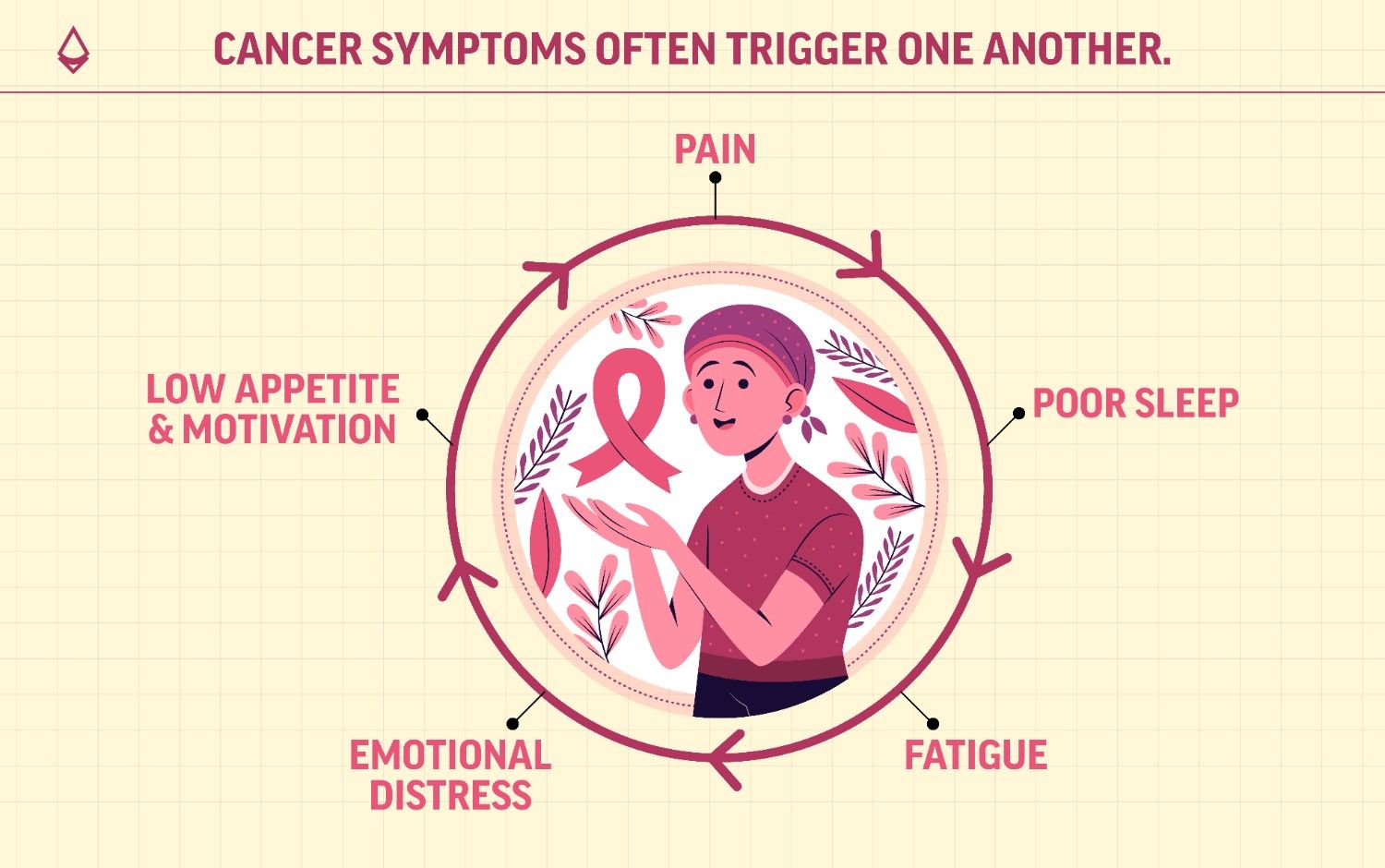
An important concept in palliative oncology is the concept of “symptom clusters.” This means several symptoms often occur together and influence one another.
What are “symptom clusters” in cancer?
Symptom clusters occur when multiple symptoms co-occur and interact, such as pain, poor sleep, fatigue and emotional distress.
For example:
Pain may worsen insomnia
Insomnia may increase fatigue
Fatigue may contribute to depression
Depression may reduce appetite and motivation
Treating only one symptom in isolation may not be enough.
This is why modern palliative care uses a multidisciplinary approach that may involve:
Pain specialists
Nutritionists
Counsellors and psychologists
Rehabilitation experts
Oncology teams
Caregivers and family support systems
The goal is to improve overall functioning rather than simply suppress individual symptoms.
Why Is Emotional Support Important in Cancer Care?
One of the lesser-discussed aspects of cancer is the emotional exhaustion patients often experience.
Many patients struggle with:
Fear of disease progression
Uncertainty around treatment outcomes
Body image changes
Financial stress
Social isolation
Caregiver guilt and dependency concerns
Palliative care addresses these emotional dimensions through counselling, communication support, stress-management strategies and family-centred care planning.
This becomes especially important because emotional distress can directly influence physical symptoms, sleep quality, appetite and even treatment motivation.
What are Supportive Therapies in Palliative Cancer Care?
Palliative care goes beyond medications and may include nutritional support, gentle movement, breathing exercises, relaxation techniques, sleep support and emotional care to improve overall well-being during cancer treatment. In some cases, cannabinoid-based medicines may also be used under medical supervision to help support symptoms like pain, nausea, appetite loss and sleep disturbances.
Why are sleep issues common in cancer patients?
Pain, stress, medications, treatment side effects and emotional distress can all affect sleep quality during cancer care.
Final Thoughts
Modern cancer care is not only about treating the disease, but also about improving quality of life throughout treatment. Palliative care helps patients feel more supported physically, emotionally and functionally during their cancer journey.
Key Takeaways
- - Palliative care helps improve comfort and quality of life during cancer treatment.
- - Early supportive care may help patients manage symptoms more effectively.
- - Cancer-related symptoms often affect both physical and emotional well-being.
- - Holistic care in cancer includes pain management, emotional support, nutrition and rehabilitation.
- - Modern palliative care focuses on supporting the patient, not just treating the disease.