

What Is CBT For Insomnia?



For millions of individuals living with chronic insomnia, bedtime can feel less like a refuge and more like a struggle. Exhaustion builds throughout the day, yet the moment sleep is within reach, racing thoughts, heightened alertness and conditioned stress responses take over, compelling one to stay awake watching the ceiling or clock.
Over time, this cycle can teach the brain to associate the bed with wakefulness and anxiety rather than rest, turning temporary sleeplessness into a persistent problem.
Why does staring at the clock make insomnia worse?
Clock-watching can increase stress and make it harder to fall back asleep. CBT-I often recommends keeping clocks out of sight and relying on a morning alarm instead.
Cognitive Behavioural Therapy for Insomnia (CBT-I) is a structured, skills-based treatment designed to break this cycle by addressing the underlying behaviours and thought patterns that perpetuate insomnia. Rather than simply masking symptoms with medication, CBT-I retrains the brain’s relationship with sleep and restores healthy sleep associations.
Recognised as the first-line treatment for chronic insomnia by leading clinical practice guidelines and supported by high-quality evidence reviews, CBT-I delivers lasting improvements in sleep quality, sleep efficiency and overall well-being. Understanding the long-term recovery process requires a closer look at how chronic sleeplessness establishes this psychological and physiological loop in the first place.
How Chronic Insomnia Begins?
When sleep becomes difficult, the brain can unintentionally create a self-reinforcing cycle:
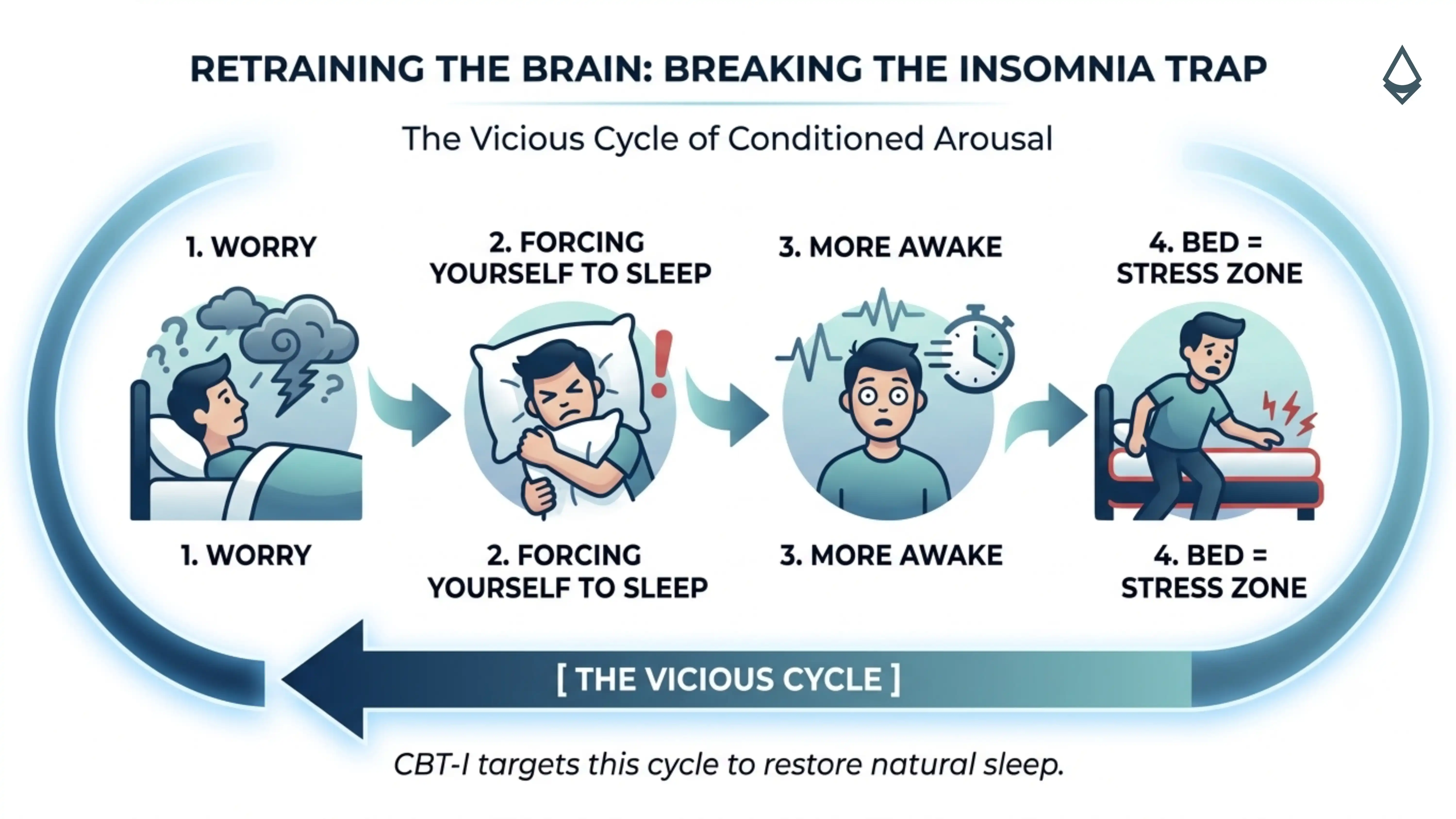
Rather than allowing sleep to occur naturally, effort is often directed toward falling asleep. This heightened effort can signal a sense of threat to the brain, increasing alertness and gradually turning the bed into a trigger for anxiety. CBT-I helps interrupt this cycle, restoring sleep as a natural and automatic process.
Can CBT-I help reduce symptoms of anxiety or depression?
Yes. Research shows that treating insomnia with CBT-I can improve sleep while also supporting better mood and reducing symptoms of anxiety and depression.
Breaking this self-reinforcing loop requires a structured approach built on clinical strategies that target both your daily habits and nightly mindset.
What Are the Five Pillars of CBT?
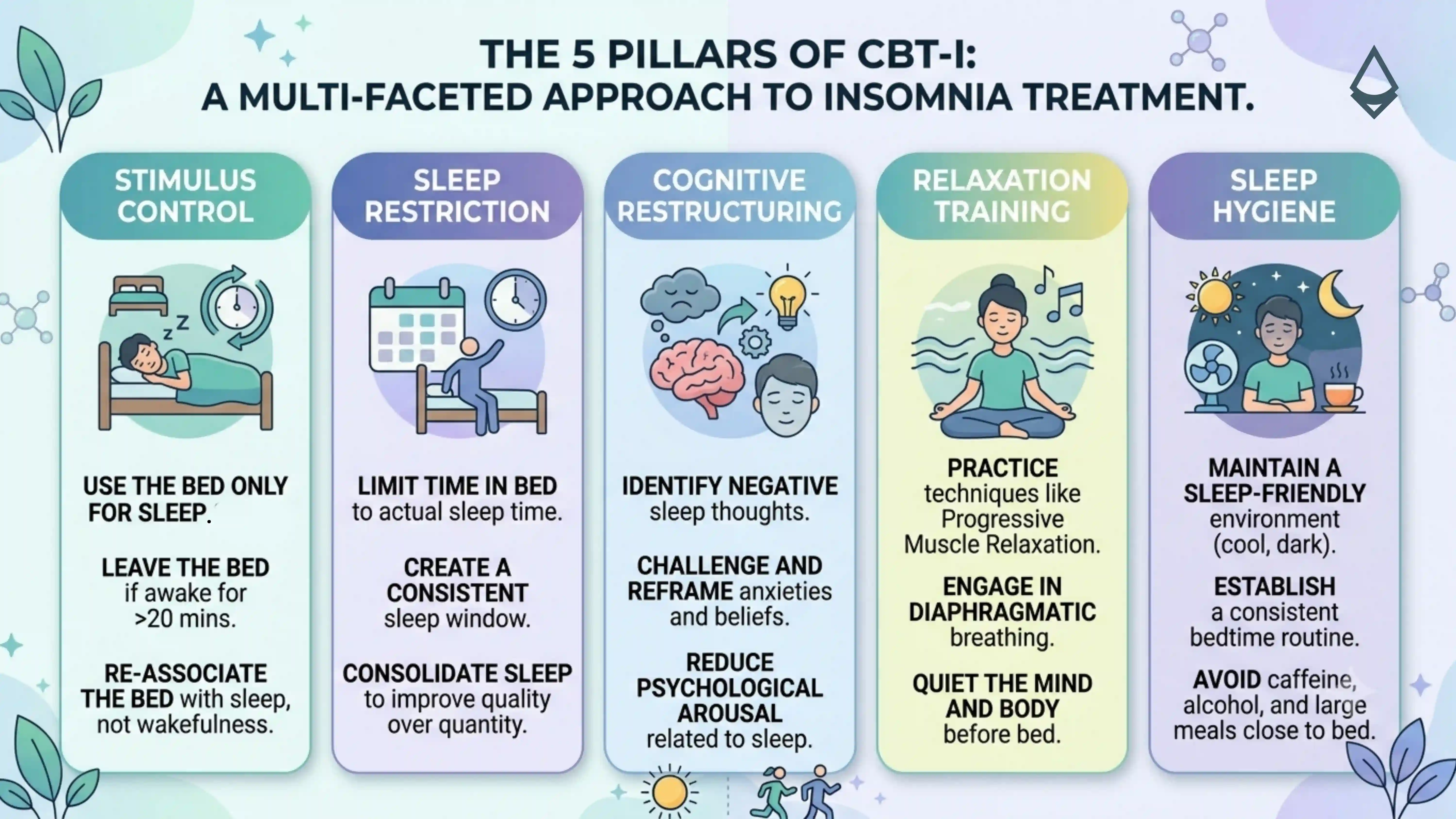
Among these core behavioural components, limiting time spent awake in bed is one of the most powerful tools for consolidating your sleep.
How to Track Sleep Efficiency Progress?
Sleep Efficiency (SE) = Total Sleep Time (TST) ÷ Time In Bed (TIB), expressed as a percentage.
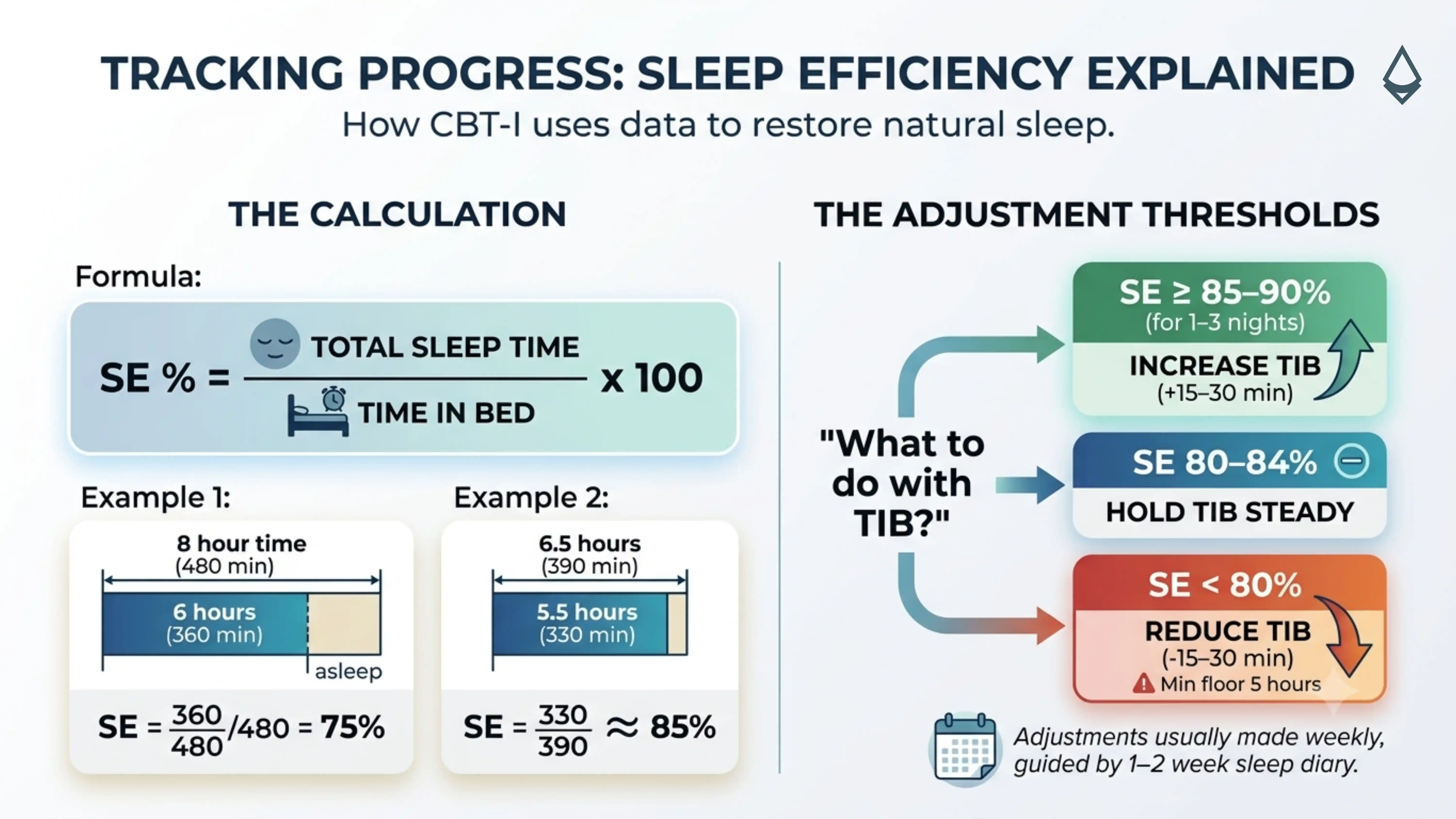
Spending more time in bed than is actually spent sleeping can fragment sleep and reinforce wakefulness in bed. Sleep Restriction Therapy addresses this by using a carefully controlled, time-limited “sleep window,” which helps strengthen the connection between bed and sleep. This approach builds sleep pressure, helping people fall asleep more easily, stay asleep longer and spend less time awake during the night.
While building this strategic sleep pressure serves as a core engine of recovery, implementing it successfully requires the structure of a multi-week clinical roadmap.
Week-by-Week Sleep Roadmap
Session 1: Setting the Baseline:
Sleep patterns are reviewed, a consistent wake-up time is established and an individualised sleep window is created.
Session 2: Breaking the Bed-Stress Connection:
The focus shifts to rebuilding a strong association between the bed and sleep through stimulus control strategies and healthier bedtime habits.
Session 3: Reviewing Progress and Addressing Nighttime Worry:
Sleep efficiency is assessed, the sleep window is adjusted if needed and unhelpful sleep-related thoughts are challenged.
Session 4: Calming the Nervous System:
Relaxation techniques such as deep breathing and progressive muscle relaxation are introduced to reduce physiological arousal.
Session 5: Letting Go of Sleep Perfectionism:
Strategies are developed to manage sleep-related pressure and navigate common disruptions such as stress, illness, or travel.
Sessions 6-8: Expanding the Sleep Window:
As sleep improves, time in bed is gradually increased while reinforcing long-term habits that help prevent relapse.
While finishing this multi-week program establishes lasting habits, it requires a level of commitment that contrasts sharply with the quick-fix approach of sleeping medications.
How to Start a CBT-I Journey?
Access to CBT-I is available through several pathways, with the most suitable option often depending on individual circumstances, budget and location:
In-Person Therapy: A qualified behavioural sleep specialist can provide personalised CBT-I treatment and guidance.
Digital CBT-I (dCBT-I): Online CBT-I programs offer structured, evidence-based treatment that can be as effective as face-to-face therapy.
Self-Help Workbooks: Guided sleep diaries and evidence-based workbooks can help individuals learn and apply core CBT-I techniques.
Can naps be taken during the program?
Naps are generally discouraged during sleep restriction because they can weaken nighttime sleep drive. In some cases, a brief early-afternoon nap may be appropriate under clinical guidance.
Once an entry pathway is selected, these fundamental protocols are tailored to meet the specific biological and lifestyle needs of different populations.
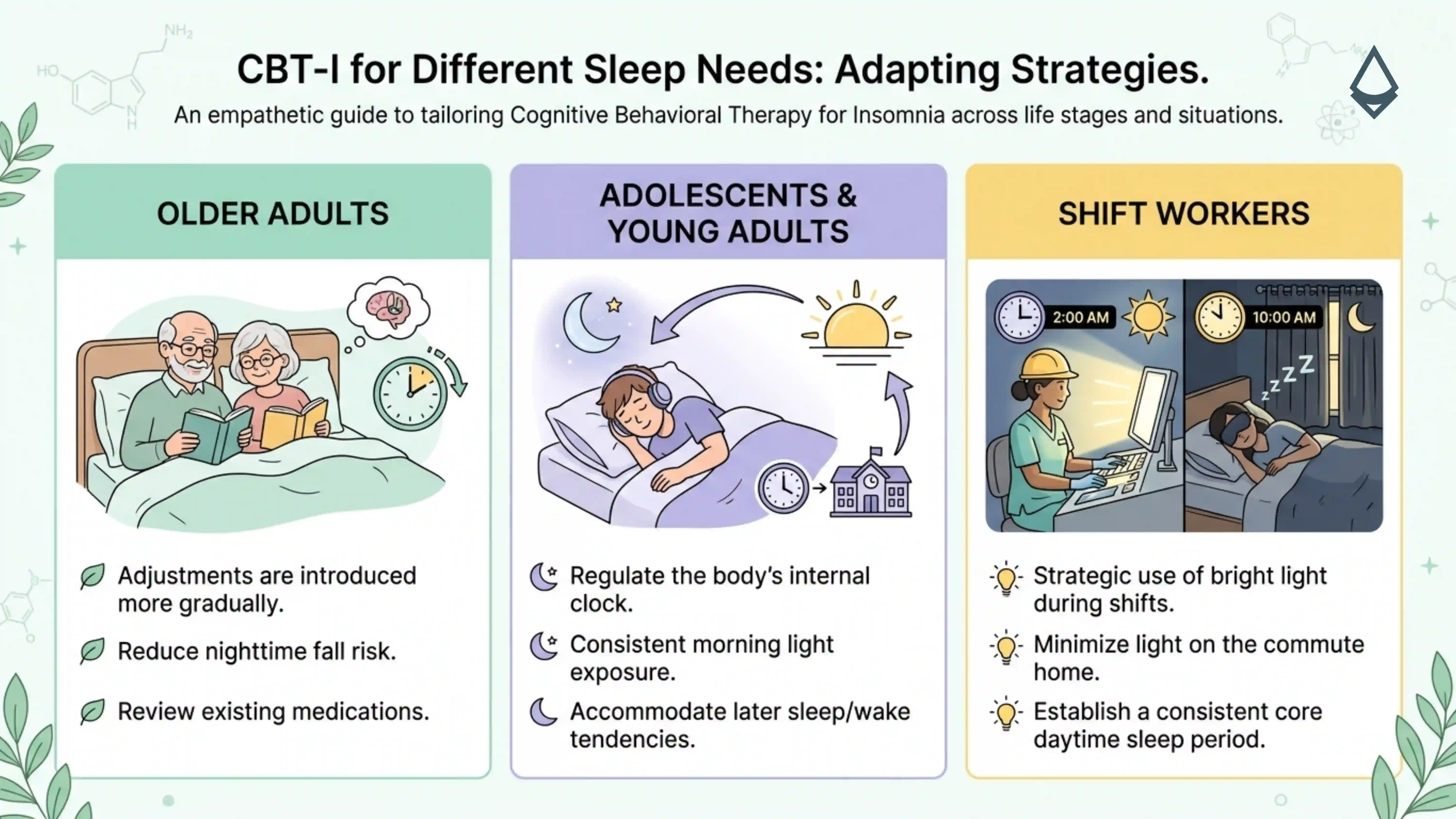
CBT-I for Different Sleep Needs
Sleep patterns and challenges vary across age groups and lifestyles, so CBT-I strategies are often adapted to fit specific circumstances while maintaining the same evidence-based principles.
Conclusion
Chronic insomnia is not simply a matter of poor sleep habits. It is often a learned pattern of heightened arousal that can be reversed through targeted intervention.
In addition, cannabinoid-based medications offer a natural alternative when dealing with sleeplessness or other sleep-related disorders.
With a structured approach, realistic expectations and appropriate clinical guidance when needed, lasting improvements in sleep quality and consistency are achievable.
Key Takeaways
- - CBT-I is an evidence-based treatment that addresses the underlying causes of chronic insomnia rather than simply managing its symptoms.
- - By breaking the cycle of sleep-related anxiety and wakefulness, CBT-I helps restore a healthier relationship with sleep.
- - Its core techniques, including sleep restriction and stimulus control, are designed to improve sleep quality and efficiency over time.
- - Treatment follows a structured, multi-week program that gradually rebuilds healthy sleep habits and resilience.
- - Available through therapists, digital platforms and self-help resources, CBT-I provides a sustainable, medication-free path to better sleep.