

What Are Varicose Veins and Why Do They Develop?


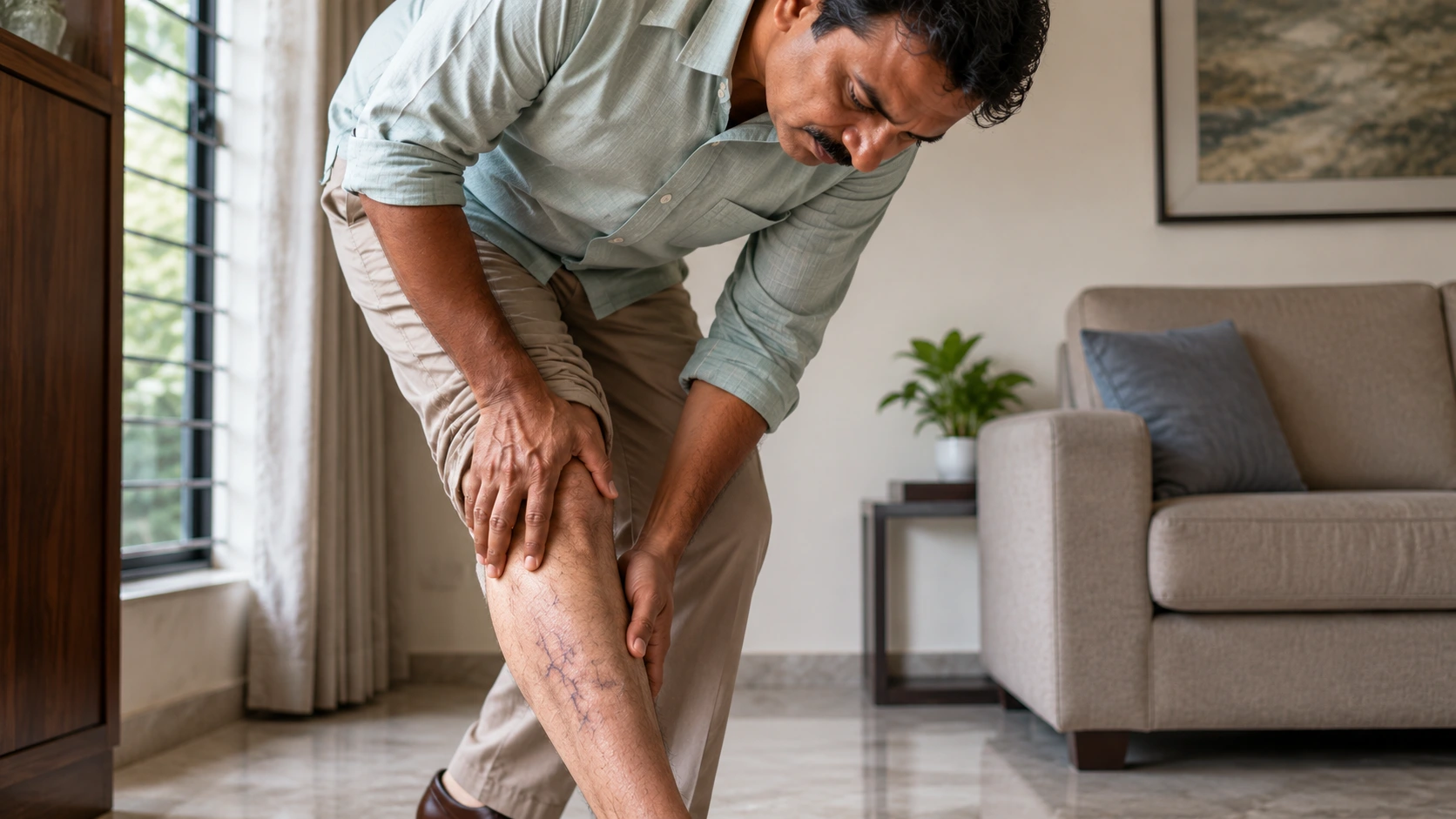
A few prominent veins on the legs may seem like nothing more than a cosmetic concern. But when those veins become twisted, raised or increasingly visible and are also accompanied by aching, heaviness, swelling or itching, they may be signs of varicose veins.
Varicose veins develop when the valves inside the leg veins do not work properly. Instead of moving efficiently back towards the heart, some blood flows backwards and pools in the veins. Over time, the increased pressure can cause the veins to stretch, enlarge and become visible beneath the skin.
While some people have varicose veins without any symptoms, others may experience discomfort or develop complications such as skin changes, inflammation, bleeding or ulcers.
What Do Varicose Veins Look and Feel Like?
Varicose veins typically appear as blue, purple or skin-coloured veins that look twisted, enlarged or cord-like. They are most commonly seen on the thighs, calves and lower legs. Not everyone with visible varicose veins experiences pain.
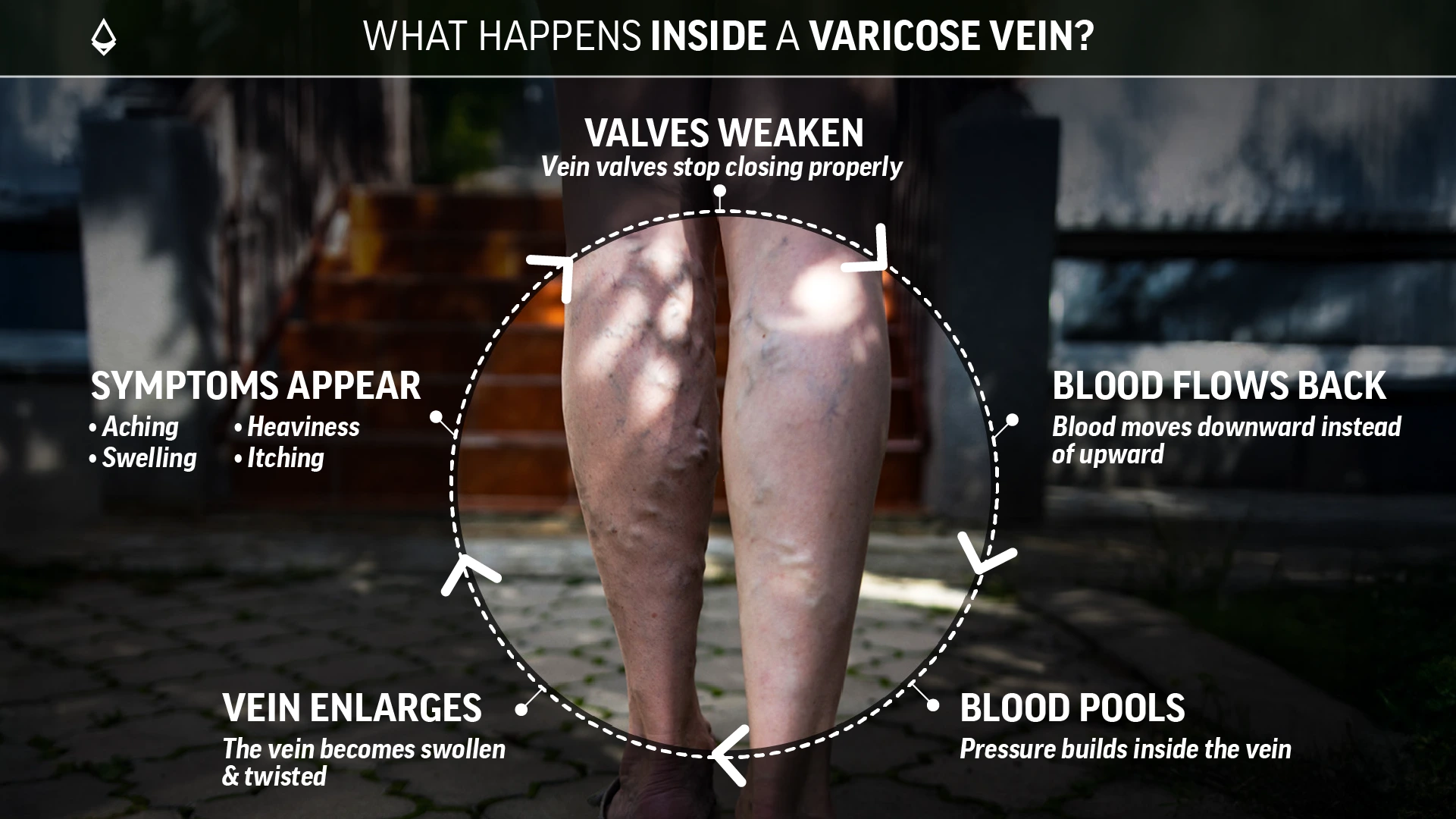
When symptoms occur, they may include:
Aching or throbbing in the legs
A feeling of heaviness or tiredness
Swelling around the ankles or lower legs
Burning or cramping
Itching around the affected veins
Pain that becomes worse after prolonged standing or sitting
Changes in skin colour around the veins
Symptoms can vary throughout the day and may become more noticeable after long periods of standing.
What Causes Varicose Veins in the Legs?
The veins in the legs have one-way valves that help blood move upward against gravity. When these valves become weak or damaged, blood can flow backwards, a process known as venous reflux. The resulting pressure can gradually enlarge the veins.
What is venous reflux in varicose veins?
Venous reflux occurs when faulty vein valves allow blood to flow backwards and pool in the legs instead of moving towards the heart.
Several factors can increase the likelihood of developing varicose veins.
These include:
Increasing age
Family history of varicose veins
Pregnancy and hormonal changes
Excess body weight
Prolonged sitting or standing
Reduced physical activity
Previous problems affecting the veins
The risk generally increases with age, while pregnancy can temporarily increase pressure on the veins and contribute to their enlargement.
What Other Conditions Can Varicose Veins Be Mistaken For?
Not every visible vein, swollen leg or leg pain is caused by varicose veins. Several other conditions can produce similar symptoms.
Spider veins: They are smaller, superficial blood vessels that often appear as red, blue or purple web-like patterns. Unlike typical varicose veins, they are usually much smaller and flatter.
Chronic venous insufficiency: It can cause swelling, heaviness, skin discolouration and ulcers. Varicose veins can be one manifestation of underlying venous disease, but the two terms are not interchangeable.
Superficial thrombophlebitis: It can cause a hard, painful, tender vein with redness and inflammation. This needs assessment because a blood clot may be present.
Deep vein thrombosis (DVT): It can cause swelling and pain in a leg and should not be assumed to be an ordinary varicose-vein symptom. Sudden swelling or pain, particularly when accompanied by breathlessness or chest pain, requires urgent medical attention.
What is the difference between varicose veins and spider veins?
Varicose veins are larger, raised and twisted, while spider veins are smaller, flatter blood vessels that often appear in web-like patterns on the skin.
Leg symptoms can also have non-vascular causes, including muscle, joint or nerve problems. This is why persistent or unusual symptoms should not automatically be attributed to visible varicose veins.
What Problems Can Varicose Veins Cause?
Many varicose veins remain relatively mild, but chronic venous pressure can cause problems over time.
Can varicose veins get worse over time?
Yes. Without appropriate management, venous reflux can progress and may lead to increasing symptoms, swelling, skin changes or ulcers.
Potential complications include:
Leg swelling: Persistent fluid accumulation can cause swelling around the ankles and lower legs.
Skin changes: The skin around the lower leg may become darker, irritated or develop eczema-like changes.
Superficial vein thrombosis: A superficial vein can become inflamed and develop a clot, often producing a hard and painful area.
Venous leg ulcers: Longstanding venous disease can contribute to ulcers, particularly around the ankle, which may be slow to heal.
Bleeding: Veins close to the skin can occasionally bleed, particularly after minor trauma.
Blood clots: Leg pain and swelling can sometimes indicate a deeper clot rather than uncomplicated varicose veins.
These complications are not inevitable, but symptoms that are progressing or accompanied by skin changes should be assessed rather than treated as a purely cosmetic issue.
How Are Varicose Veins Assessed and Diagnosed?
Assessment usually begins with a clinical examination. A healthcare professional may look at the veins while standing and assess the location of visible veins, swelling, skin changes and areas of tenderness. The symptoms and their relationship with standing, walking or prolonged sitting are also important.
When varicose veins are symptomatic, or treatment is being considered, duplex ultrasound is the key diagnostic test. It uses sound waves to assess blood flow through the superficial and deep veins and can identify abnormal backward blood flow, known as reflux. It also helps locate faulty valves and map the affected veins.
What is a duplex ultrasound for varicose veins?
A duplex ultrasound is a non-invasive test that uses sound waves to assess blood flow, identify venous reflux and locate faulty veins.
This assessment is important because treatment depends on which veins are affected and whether significant venous reflux is present.
When Should Varicose Veins Be Medically Evaluated?
Visible varicose veins do not always require treatment. However, medical assessment becomes more important when they are associated with symptoms or complications.
A vascular assessment may be appropriate when there is:
Persistent pain, aching or heaviness
Significant or recurring leg swelling
Itching or skin changes
A hard, painful vein
A leg ulcer that is not healing
Bleeding from a varicose vein
Recurrent varicose veins after previous treatment
Medical advice is also required for symptomatic varicose veins and complications such as skin changes, superficial vein thrombosis, bleeding or venous leg ulcers.
Sudden leg swelling or pain should be assessed promptly, particularly when there is concern about DVT. Chest pain or sudden breathlessness alongside possible DVT symptoms requires urgent medical attention.
How Are Varicose Veins Treated?
Treatment depends on the severity of symptoms, the underlying venous reflux and the findings on duplex ultrasound.
Can varicose veins come back after treatment?
Yes. New varicose veins can develop or previously treated veins can recur, particularly when underlying venous disease persists.
For people with confirmed symptomatic varicose veins and significant truncal reflux, treatment options can include endovenous thermal ablation, such as radiofrequency ablation or laser treatment. If this is unsuitable, ultrasound-guided foam sclerotherapy or surgery may be considered.
Compression stockings may help with symptoms such as swelling and discomfort in selected situations, but they do not correct the faulty vein valves themselves. The appropriate treatment should therefore be determined after clinical and ultrasound assessment.
In addition, cannabinoid-based medications are being used in selected settings for pain management. Where pain management is required, their potential role should be considered by a healthcare professional based on the individual's symptoms, diagnosis and overall treatment plan.
Also watch:
Key Takeaways
- - Varicose veins develop when weakened or damaged valves allow blood to pool in the leg veins.
- - Aching, heaviness, swelling, itching and skin changes can occur alongside visible varicose veins.
- - Not every swollen or painful leg is caused by varicose veins; conditions such as superficial thrombophlebitis and DVT can present differently and require appropriate assessment.
- - Duplex ultrasound is used to confirm venous reflux, assess the affected veins and help plan treatment.
- - Persistent symptoms, skin changes, ulcers, bleeding or sudden leg swelling should not be ignored and may require vascular assessment.