

What Are the Early Signs of Sciatica That Shouldn't Be Ignored?


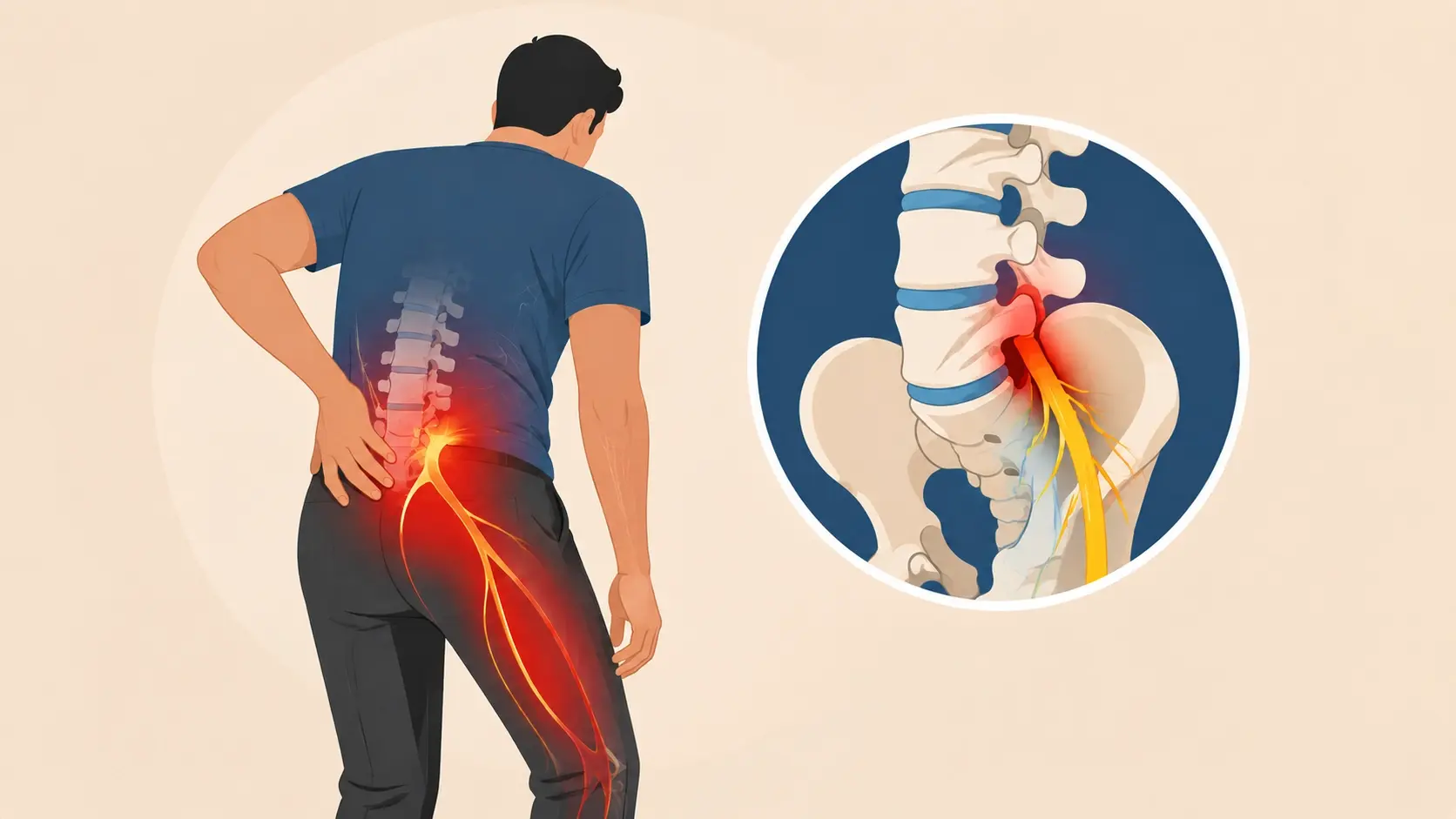
It often starts small. A dull ache in the lower back or buttock, easy to blame on a long day of sitting or an awkward night's sleep. Then, without much warning, it changes character, a sharp, electric pain that travels down the back of one leg, sometimes reaching all the way to the calf or foot.
For many people, this is the first real encounter with sciatica. What begins as mild, forgettable discomfort can, if ignored, settle into a chronic conditioned pain response, in which the nervous system essentially "remembers" the pain pathway and keeps firing it long after the original irritation has subsided. That is why early recognition matters so much.
Is sciatica a disease or a symptom?
Sciatica isn't a standalone disease; it's a symptom. It describes pain that radiates along the sciatic nerve pathway, usually caused by irritation or compression of a nerve root in the lower spine.
How Sciatic Nerve Irritation Begins?
The sciatic nerve is the longest and thickest nerve in the body, formed by nerve roots exiting the spine between the lower back and pelvis. When something disrupts one of these roots, pain travels the entire length of the nerve, not just at the point of origin.
There are two broad mechanisms behind this disruption:
Compression: A structural issue, such as a herniated disc, bone spur, or spinal narrowing, physically presses against the nerve root.
Inflammation: Chemical irritants released from an injured disc inflame the nerve, even without significant physical pressure.
Which leg is usually affected by sciatica?
Sciatica most commonly affects one leg at a time because it usually involves irritation of a single nerve root. Bilateral symptoms are less common and may require further evaluation.
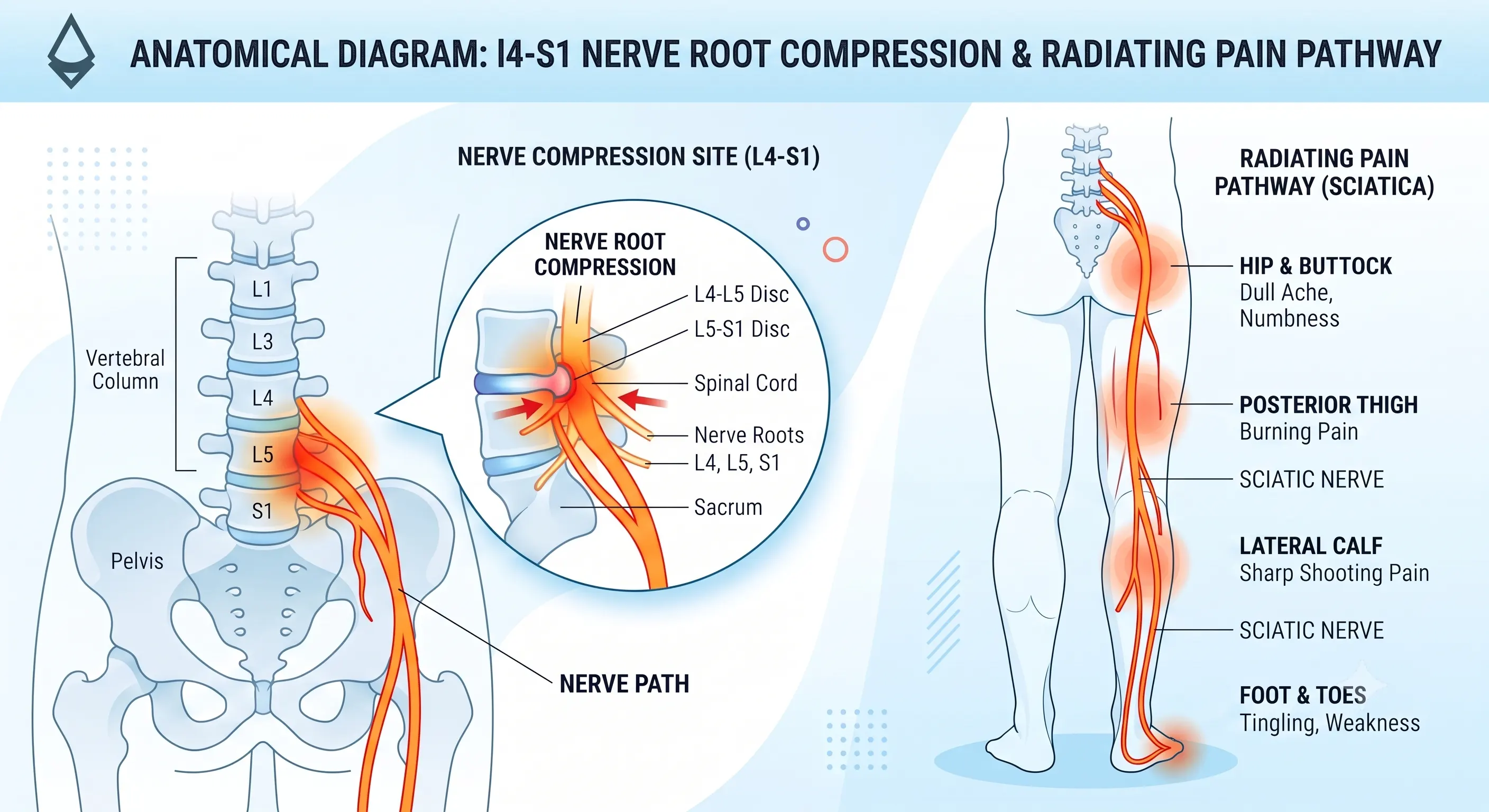
Understanding this distinction matters because compression and inflammation don't always respond to the same interventions. But before addressing the mechanism, the priority is recognition, catching the early signals before nerve compression becomes severe enough to affect strength or function.
What Are the 5 Core Early Signs of Sciatica?
Sciatica rarely announces itself loudly on day one. It tends to build through a specific set of early indicators; recognising them is the first step toward timely intervention.
Unilateral Pain: Pain that affects one side of the lower back, buttock, and leg, rarely both sides at once. This one-sidedness is a hallmark of nerve root involvement rather than generalised muscular strain.
Paresthesia (Tingling or Pins-and-Needles): A tingling, "static" sensation along the leg or foot. In clinical terms, this is paresthesia; simply put, the nerve is misfiring signals as it becomes irritated.
Mechanical Aggravation: Pain that spikes with specific movements, coughing, sneezing, prolonged sitting, or bending forward. These actions increase pressure within the spinal canal, directly stressing an already irritated nerve root.
Muscle Weakness: A feeling that the leg or foot is "giving way," or difficulty lifting the front of the foot (foot drop in more advanced cases). This signals the nerve's motor fibres are being affected, not just its sensory ones.
Burning Sensation: A deep, hot, radiating discomfort distinct from typical muscular soreness. This burning quality often points to nerve-based (neuropathic) pain rather than a simple strain.
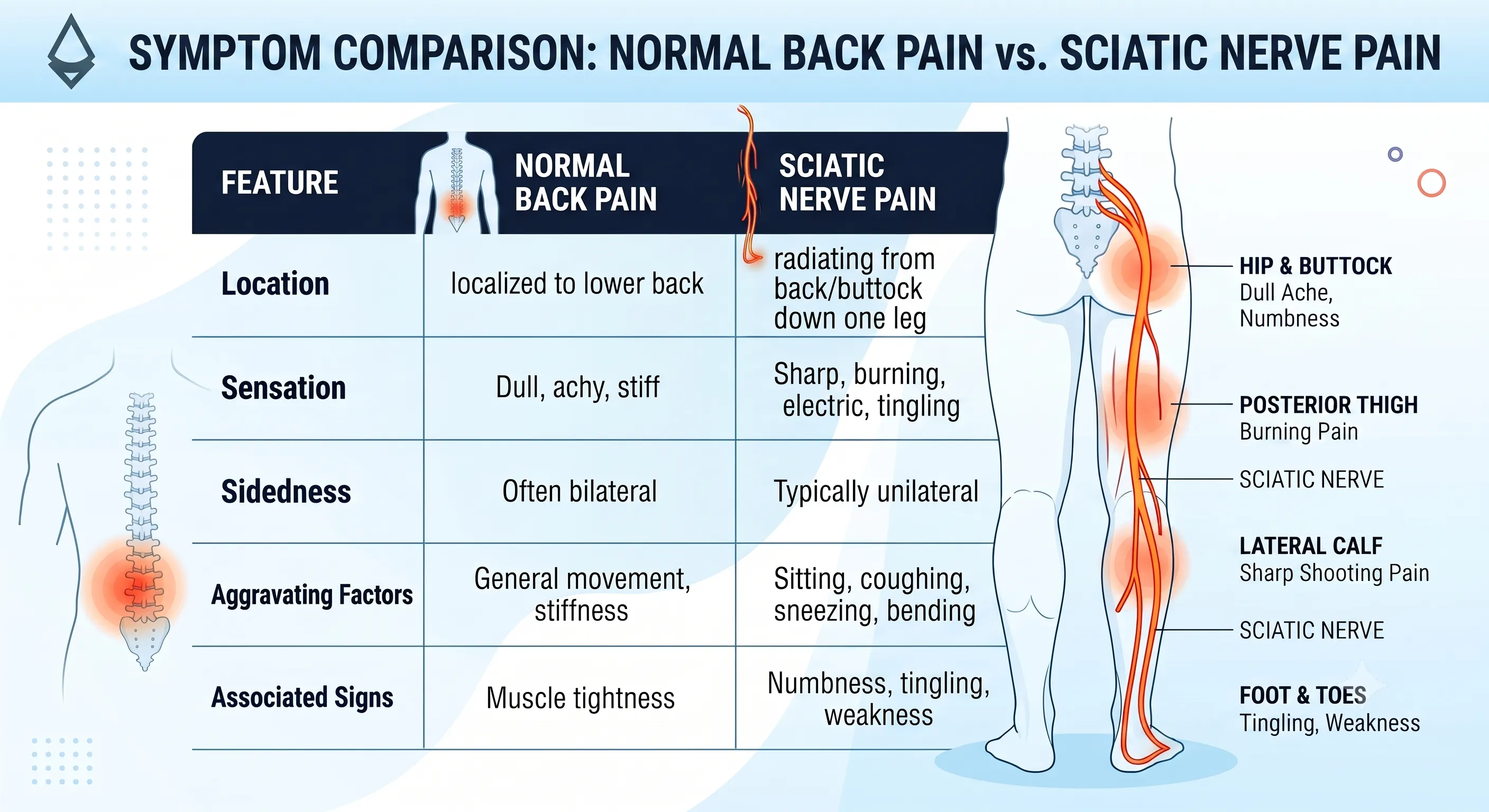
How is sciatica different from ordinary back pain?
Ordinary back pain is usually confined to the lower back, whereas sciatica typically radiates from the lower back or buttock down the leg along the sciatic nerve pathway.
How Does Nerve Pain Progress and How Is It Assessed?
Once early signs are present, the next question is severity: is this simple irritation, or is nerve root compression progressing? Clinicians often use a straightforward physical test to help clarify this.
When should medical attention be sought for sciatica?
Medical evaluation is recommended if symptoms include significant weakness, worsening numbness, loss of bladder or bowel control, or severe pain that does not improve.
Clinical Callout: Straight Leg Raise Test (Lasègue's Sign):
With the patient lying flat, the leg is raised slowly while the knee stays straight. A true positive is when pain radiates between roughly 30° and 60–70° of elevation, reproducing the patient's typical radiating leg pain rather than just tightness in the lower back or thigh. This is a screening tool used alongside a broader clinical exam, not a standalone diagnosis.
Medical evaluation is recommended if symptoms include significant weakness, worsening numbness, loss of bladder or bowel control, or severe pain that does not improve.
Can sciatica clear up on its own?
Often, yes. Most cases resolve within a matter of weeks with no long-term complications, even without medical treatment. More severe cases, especially those involving neurological symptoms like numbness or weakness, tend to take longer and are more likely to need active management.
What Does a Week-by-Week Recovery Roadmap for Sciatica Look Like?
Recovery isn't instant, but it typically follows a predictable arc when managed proactively.
Acute Phase (0-2 Weeks): Focus on pain reduction, relative rest (not complete bed rest), gentle movement, anti-inflammatory support, and avoiding positions that aggravate the nerve.
Subacute Phase (2-6 Weeks): Gradual reintroduction of mobility, walking, nerve-gliding stretches and posture correction to reduce mechanical stress on the nerve root.
Rehabilitation & Maintenance (6+ Weeks): Core and hip-stabilising strength work, ergonomic adjustments and long-term habit changes to prevent recurrence.
The key theme across all three phases: progressive, not passive, management.
How Can Sciatica Be Managed Across Different Lifestyles?
Sciatica doesn't affect everyone the same way; daily habits shape both the risk and the recovery strategy.
Sedentary Corporates: Prolonged sitting increases disc pressure and nerve root stress. Frequent micro-breaks, lumbar support, and standing-desk intervals make a meaningful difference.
Athletes & Active Individuals: Overuse, poor lifting mechanics, or sudden increases in training load can trigger nerve irritation. A gradual return to activity with proper form correction is essential.
Older Adults: Age-related changes such as spinal narrowing or disc degeneration mean symptoms may develop more gradually. Consistent, low-impact movement and monitoring for progressive weakness are especially important here.
Can prolonged sitting make sciatica worse?
Yes. Extended periods of sitting can increase pressure on the lower spine and aggravate an irritated sciatic nerve, particularly when posture is poor.
Conclusion
Sciatica symptoms are the body's early warning system, and they respond far better to timely, structured attention than to passive waiting. In addition to conventional therapies, cannabinoid based medications are also emerging as a natural method to deal with chronic pain and provide relief naturally and should be taken under the guidance of a healthcare expert.
Recognising the shift from a dull backache to true nerve involvement is the single most valuable thing a person can do for long-term recovery.
Key Takeaways
- - Management should be tailored to lifestyle; sedentary workers, athletes and older adults each need a slightly different approach.
- - Simple clinical tests, like the Straight Leg Raise, can help flag nerve involvement early.
- - The 5 core early signs are unilateral pain, tingling (paresthesia), mechanical aggravation, muscle weakness, and a burning sensation.
- - Sciatica is a symptom, not a standalone disease; it signals irritation or compression of the sciatic nerve root.
- - Recovery generally follows a 0-2, 2-6, 6+ week phased roadmap: acute care, mobility restoration and long-term strengthening.