

What Are the Early Signs and Symptoms of Carpal Tunnel Syndrome?


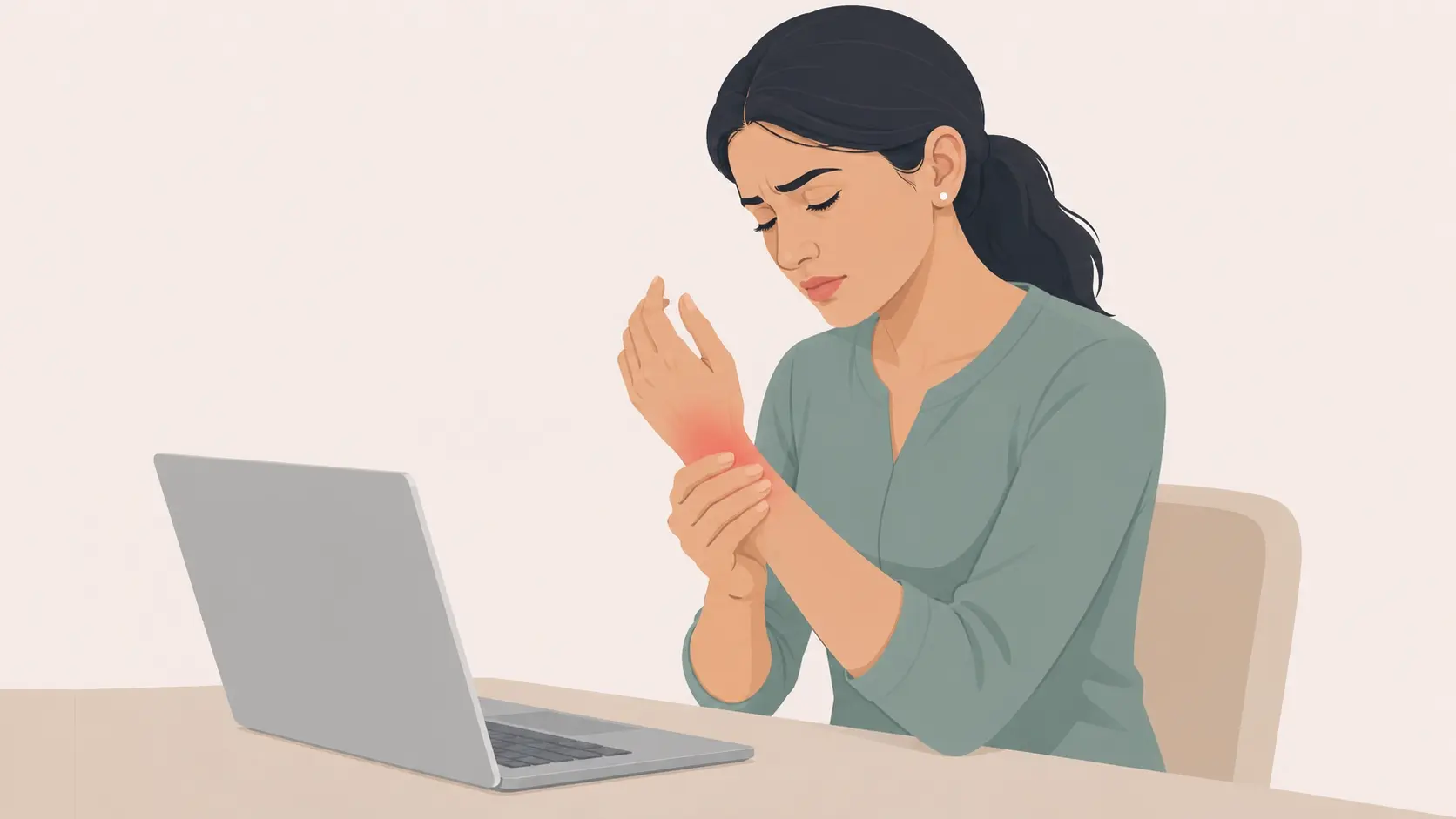
Carpal tunnel syndrome rarely announces itself with a dramatic injury. Instead, it tends to creep in quietly: a burst of tingling in the fingers that fades by morning, an odd numbness after a long drive, a hand that feels "asleep" for no clear reason. Because these episodes are brief and often dismissed as minor annoyances, many people ignore them for months. Left unaddressed, however, ongoing compression of the median nerve can progress from occasional discomfort to permanent sensory loss and muscle wasting at the base of the thumb.
Recognising the earliest signals is therefore not a matter of comfort alone; it is a window for intervention before nerve damage becomes irreversible. While recognising these initial symptoms is crucial, understanding why they occur requires a look at the unique anatomy of the wrist and the path of the median nerve.
Is carpal tunnel syndrome permanent?
No, not usually. Early treatment with splints or modified activity often fully resolves symptoms. However, leaving severe nerve compression untreated can cause permanent numbness or muscle weakness.
Why Is the Median Nerve Vulnerable?
The carpal tunnel is a narrow passageway on the palm side of the wrist, bordered by small wrist bones (the carpal bones) on the bottom and sides and a tough band of connective tissue called the transverse carpal ligament on top. Through this confined space run nine tendons that bend the fingers, along with the median nerve, the structure responsible for sensation in the thumb, index finger, middle finger and the thumb-side half of the ring finger. Notably, the little finger is supplied by a different nerve entirely and is typically spared.
Two overlapping mechanisms usually drive carpal tunnel syndrome:
Mechanical compression - Repetitive wrist motion, sustained flexion or extension, or direct pressure narrows the already-tight tunnel and squeezes the nerve against surrounding structures.
Synovial tissue inflammation and swelling - The tendon sheaths (synovium) that line the tunnel can thicken or swell from overuse, fluid retention, or inflammatory conditions, reducing the space available for the nerve.
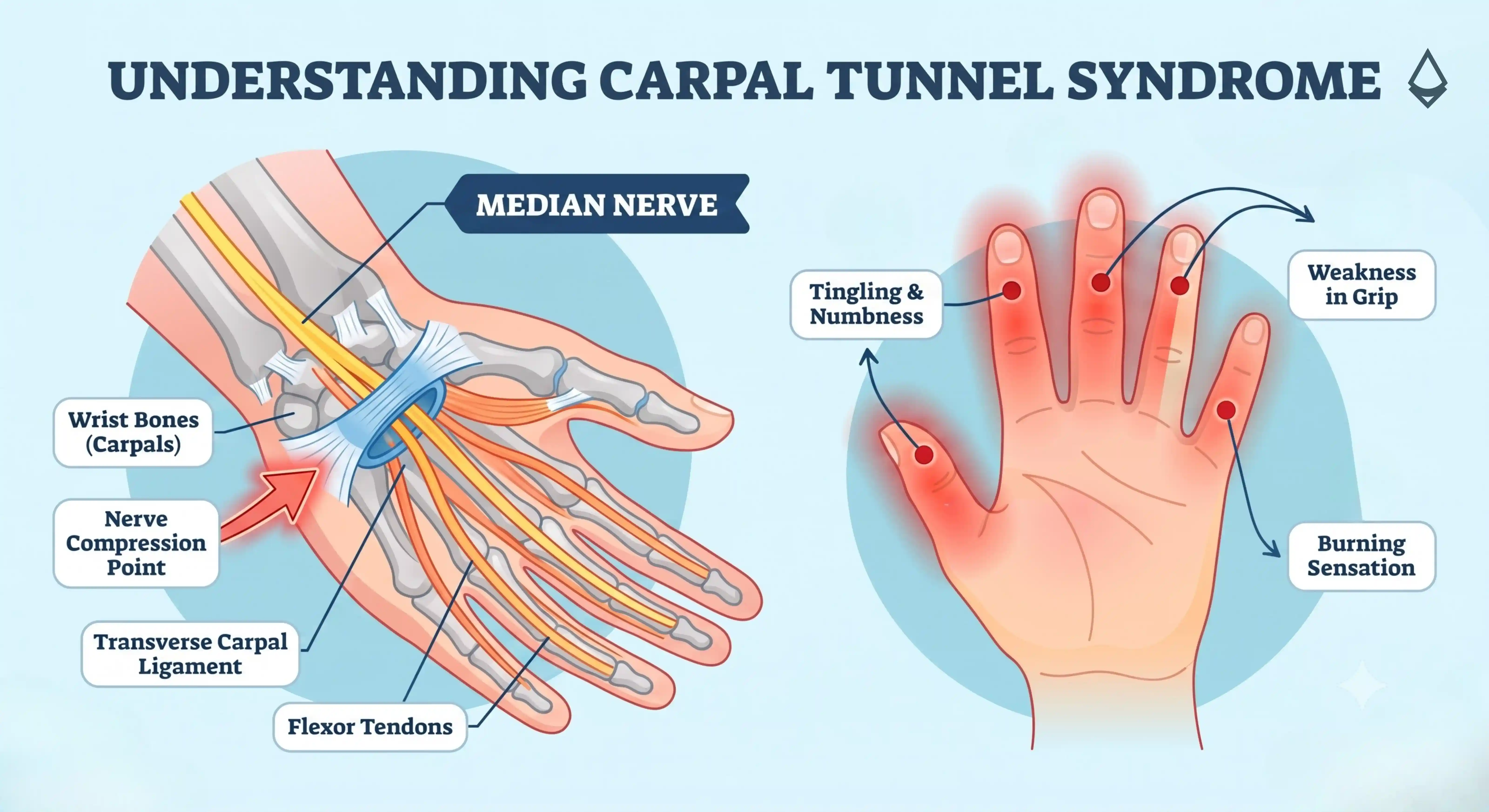
Because this narrow pathway is easily compromised, compression shows up as a distinct set of early indicators one shouldn't ignore.
What are the 5 early warning signs of Carpal Tunnel Syndrome?
Nighttime Paresthesia and Numbness - Tingling or numbness in the thumb, index and middle fingers that wakes a person from sleep is one of the most characteristic early markers, often linked to wrist flexion during rest.
The "Flick Sign" - Needing to Shake the Hand - Many people instinctively shake or flick the wrist to relieve numbness, especially at night; this is a well-documented, clinically recognised early indicator.
Clumsiness and Micro-Grip Weakness - Subtle difficulty with fine motor tasks, buttoning a shirt, holding a pen, or gripping small objects can appear before pain becomes prominent.
Radiating Forearm Discomfort - Aching or a dull ache that travels from the wrist up into the forearm can accompany early nerve irritation, distinct from localised wrist strain.
Subtle Sensory Changes in the Fingers - Some individuals notice the affected fingers feel slightly different to the touch, less precise, or less responsive than usual before numbness becomes constant.
While clinical tests can detect early shifts in temperature or pain sensitivity, most people only notice these changes once symptoms become more frequent. It serves as a subtle clue rather than an obvious warning sign.
What Are the Provocative Tests for Carpal Tunnel Syndrome?
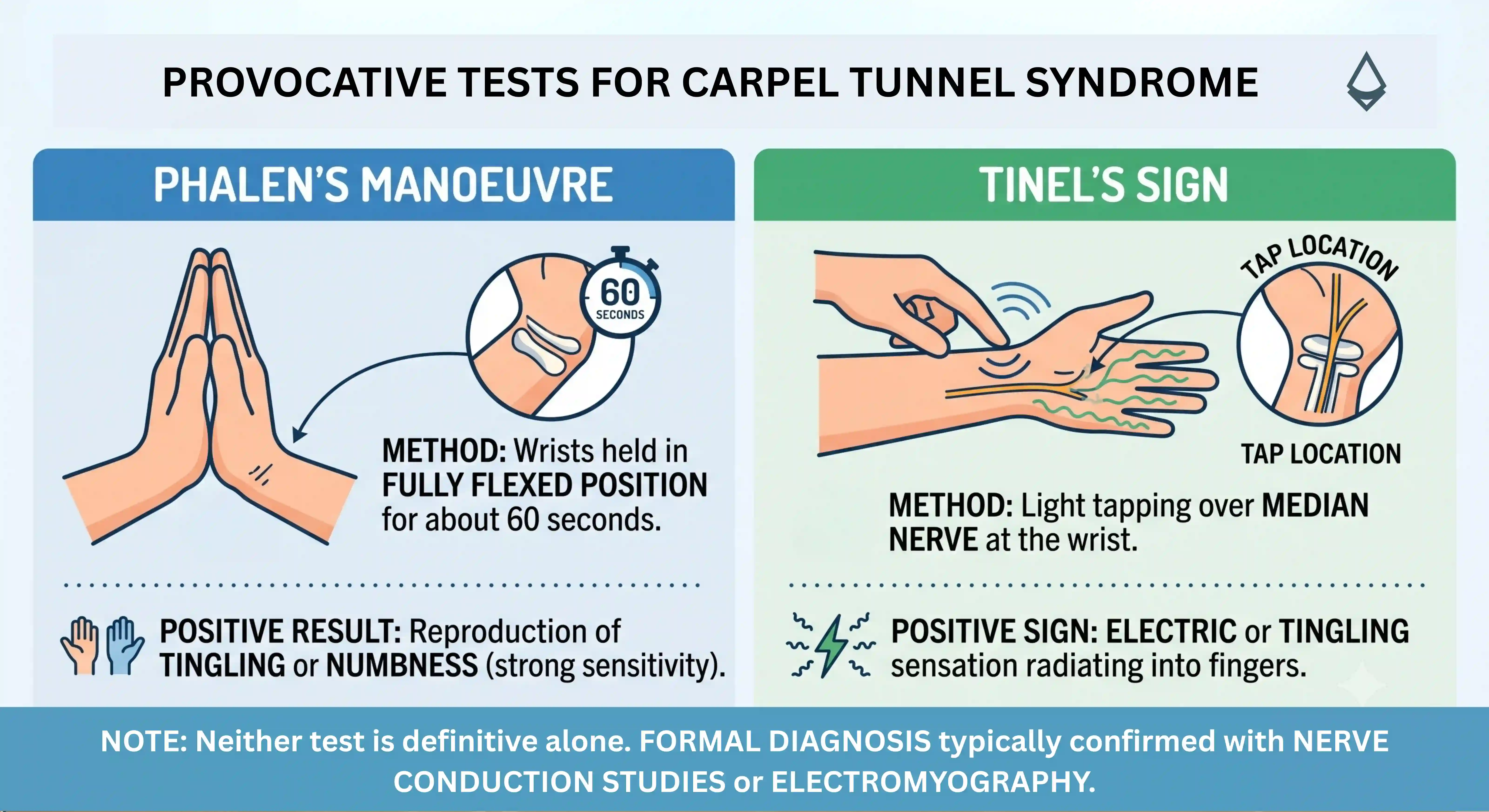
Clinicians commonly use two hands-on tests to help identify median nerve compression:
Phalen's Manoeuvre - The wrists are held in a fully flexed position for about 60 seconds; reproduction of tingling or numbness suggests a positive result. Research indicates this test carries relatively strong sensitivity when held for a full minute.
Tinel's Sign - The examiner lightly taps over the median nerve at the wrist; an electric or tingling sensation radiating into the fingers indicates a positive sign. Neither test is definitive on its own and formal diagnosis is typically confirmed with nerve conduction studies or electromyography.
Can carpal tunnel symptoms affect both hands?
Yes. Symptoms usually start in the dominant hand, but frequently spread to both, especially if driven by repetitive motion, hormonal changes, or conditions like diabetes.
Once these physical signs are recognised, evaluating daily workplace habits and repetitive wrist movements becomes the critical next step in managing early pressure on the nerve.
Lifestyle and Ergonomic Management
Management strategies differ depending on daily activity demands:
Desk and Corporate Workers - Prolonged keyboard and mouse use with a bent wrist increases mechanical strain. Ergonomic adjustments such as neutral wrist positioning, wrist rests and scheduled micro-breaks are recommended workplace interventions.
Assembly and Manual Labourers - Highly repetitive, forceful, or vibration-heavy tasks are associated with elevated occupational risk. Key mitigation measures include job rotation, vibration-dampening tools and reduced repetition.
Pregnant or Hormonal Individuals - Hormonal changes and fluid buildup during pregnancy, particularly in the third trimester, can raise pressure within the carpal tunnel; symptoms typically ease after childbirth and splinting or rest is generally preferred over surgery during pregnancy.
By pairing these targeted ergonomic adjustments with proactive daily habits, individuals can protect nerve function and support long-term wrist health.
Conclusion
Recognising these early warning signs allows individuals to take proactive steps, such as adjusting daily wrist ergonomics, taking regular breaks and resting the joint, before discomfort interferes with their routine. For targeted relief during recovery, many people also apply topical cannabinoid-based medications directly onto the affected wrist to manage localised pain naturally alongside lifestyle adjustments. But these should be used under the guidance of a medical expert. If symptoms persist or begin to disrupt daily tasks, consulting a healthcare professional is the best next step to protect long-term nerve health.
Also watch:
Key Takeaways
- - Early carpal tunnel syndrome often shows up as nighttime numbness and tingling in the thumb, index and middle fingers.
- - The median nerve does not supply the little finger, which helps distinguish CTS from other nerve- or spine-related conditions.
- - The "flick sign," subtle grip weakness and radiating forearm discomfort are frequently overlooked early indicators.
- - Phalen's manoeuvre and Tinel's sign are common bedside tests, though formal diagnosis relies on nerve conduction studies.
- - Ergonomic changes and early conservative care are most effective before symptoms become constant or muscle wasting develops.