

What Are the Best Herbs for Pain Management?


Pain is the body's alarm system. Nerves carry signals from injured or irritated tissue to the brain, which interprets them as discomfort. Short-term pain protects the body, while long-term pain can persist well after the original trigger has settled.
Inflammation, oxidative stress, muscle tension and heightened nerve sensitivity all influence how severe and long-lasting pain feels. Herbs have been used in Ayurvedic, European and other traditional systems for centuries to support comfort and movement. Several remain in use today because their active compounds act on these same biological processes.
What Biological Processes Influence Pain?
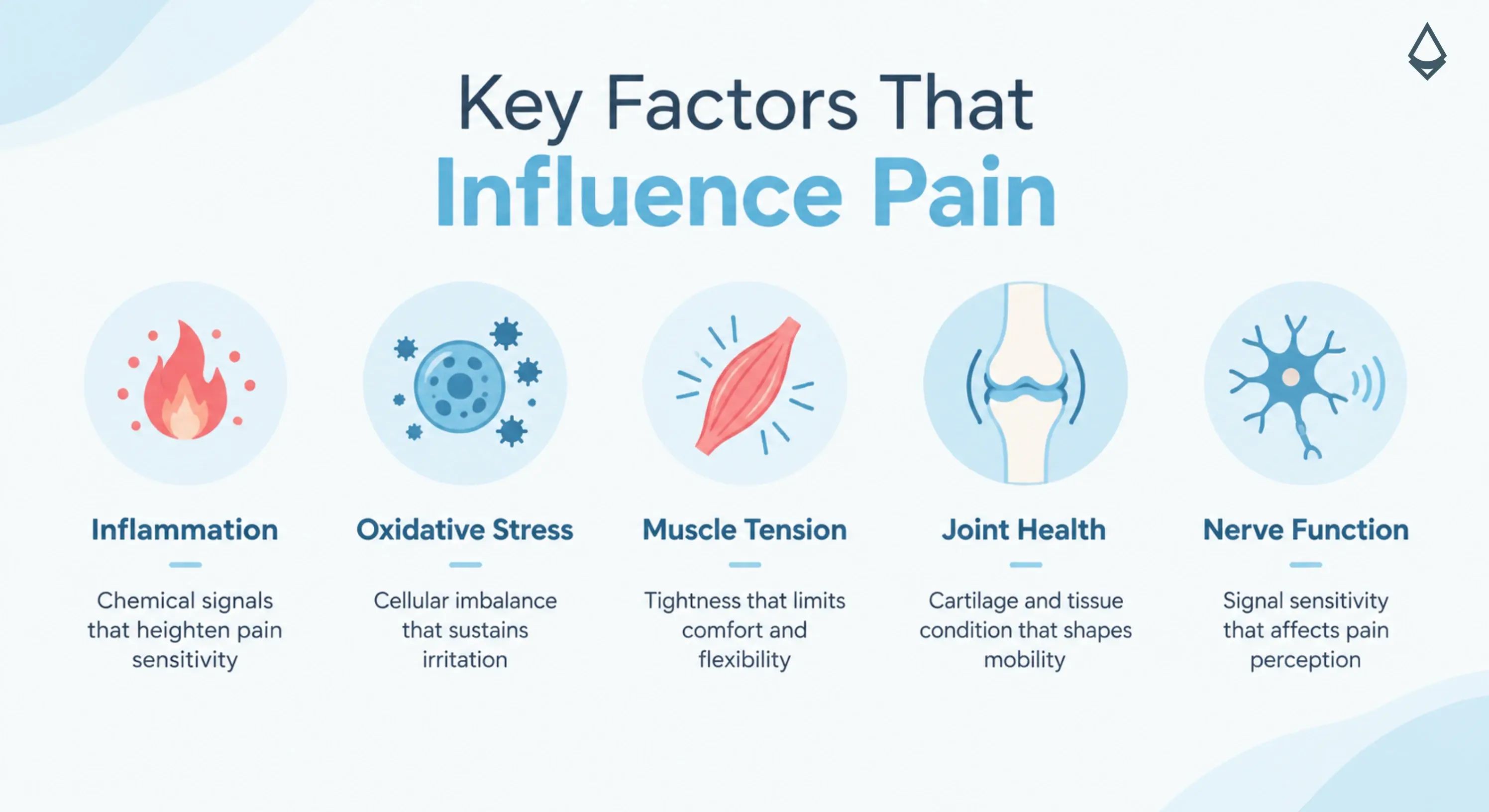
Several overlapping processes shape the pain experience:
Inflammation: The immune response to injury or irritation releases chemical messengers that sensitise nearby nerves and cause swelling and stiffness.
Oxidative stress: An imbalance between free radicals and antioxidants can damage tissue and sustain inflammatory signaling.
What are free radicals and antioxidants?
Free radicals are unstable molecules that can damage cells. Antioxidants help neutralise free radicals and protect cells from oxidative damage.
Muscle tension: Sustained contraction limits blood flow and produces aching and reduced flexibility.
Joint degeneration: Gradual wear of cartilage and surrounding tissue leads to stiffness and discomfort with movement.
Nerve sensitivity: Irritated or overactive nerves can send pain signals with little or no tissue damage.
Which Herbs Are Commonly Used for Pain Management?
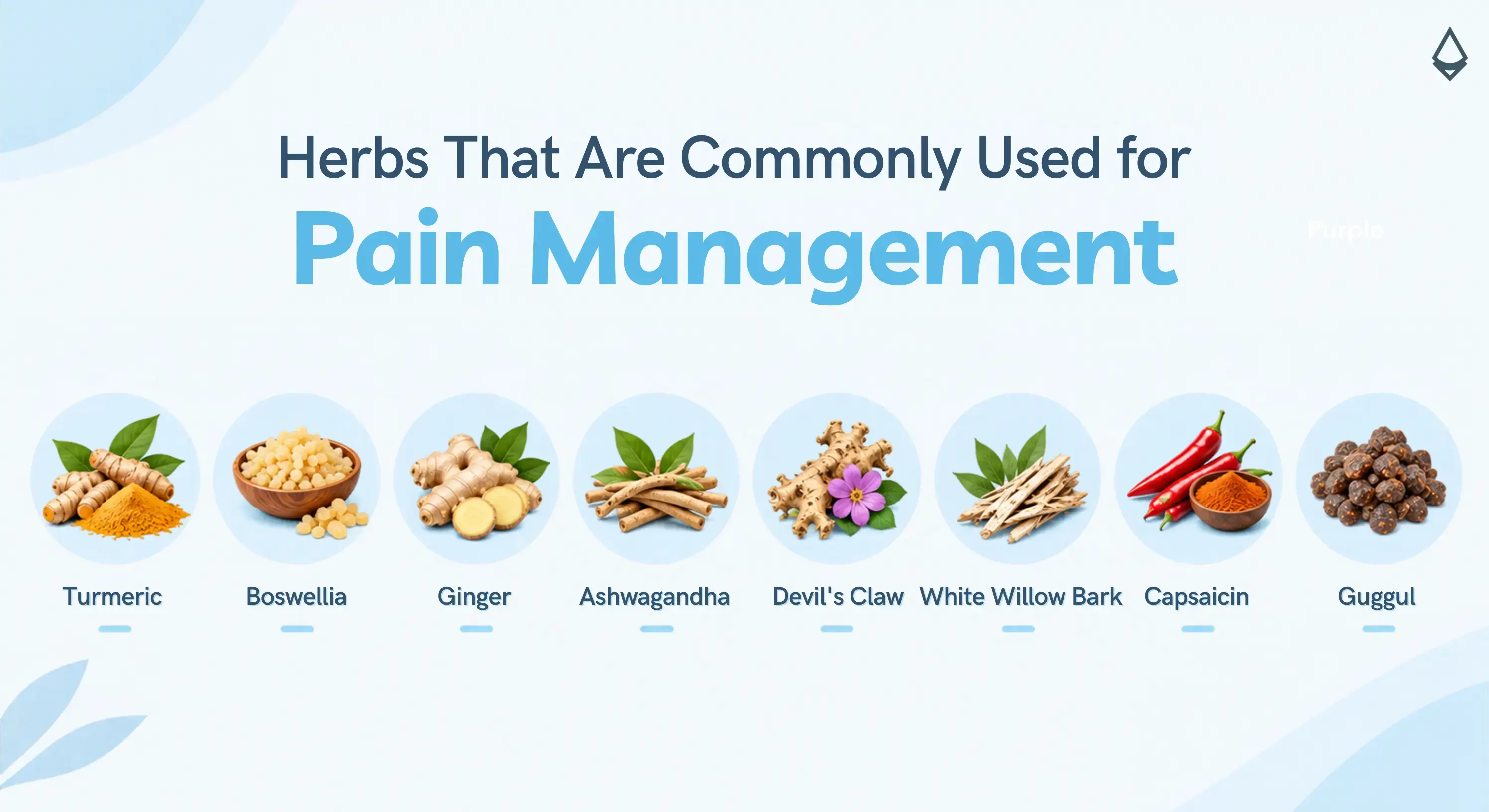
Turmeric
Its key compounds are curcuminoids, especially curcumin.
These influence inflammatory signalling and provide antioxidant activity.
It is commonly associated with joint discomfort and exercise-related soreness.
Curcumin helps modulate inflammatory pathways and provides antioxidant support.
Boswellia
This resin contains boswellic acids, which influence enzymes involved in inflammatory pathways.
It is commonly associated with joint stiffness and mobility in osteoarthritis.
Boswellic acids may help regulate inflammatory processes linked to joint discomfort and stiffness.
Ginger
Gingerols and shogaols give ginger its pungency and its inflammation-modulating activity.
It is often used for muscle soreness after exertion, joint discomfort and menstrual cramps.
Ginger compounds may influence inflammatory signalling and provide antioxidant activity.
What are gingerols and shogaols?
Gingerols and shogaols are bioactive compounds in ginger that contribute to its pungency and anti-inflammatory activity.
Ashwagandha
Withanolides are its main active constituents.
This adaptogenic herb is associated with stress regulation, which may help with stress-related muscle tension and support sleep and recovery.
By supporting the body's stress response, ashwagandha may help ease tension associated with stress and support recovery.
Devil's Claw
This southern African root contains iridoid glycosides, notably harpagoside.
What is harpagoside?
Harpagoside is an iridoid glycoside, a bioactive compound found in devil’s claw.
It has traditionally been used for low back pain and osteoarthritis-related joint discomfort.
Harpagoside and other compounds may influence inflammatory pathways associated with joint and musculoskeletal discomfort.
White Willow Bark
The body converts salicin into salicylic acid, a compound related to aspirin.
Flavonoids and polyphenols also contribute antioxidant activity.
White willow bark is commonly used for low back pain and joint discomfort.
Salicin influences pain and inflammatory signalling, while other compounds provide antioxidant activity.
Capsaicin
Capsaicin is applied to the skin.
It acts on TRPV1 receptors in sensory nerves and repeated use can reduce the transmission of pain signals.
What are TRPV1 receptors?
TRPV1 receptors are sensory nerve receptors that detect heat and painful stimuli.
It is associated with nerve-related discomfort, as well as muscle and joint aches.
Capsaicin changes pain signalling in sensory nerves and with repeated topical use, can reduce pain signal intensity.
Guggul
This resin contains guggulsterones, including E and Z forms.
What are E and Z forms?
E and Z forms are two structural forms of guggulsterones with slightly different molecular arrangements.
It has a long history in Ayurveda for joint conditions and is associated with joint stiffness and comfort.
Guggul contains guggulsterones, compounds with anti-inflammatory properties that help support joint comfort.
How Can Herbs Fit Into a Broader Pain Management Approach?
Herbs are typically used as one part of a wider routine rather than a standalone solution. Common complementary elements include:
Physical activity: Regular, moderate movement maintains joint range and muscle strength.
Physiotherapy: Guided exercises and manual techniques address posture, mechanics and gradual recovery.
Sleep: Restorative sleep supports tissue repair and lowers pain sensitivity.
Stress management: Relaxation practices, breathing exercises and mindfulness reduce muscle tension and nervous system reactivity.
Balanced nutrition: Diets rich in vegetables, fruit, whole grains and healthy fats supply nutrients that support tissue health.
Herbs can interact with medications, and some may not be suitable for certain people. White willow bark, for example, is chemically related to aspirin, while capsaicin can irritate the skin and mucous membranes. Other natural approaches, including cannabinoid-based products, may also be explored as part of a broader pain-management approach. A qualified healthcare professional should be consulted before starting any herbal or cannabinoid product, particularly during pregnancy, with existing health conditions, or alongside prescribed medication.
Conclusion
Herbs may support pain management by influencing processes such as inflammation, oxidative stress, muscle tension and nerve sensitivity. However, their role is best understood as part of a broader approach rather than a replacement for appropriate medical care.
Combining complementary strategies such as regular movement, physiotherapy, adequate sleep, stress management and balanced nutrition can support recovery, comfort and mobility. Choosing any herbal or natural product should also take individual health needs, potential interactions and professional guidance into account.
Also watch:
Key Takeaways
- - Herbs such as turmeric, boswellia and ginger may help manage pain and inflammation.
- - Different herbs support pain management through distinct biological mechanisms.
- - Their potential benefits vary depending on the herb, condition and individual.
- - Combining herbal approaches with movement, physiotherapy and quality sleep can support recovery.
- - Professional guidance helps ensure safe use and reduces the risk of medication interactions.