

What are Sleep Disturbances and How to Fix Them?



Sleep is one of the most important pillars of health, yet millions of people struggle to get enough restorative sleep. Sleep disturbances are not limited to insomnia alone. They include difficulties falling asleep, staying asleep, waking up too early, experiencing poor sleep quality, or feeling tired despite getting enough hours of sleep.
Modern lifestyles have created the perfect environment for disrupted sleep. Increased screen time, chronic stress, irregular work schedules, poor dietary habits and reduced exposure to natural daylight have all contributed to a growing sleep crisis. Identifying the underlying cause of sleep disturbances is often the first step toward improving them.
What Exactly Are Sleep Disturbances?
Sleep disturbances refer to any condition or habit that interferes with normal, restorative sleep. They may occur occasionally due to stress or travel, or become chronic and significantly affect daily life.
Some common types of sleep disturbances include:
Frequent awakenings during the night
Excessive daytime sleepiness
Circadian rhythm disorders
Parasomnias such as sleepwalking or night terrors
What is sleep apnea?
Sleep apnea is a sleep disorder characterised by repeated pauses in breathing during sleep, often leading to poor sleep quality and daytime fatigue.
While occasional sleep problems are common, persistent disturbances can affect physical, emotional and cognitive health.
What Causes Sleep Disturbances?
Sleep is regulated by a complex interaction between the brain, hormones, environment and lifestyle habits. Several factors can disrupt this balance:
Lifestyle factors
Excessive caffeine or alcohol consumption
Irregular sleep schedules
Late-night screen exposure
Lack of physical activity
Eating heavy meals close to bedtime
Psychological factors
Stress and anxiety
Depression
Emotional trauma
Chronic worry and overthinking
Medical conditions
Chronic pain
Hormonal changes
Respiratory disorders
Neurological conditions
Gastrointestinal issues
Interestingly, researchers have found that even low levels of nighttime light exposure can interfere with melatonin production, the hormone responsible for regulating our sleep-wake cycle.
What is melatonin? Why is it important for sleep?
Melatonin is a hormone produced by the brain that helps regulate the sleep-wake cycle and signals the body that it is time to sleep.
How To Tell If Sleep Quality Is Poor?
Many people assume they're sleeping well simply because they spend enough time in bed. However, sleep quality matters just as much as sleep duration.
How much sleep do adults actually need?
Adults require 7-9 hours of sleep per night, although sleep quality is just as important as sleep duration for overall health and recovery.
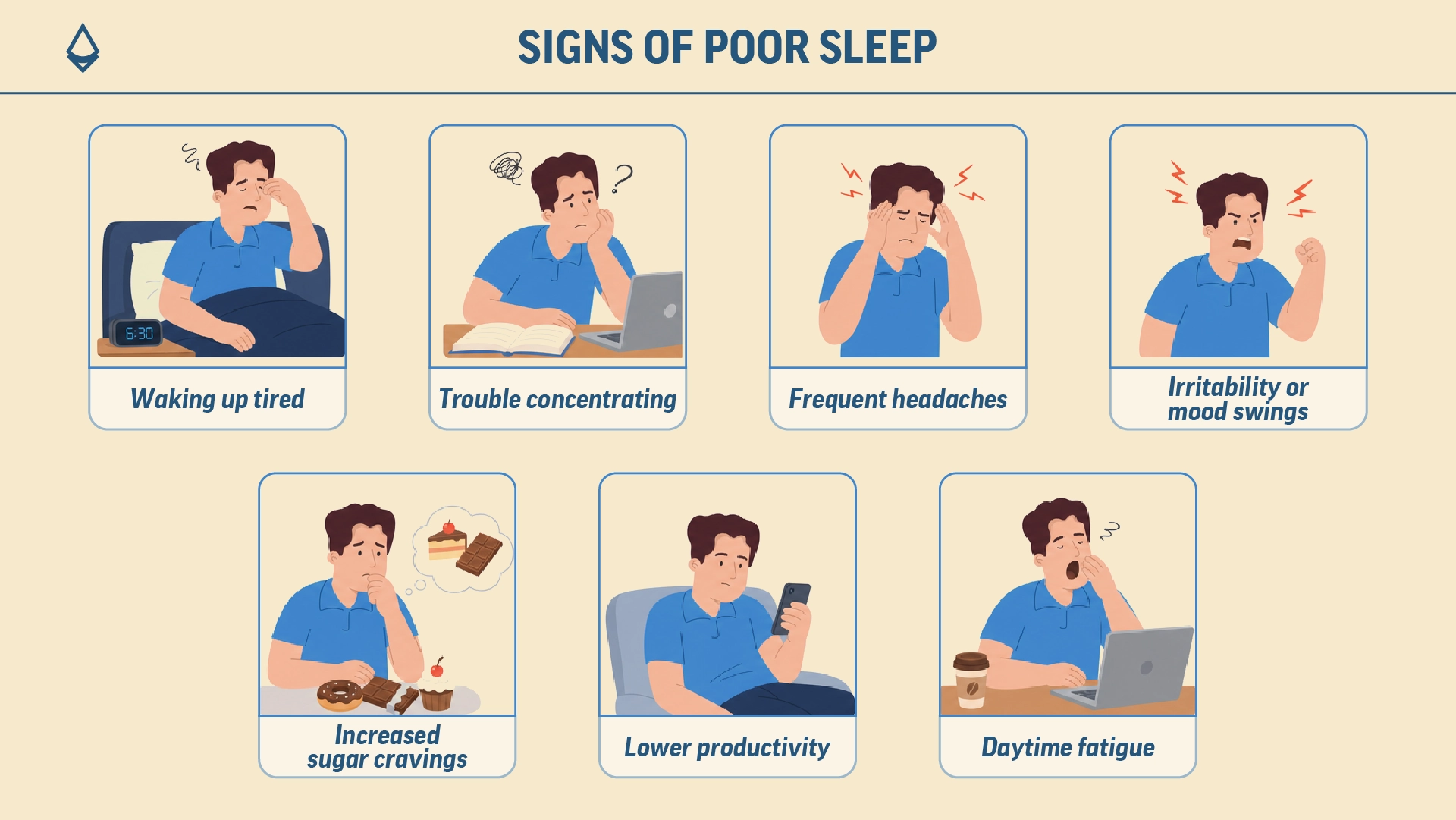
Signs of poor-quality sleep may include:
Waking up feeling unrefreshed
Difficulty concentrating during the day
Frequent headaches
Mood changes or irritability
Increased cravings for sugar and processed foods
Reduced productivity
Daytime fatigue despite sleeping for 7-8 hours
Poor sleep quality has also been associated with impaired immune function, increased inflammation and a higher risk of metabolic disorders.
Can Lifestyle Changes Really Improve Sleep?
In many cases, yes. Small but consistent changes can significantly improve sleep quality over time.
Establish a consistent sleep schedule: Going to bed and waking up at the same time every day helps regulate the body's internal clock.
Get morning sunlight exposure: Exposure to natural light within the first hour of waking helps reinforce circadian rhythms and supports nighttime melatonin production.
What is the circadian rhythm?
The circadian rhythm is the body's internal 24-hour clock that regulates sleep, wakefulness, hormone production, metabolism and other biological functions.
Reduce screen exposure before bed: The blue light emitted by phones, tablets and computers can suppress melatonin production and delay sleep onset.
Move regularly: Regular physical activity has been shown to improve sleep quality, reduce stress and increase deep sleep. Even moderate activities such as walking can help.
Optimise the sleep environment: A good sleep environment should be dark, quiet, cool (typically between 18°C and 22°C), comfortable and free from distractions.
Mindful diet: Consider limiting caffeine after the afternoon, alcohol, heavy or spicy meals late at night
If sleep disturbances persist for several weeks, significantly affect daily functioning, or are accompanied by symptoms such as loud snoring, breathing interruptions, or severe daytime sleepiness, it's important to consult a healthcare professional.
Early intervention can help identify underlying causes and prevent long-term complications associated with chronic sleep deprivation.
Could Natural Therapies Play a Role in Better Sleep?
Alongside lifestyle changes, practices such as mindfulness, yoga, breathing exercises, meditation and certain herbal therapies have shown potential benefits in improving sleep quality and reducing stress.
In addition, cannabinoid-based medications have also gained attention as a potential alternative therapeutic option for some sleep-related concerns. Studies suggest that certain cannabinoid compounds may influence the body's endocannabinoid system, which plays a role in regulating sleep, stress and overall balance.
Ultimately, improving sleep is rarely about finding a single solution. Rather, it involves understanding the factors disrupting sleep and building sustainable habits that support long-term restorative rest.
Key Takeaways
- - Sleep disturbances can be caused by stress, lifestyle habits, or underlying health conditions.
- - Poor sleep affects mood, focus, productivity and overall health.
- - A consistent sleep routine can significantly improve sleep quality.
- - Simple habits like reducing screen time and getting morning sunlight can support better sleep.
- - Persistent sleep problems should not be ignored and may require professional attention.