

What Are Parasomnias and Sleep-Related Movement Disorders?



Sleep is often thought of as a time when the body and mind completely switch off. In reality, the brain remains highly active, coordinating complex processes that support memory, healing, metabolism and emotional well-being. When these processes are disrupted, however, sleep can become anything but restful.
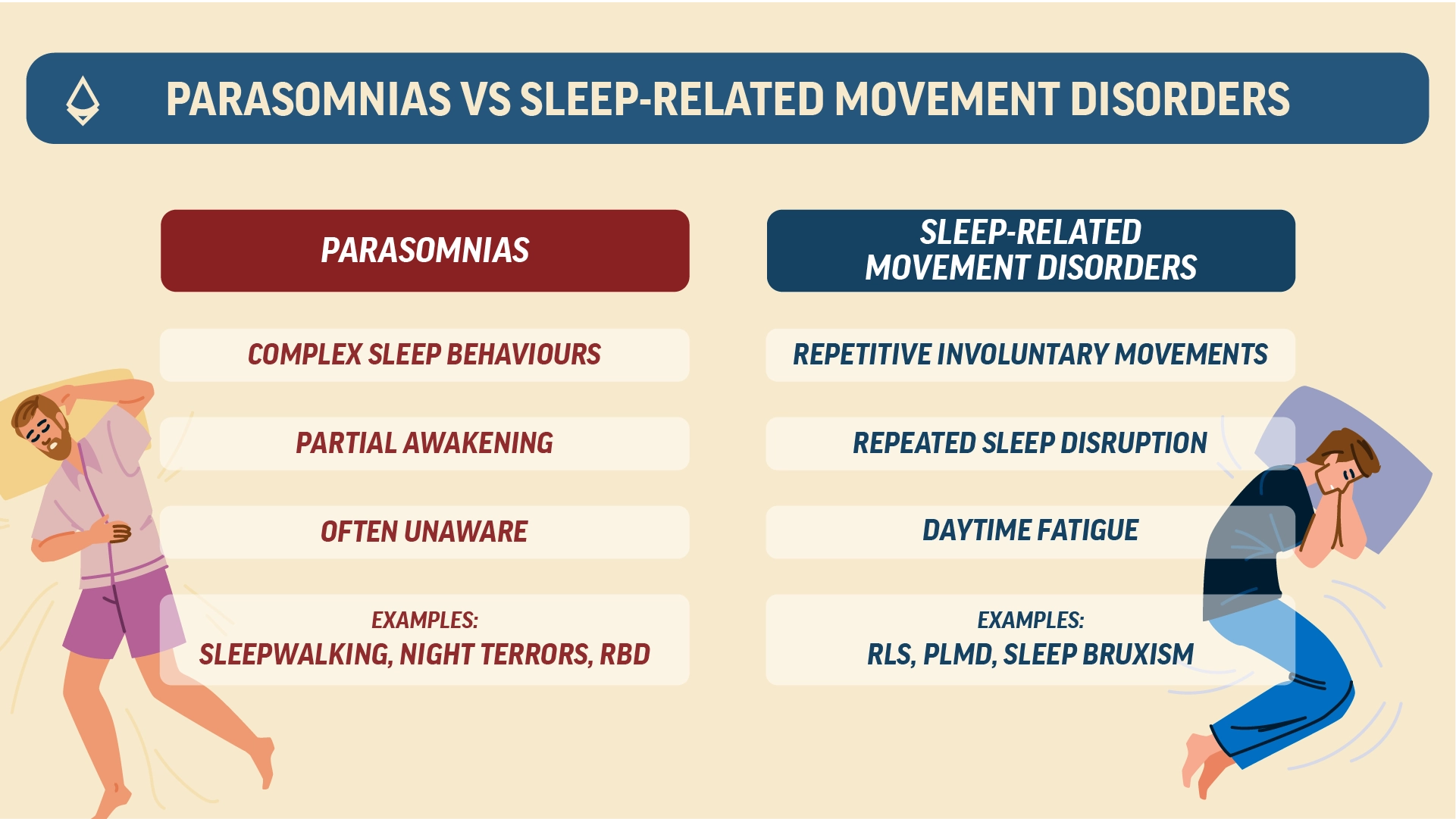
Some people may walk through their house while asleep, unknowingly grind their teeth throughout the night, or experience repeated leg movements that leave them exhausted the next morning. These conditions fall into two distinct categories: parasomnias and sleep-related movement disorders. Although they may appear similar, they differ in their causes, symptoms and treatment approaches.
What Are Parasomnias?
Parasomnias are undesirable behaviours or experiences that occur during sleep or while transitioning between sleep and wakefulness. They occur when the brain partially awakens from sleep, causing a person to perform actions without full awareness.
These episodes are often more common in children but can occur at any age. While some are harmless and disappear over time, others may interfere with sleep quality or signal an underlying neurological condition.
What Are Some Common Parasomnias?
Common parasomnias include sleepwalking, sleep talking, night terrors, confusional arousals, nightmares and REM Sleep Behaviour Disorder (RBD), a condition in which people physically act out their dreams because the normal muscle paralysis during REM sleep is absent. RBD is particularly important because it may precede certain neurodegenerative disorders, including Parkinson's disease, by several years.
Is REM Sleep Behaviour Disorder (RBD) linked to neurological diseases?
Yes. Research suggests that REM Sleep Behaviour Disorder may be an early indicator of certain neurodegenerative conditions, making early evaluation important.
How Are Sleep-Related Movement Disorders Different?
Unlike parasomnias, sleep-related movement disorders involve simple, repetitive and often involuntary movements that interrupt sleep rather than complex behaviours.
One of the most recognised examples is Restless Legs Syndrome (RLS), characterised by an uncomfortable urge to move the legs, particularly during periods of rest or before bedtime. Another common condition is Periodic Limb Movement Disorder (PLMD), in which repetitive leg jerks occur throughout the night, often without the individual being aware of them.
What is the difference between Restless Legs Syndrome (RLS) and Periodic Limb Movement Disorder (PLMD)?
RLS causes an irresistible urge to move the legs while awake, especially before sleep. In contrast, PLMD involves involuntary leg movements that occur during sleep, often without the person being aware of them.
Other disorders in this group include sleep bruxism, rhythmic movement disorder and sleep-related leg cramps. Although these movements may seem minor, repeated sleep interruptions can significantly reduce sleep quality, leading to fatigue, impaired concentration, mood disturbances and reduced daytime productivity.
What is sleep bruxism?
Sleep bruxism is the involuntary grinding or clenching of teeth during sleep, which can cause jaw pain, headaches and tooth wear over time.
Why Do These Disorders Occur?
There is rarely a single cause. Instead, these conditions usually result from a combination of neurological, genetic, environmental and lifestyle factors.
Sleep deprivation, chronic stress, anxiety, irregular sleep schedules, alcohol consumption and certain medications can increase the likelihood of parasomnias. Meanwhile, sleep-related movement disorders are frequently associated with iron deficiency, kidney disease, pregnancy, peripheral neuropathy and neurological disorders such as Parkinson's disease.
Researchers also believe that changes in the brain circuits responsible for regulating movement and sleep contribute significantly to many of these disorders.
When Can Sleepwalking Become A Concern?
Occasional sleep talking or a single episode of sleepwalking is usually not a cause for alarm. However, recurring episodes that affect sleep quality or pose a risk of injury deserve medical attention.
Warning signs include:
Frequent sleepwalking or violent movements during sleep
Acting out dreams or falling out of bed
Persistent leg discomfort before bedtime
Repetitive limb movements noticed by a bed partner
Excessive daytime sleepiness despite getting adequate sleep
Morning headaches, jaw pain, or worn teeth from nighttime grinding
Ignoring these symptoms can lead to chronic sleep deprivation, impaired cognitive function, workplace accidents and a reduced quality of life.
How Are These Conditions Diagnosed?
Diagnosis begins with a thorough review of a person's sleep history, medical history, medications and lifestyle. Since many patients are unaware of what happens while they sleep, observations from a family member or bed partner often provide valuable clues.
If required, a sleep specialist may recommend an overnight polysomnography (sleep study), which records brain activity, breathing, heart rate, muscle activity and body movements throughout the night. Blood tests may also be performed to identify contributing factors such as iron deficiency or other underlying medical conditions.
Accurate diagnosis is essential because many sleep disorders share similar symptoms but require different treatment strategies.
Can These Disorders Be Managed?
The good news is that most parasomnias and sleep-related movement disorders can be managed effectively once the underlying cause is identified.
Treatment often begins with improving sleep hygiene, maintaining a regular sleep schedule, reducing stress, limiting alcohol intake and addressing medical conditions that may be contributing to symptoms. In some cases, medications or behavioural therapies may be recommended. At the same time, safety measures - such as removing sharp objects or securing the sleep environment are important for individuals who sleepwalk or experience violent dream enactment.
Can stress and anxiety trigger parasomnias?
Yes. Emotional stress, anxiety, sleep deprivation and irregular sleep schedules can increase the frequency or severity of parasomnias such as sleepwalking, night terrors and confusional arousals.
Emerging research is also exploring the role of cannabinoid-based medications in improving sleep in certain patients, particularly where chronic pain, anxiety, or neurological disorders coexist with sleep disturbances. While evidence continues to evolve, these therapies are being investigated for their potential to support sleep quality in carefully selected patients under medical supervision.
Why Healthy Sleep Should Never Be Ignored?
Sleep disorders are more than an inconvenience; they can affect nearly every aspect of physical and mental health. Persistent disruptions may increase the risk of cardiovascular disease, depression, anxiety, metabolic disorders, impaired memory and reduced daytime performance.
When to see a doctor for unusual movements during sleep?
Seek medical advice if the episodes are frequent, cause injuries, significantly disrupt sleep, involve violent dream enactment, or lead to excessive daytime sleepiness, as these may require specialised evaluation and treatment.
Recognising unusual nighttime behaviours early and seeking professional evaluation can lead to timely treatment, better sleep quality and a healthier, more productive life.
Key Takeaways
- - Parasomnias involve complex behaviours during sleep, whereas sleep-related movement disorders involve repetitive involuntary movements.
- - Conditions such as sleepwalking, REM Sleep Behaviour Disorder, Restless Legs Syndrome and sleep bruxism can significantly affect sleep quality.
- - Neurological disorders, stress, sleep deprivation, iron deficiency and certain medications are common contributing factors.
- - Proper diagnosis often requires a detailed sleep history and, in some cases, an overnight sleep study.