

Osteopenia vs Osteoporosis: How Do They Differ?


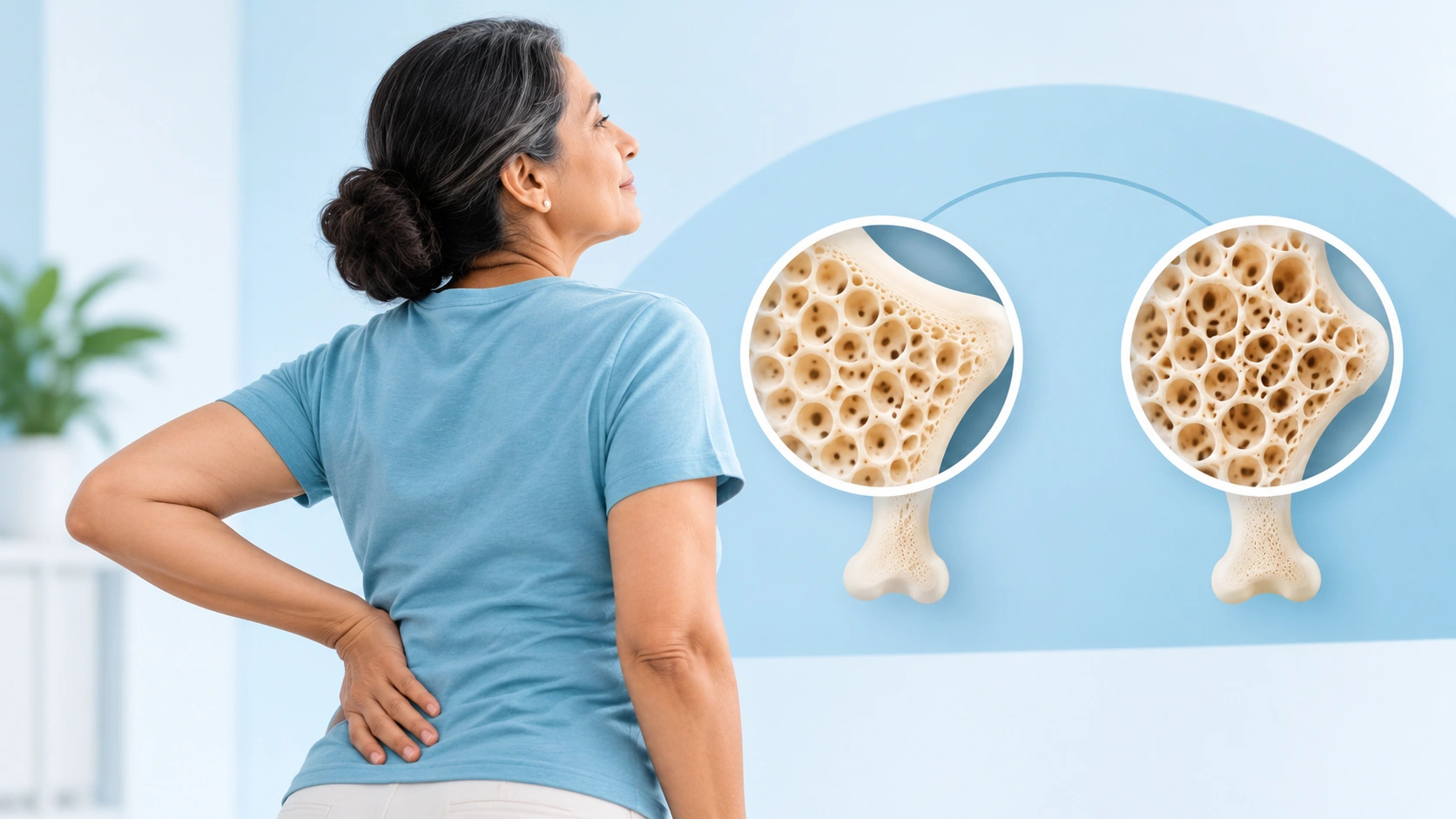
Osteopenia vs osteoporosis is a frequent point of confusion when a bone density report mentions low bone mass. Both conditions involve reduced bone mineral density (BMD), but they differ in severity, fracture risk and management. Understanding T-scores, diagnosis and practical lifestyle measures supports informed discussions with a healthcare professional.
What Is the Difference Between Osteopenia and Osteoporosis?
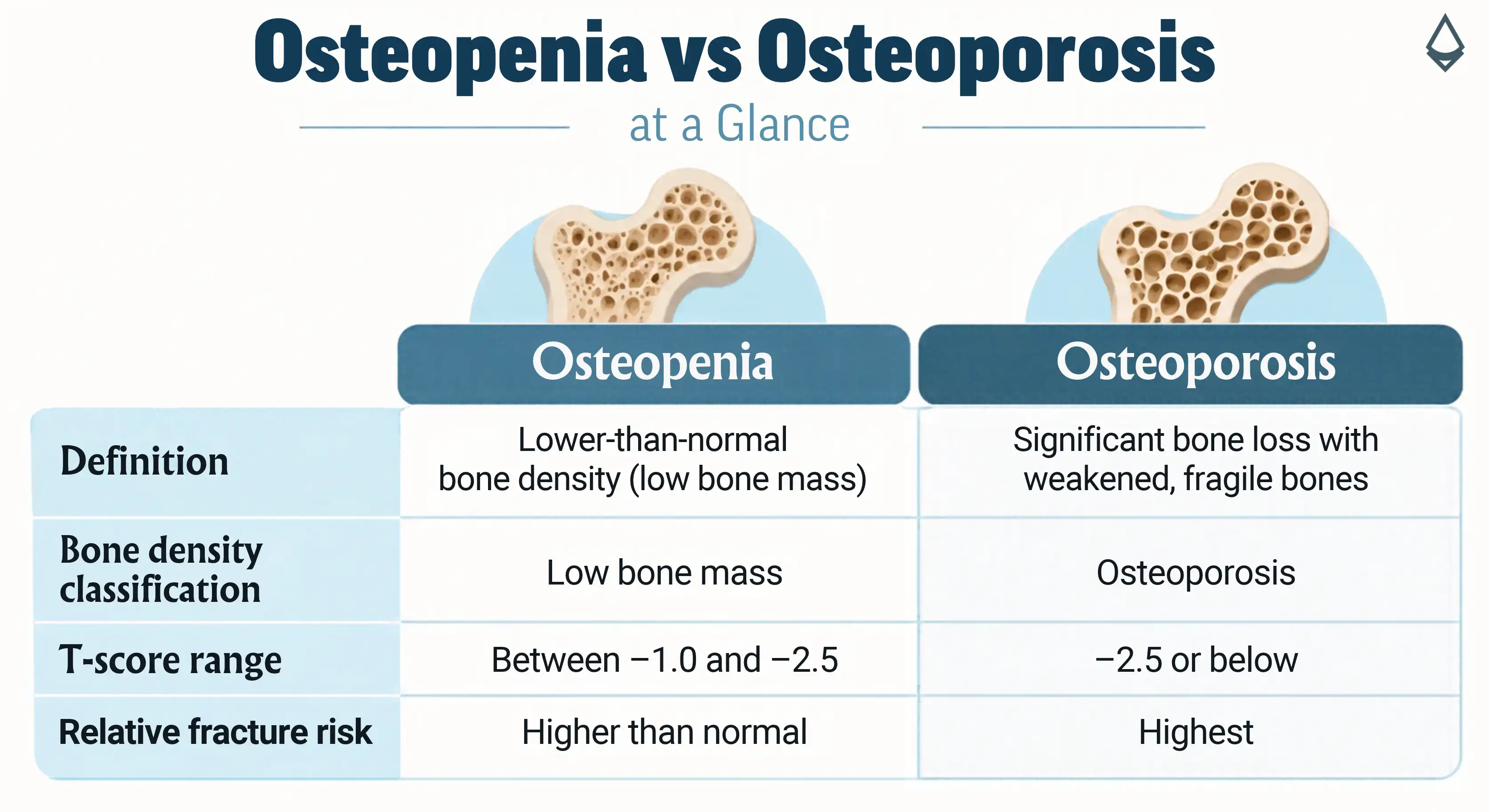
Osteopenia, also called low bone mass, describes bone density that is lower than normal but not low enough to qualify as osteoporosis. Osteoporosis is a bone disease in which BMD and bone mass decrease, or bone quality and structure change, reducing bone strength and increasing fracture risk.
Fracture risk is higher with osteopenia than with normal bone density and highest with osteoporosis. Bones affected by osteoporosis can break from a minor fall or sudden impact.
Does osteopenia always become osteoporosis?
No. Osteopenia can progress to osteoporosis, but progression is not inevitable. Everyone with low bone mass has a higher risk of osteoporosis, and steps that slow bone loss can help prevent it.
How Do Osteopenia and Osteoporosis Differ in T-Scores?
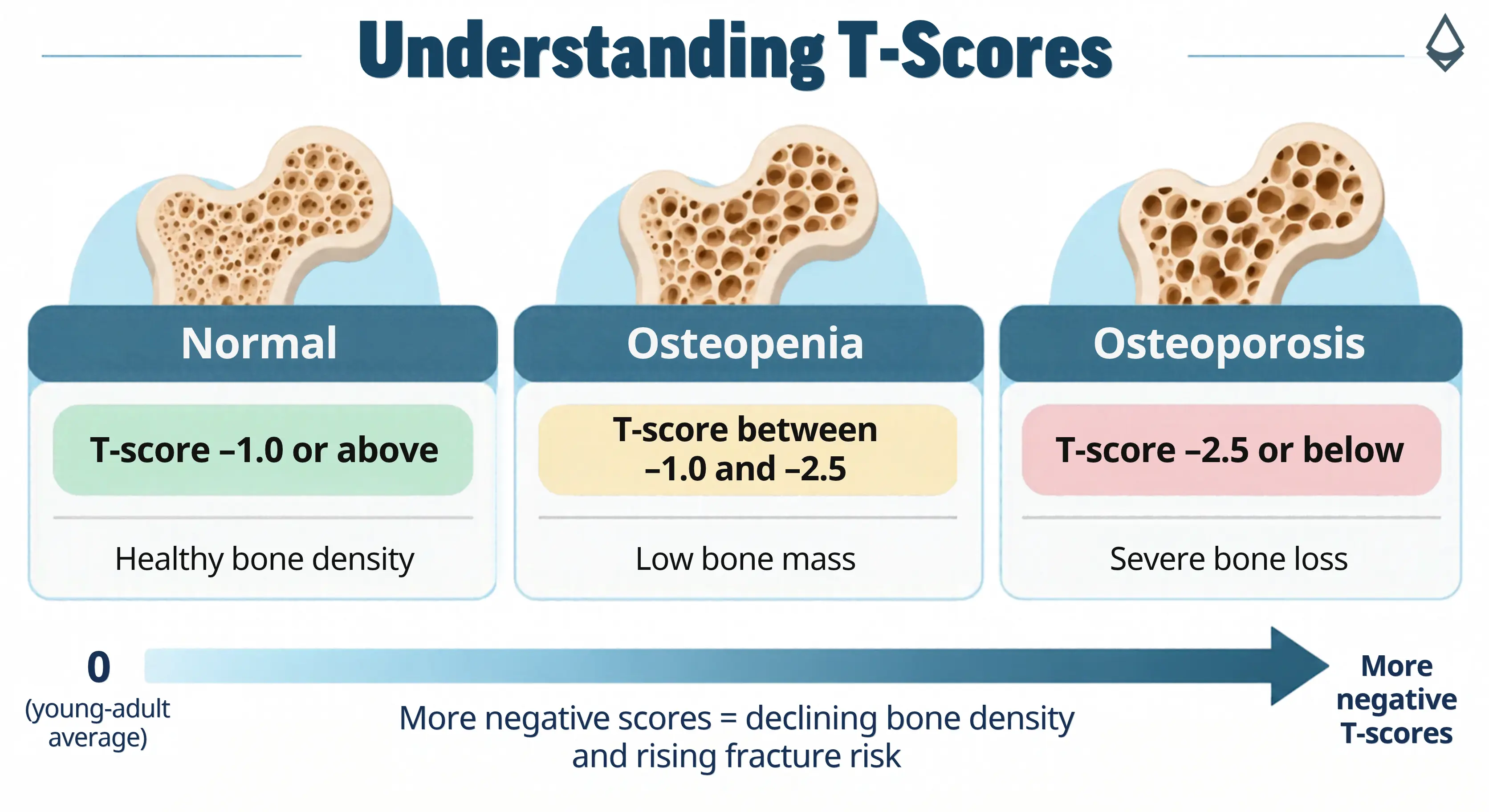
A T-score compares an individual's BMD with the average BMD of a healthy young adult, expressed in standard deviations. A score of 0 matches the young-adult average. The lower (more negative) the score, the lower the bone density and the higher the fracture risk.
T-scores come from a dual-energy X-ray absorptiometry (DXA or DEXA) scan. They are reported for postmenopausal women and men aged 50 or older. Premenopausal women, men younger than 50 and children receive Z-scores, which compare BMD with people of the same age, sex and ethnicity.
What is a DXA or DEXA scan, and what does absorptiometry mean?
A DXA (or DEXA) scan is an X-ray test that measures bone density. Absorptiometry measures how much X-ray energy bones absorb to assess density.
The standard World Health Organisation (WHO) classification is:
Normal bone density: T-score of −1.0 or above
Osteopenia (low bone mass): T-score between −1.0 and −2.5
Osteoporosis: T-score of −2.5 or below
The osteopenia T-score range therefore sits between normal bone density and osteoporosis. A T-score alone does not determine overall fracture risk, because age, medical history and previous fractures also influence the likelihood of a break.
How Do Osteopenia and Osteoporosis Affect the Body?
Both conditions are generally asymptomatic in the early stages, and neither typically causes noticeable pain on its own. Osteoporosis often goes unnoticed until a bone breaks.
Fractures, loss of height and a stooped back can indicate advanced osteoporosis or vertebral fractures. When comparing osteoporosis vs osteopenia symptoms, none reliably distinguishes the two conditions, so only a bone density test can confirm which applies.
What Tests Help Identify Osteopenia?
Osteopenia diagnosis relies on a DXA scan, a short, painless test using a small amount of X-ray. The scan measures BMD at the hip and lumbar spine, the sites where weak bones tend to break most often.
Healthcare professionals interpret the resulting T-score alongside age, sex, medical history, risk factors and fracture history. The Fracture Risk Assessment Tool (FRAX) combines these factors with BMD to estimate the 10-year probability of a hip or other major osteoporotic fracture.
What is FRAX?
FRAX (Fracture Risk Assessment Tool) is a tool that estimates a person's 10-year risk of hip or other major osteoporotic fractures.
Screening is recommended for women aged 65 or older and for postmenopausal women under 65 who have an increased fracture risk.
What Helps Manage Osteopenia and Osteoporosis?
Treatment depends on bone density, fracture history, overall fracture risk and any underlying cause of bone loss. Lifestyle measures form the foundation of management for both conditions:
Calcium: adequate intake, preferably from foods such as dairy and fortified products
Vitamin D: sufficient levels, since vitamin D supports calcium absorption
Weight-bearing activity: walking, stair climbing or dancing
Resistance and muscle-strengthening exercise: supports bone and muscle strength
Balance exercises and fall prevention: reduces the chance of fractures from falls
Smoking and alcohol: avoiding smoking and limiting alcohol
Diet and weight: a balanced diet and healthy body weight, as being underweight raises risk
Supplement amounts should be individualised and guided by a healthcare professional. Lifestyle measures slow bone loss and lower fall risk, but they do not reverse established osteoporosis.
Prescription medication is considered for osteoporosis, and for osteopenia when fracture risk is sufficiently high, such as after a previous fracture or with a high FRAX estimate.
Does everyone with osteopenia need medication?
No. Many people with osteopenia are managed with lifestyle measures and periodic monitoring. Medication decisions rest on the individual fracture risk rather than the T-score alone.
Conclusion
Understanding the difference between osteopenia and osteoporosis helps you take informed steps towards better bone health. A balanced diet, adequate calcium and vitamin D, regular exercise and fall prevention can help maintain bone strength and reduce fracture risk. Depending on individual risk, medical treatment may also be necessary.
Cannabinoid-based medicines may also be explored by healthcare professionals for certain co-existing pain-related conditions. However, their use should be assessed individually and guided by medical supervision.
Key Takeaways
- - Calcium, vitamin D, exercise and fall prevention support bone health, with medication reserved for higher-risk cases.
- - A DXA scan, interpreted with risk factors and FRAX, establishes diagnosis and fracture risk.
- - Neither condition usually causes symptoms until a fracture, height loss or posture change occurs.
- - T-scores of −1.0 to −2.5 indicate osteopenia, and −2.5 or below indicates osteoporosis.
- - Osteopenia is low bone mass, while osteoporosis is more severe bone loss with greater fracture risk.