

Identify and Treat Specific Types of Joint Pain


Where Joint Pain Actually Comes From?
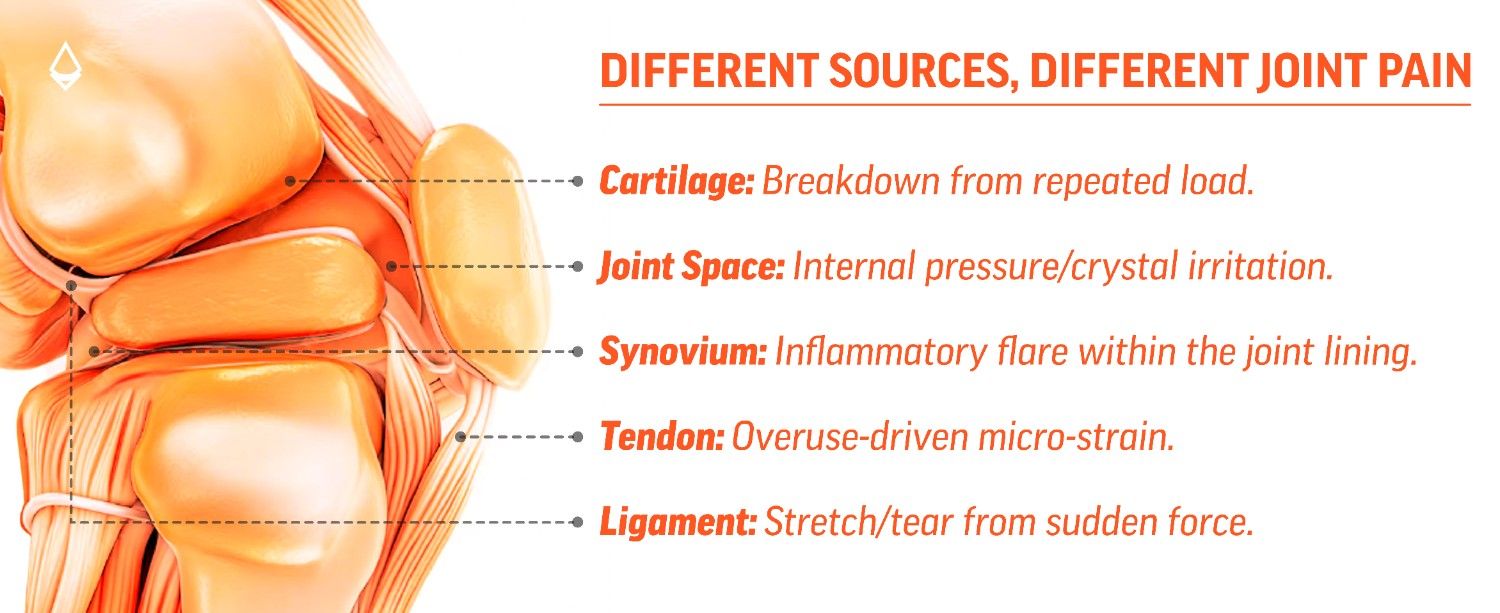
Joint pain doesn’t come from just one part of the joint. A joint is a complex structure made up of cartilage, the synovial lining, ligaments, tendons and the joint space. When any one of these tissues is irritated or damaged, the pain presents differently.
Cartilage: Gradual breakdown due to repeated load, poor alignment or weak support muscles
Synovium: Inflammatory flare within the joint lining, causing swelling and stiffness
Tendon: Repetitive micro-strain from overuse or improper movement patterns
Ligament: Stretching or tearing following sudden force or twisting injuries
Joint Space: Internal pressure changes or crystal deposition leading to acute inflammation
What is cartilage and why does it matter in joint pain?
Cartilage is the smooth cushioning tissue at the ends of bones. It absorbs shock and allows friction-free movement. When it breaks down from repeated load, mechanical pain develops.
Identifying which structure is affected allows treatment to be targeted, rather than simply masking the pain.
Mechanical Joint Pain: When Load Is the Problem
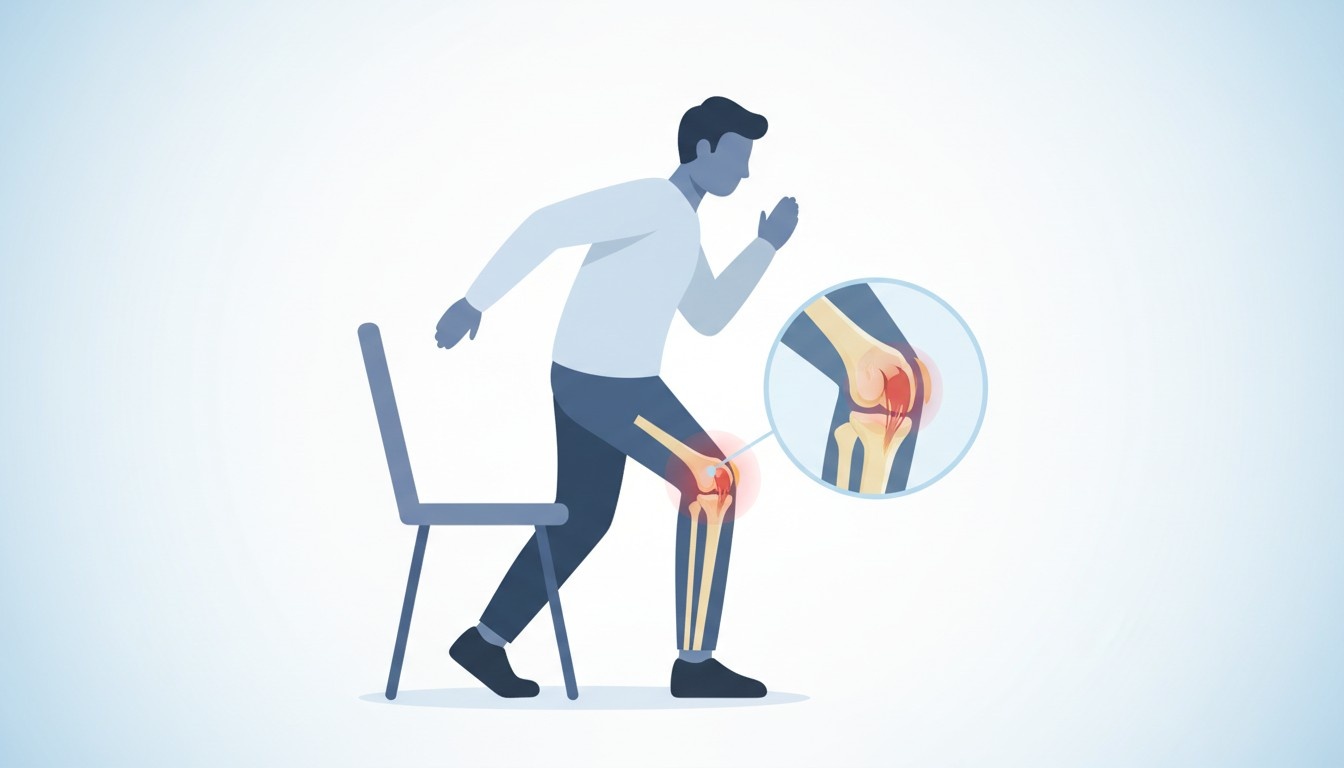
Mechanical joint pain is the most common form seen in adults. It typically worsens with movement and improves with rest. One may experience discomfort while climbing stairs, squatting, lifting groceries, or getting up after sitting for extended periods.
Why does joint pain feel worse after sitting for long hours?
Prolonged inactivity reduces synovial fluid circulation, leading to stiffness-dominant pain that improves once movement resumes.
This type of pain typically develops because the joint is handling a load that it cannot tolerate. Weak surrounding muscles, poor posture, excess body weight, improper footwear, or sudden increases in physical activity all contribute to this strain. Unlike inflammatory pain, swelling is minimal and morning stiffness is brief.
Treatment focuses on correcting the root cause rather than simply resting. Gradual strengthening of surrounding muscles, improving movement mechanics and incorporating low-impact activities like cycling or swimming are essential. Completely avoiding movement can worsen stiffness because cartilage depends on joint motion to circulate synovial fluid and receive nutrients.
Inflammatory Joint Pain: When the Body Is Reacting
Inflammatory joint pain behaves differently. It often causes prolonged morning stiffness, visible swelling, warmth and discomfort even at rest. Fatigue may accompany it.
This type of pain is driven by immune or systemic inflammation rather than physical strain. It can be seen in conditions such as Rheumatoid arthritis, but even early inflammatory responses without a formal diagnosis can present similarly.
Rest alone does not resolve inflammatory pain. Management includes reducing inflammatory triggers through diet (omega-3-rich foods, leafy greens, turmeric), maintaining gentle range-of-motion exercises, managing stress levels and improving sleep quality. High-impact workouts during active inflammation can aggravate symptoms.
If stiffness lasts more than 45–60 minutes in the morning or swelling persists, evaluation is necessary.
Overuse Joint Pain: When Repetition Causes Irritation
Overuse pain develops gradually and is localised around a specific joint. It is common in people who perform repetitive tasks such as typing, lifting overhead, running long distances, or manual labour.
The discomfort is often linked to irritation of soft tissues around the joint, such as in Tendinitis or Bursitis. Pain typically worsens at the end of the day and may feel tender when touched.
What is Tendinitis or Bursitis?
Tendinitis is irritation of a tendon due to repetitive strain. Bursitis is inflammation of small fluid-filled sacs (bursae) that reduce friction around joints. Both are common in overuse injuries.
Unlike inflammatory joint disease, this pain improves with temporary load reduction. The key is not complete immobilisation but controlled recovery. Short-term activity modification, correcting technique, strengthening stabilising muscles and using cold compresses during flare-ups are effective. Ignoring repetitive strain often converts short-term irritation into chronic pain.
Acute Sudden Joint Pain: When Pain Appears Overnight
Sudden and intense joint pain that appears without warning, especially at night, should not be dismissed. The joint may appear red, swollen, and extremely tender.
One common cause is Gout, where excess uric acid forms crystals in the joint, triggering sharp inflammation. Unlike mechanical pain, this type is severe and abrupt.
What is gout?
Gout is a condition where excess uric acid forms crystals inside the joint space, triggering sudden, intense inflammation, often overnight.
Hydration plays a major role in prevention. Reducing excessive intake of red meat, alcohol and sugary beverages can help regulate uric acid levels. Cold compresses may ease acute swelling, but recurring episodes require medical evaluation.
Post-Injury Joint Pain
Joint pain that follows a fall, twist or sports activity often involves structural injury. Swelling may appear within hours and the joint can feel unstable.
Injuries such as an anterior cruciate ligament injury (ACL) or cartilage strain may initially improve but leave lingering weakness if not properly rehabilitated. Many chronic joint issues in adults originate from incompletely treated injuries in earlier years.
What is an ACL injury?
The anterior cruciate ligament (ACL) is a key stabilising ligament in the knee. A tear usually occurs during sudden twisting or pivoting movements and can cause instability if not rehabilitated properly.
Early management may include rest, compression and elevation, but long-term recovery depends on structured physiotherapy and progressive strengthening. Returning to intense activity too soon increases the risk of recurring pain.
Stiffness-Dominant Joint Pain
Some joint pain presents more as tightness than sharp discomfort. It is common in sedentary individuals or those who sit for prolonged hours. The joint feels restricted, especially after inactivity and may improve slightly once movement begins.
This occurs because joints rely on regular motion to maintain lubrication and tissue elasticity. Prolonged immobility reduces synovial fluid circulation and contributes to stiffness.
Frequent mobility breaks, gentle circular joint movements, stretching and maintaining a daily step count can significantly reduce this type of discomfort. Warm showers before activity can also improve flexibility.
Warning Signs That Need Immediate Attention
While many types of joint pain are manageable, certain symptoms require prompt evaluation:
Fever accompanying joint pain
Severe swelling or redness
Sudden inability to bear weight
Persistent pain lasting more than a few weeks
Rapid worsening of symptoms
Conditions like Septic arthritis are rare but serious and require urgent care.
Natural Treatment Approaches for Joint Pain
Natural treatment for joint pain focuses on reducing inflammation and restoring movement. Anti-inflammatory foods like omega-3 rich seeds, turmeric and leafy greens, along with low-impact exercise, mobility work, posture correction and proper sleep, help support long-term joint health and cartilage nourishment.
In addition, cannabinoid-based medications can also support pain and inflammation modulation through the endocannabinoid system (ECS), complementing physiotherapy and lifestyle correction as part of a holistic joint care plan. When used in topical oils, cannabinoids may act locally on receptors in the skin and surrounding tissues, helping ease discomfort and stiffness in targeted areas without systemic effects.
Conclusion
Joint pain is often treated reactively - pain appears, movement stops and temporary relief measures are applied. But without identifying whether the cause is mechanical overload, inflammation, repetitive strain, injury or immobility, the problem often returns.
Effective treatment depends on matching the solution to the cause. Mechanical pain needs strength correction. Inflammatory pain needs inflammation control. Overuse pain needs load management. Injury-related pain needs rehabilitation. Stiffness needs movement.
Joint pain is common, but it should never be generalised. The body gives specific signals through timing, swelling, stiffness and response to movement. Paying attention to these patterns allows for early, precise intervention and better long-term mobility.
Key Takeaways
- - Not all joint pain is the same - the timing, stiffness and swelling reveal the cause.
- - Mechanical pain worsens with movement; inflammatory pain causes prolonged stiffness and swelling.
- - Overuse and untreated injuries often lead to chronic joint problems.
- - Movement, strengthening and load correction are essential - complete rest is rarely the solution.
- - Early intervention and targeted care prevent long-term joint damage and mobility loss.