

How to Cure Insomnia Quickly?


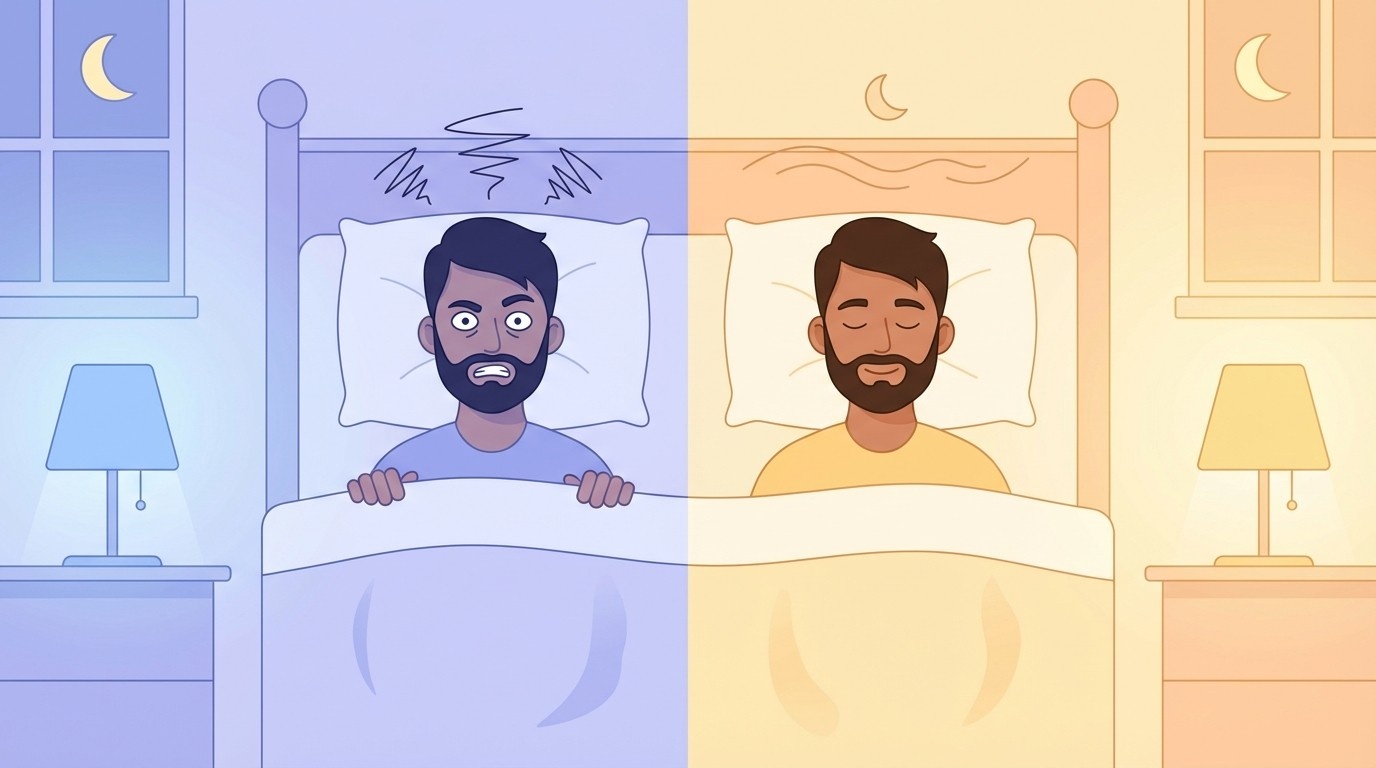
Insomnia usually starts the same way - a tired body, but a mind that refuses to switch off. Minutes stretch into hours and the harder sleep is chased, the further it seems to drift away. Insomnia isn’t just about not sleeping; it’s about the body being out of sync with its natural rhythm.
The key to managing insomnia quickly lies in understanding one thing: sleep cannot be forced, but it can be facilitated. When the right signals are sent to the body, sleep tends to follow.
Why Insomnia Happens?
Insomnia is often the result of an overactive nervous system. Stress, irregular routines, excessive screen exposure, or even late-night meals can keep the body in a state of alertness when it should be winding down.
Over time, this can create a pattern where:
The mind stays active at night
The body resists relaxation
The bed becomes associated with wakefulness
Breaking this cycle requires calming both the mind and the environment.
What Are Some Fast Ways to Fall Asleep?
When sleep feels delayed, small, intentional shifts can make a significant difference:
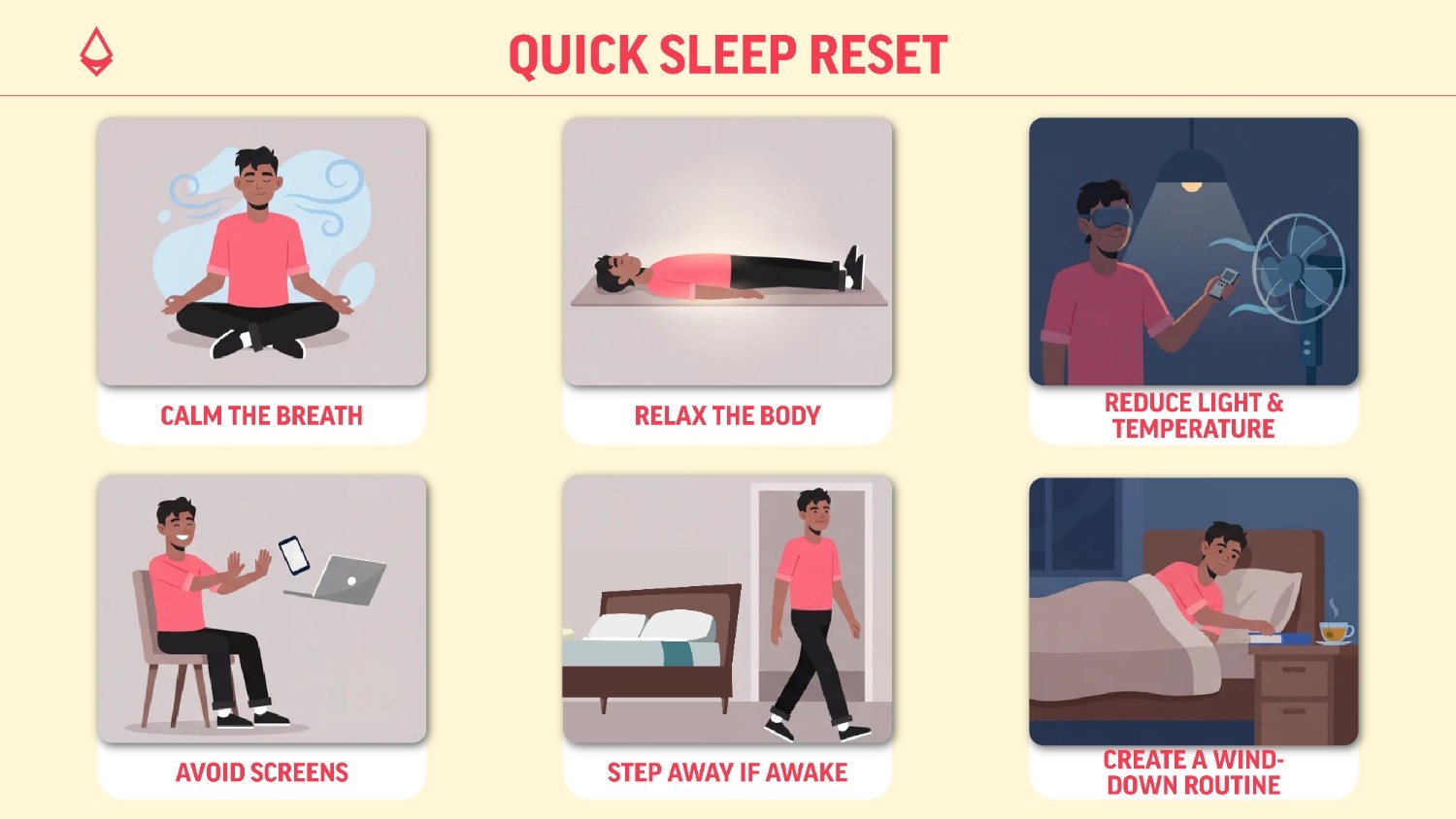
Slow down the breath: Longer exhales help reduce heart rate and calm the system
Relax the body consciously: Releasing tension from the face and shoulders can signal safety
Keep the room cool: A slightly lower temperature supports deeper sleep
Reduce light exposure: Dim lighting helps regulate melatonin production
Avoid clock-watching: It increases stress and mental activity
A lesser-known tip is that warming the feet can improve circulation and help the body transition into sleep faster.
What Are the Techniques That Support Quick Sleep Onset?
Sequential Relaxation: Relaxing the body step-by-step, starting from the face and moving downward, helps reduce physical tension that often keeps the mind active.
Controlled Breathing: Practices like slow inhale and exhale cycles create a rhythm that the body can follow into rest, easing internal alertness.
Letting Go of Sleep Effort: Trying too hard to sleep often backfires. Allowing wakefulness without resistance can reduce performance pressure and help sleep arrive naturally.
What to Do When Sleep Doesn’t Come?
Staying in bed while awake can unintentionally reinforce insomnia. Instead:
Step out of bed if sleep feels distant
Sit in a dimly lit space
Engage in something calm and low-effort
Return only when sleepiness builds
This helps maintain a strong association between bed and sleep.
What Are Long-Term Fixes To Reset the Sleep Cycle?
Quick fixes work best when paired with consistent habits. Over time, the body responds to routine.
Focus on:
Fixed sleep and wake timings
Limiting stimulants late in the day
Creating a wind-down routine
Reducing mental stimulation before bed
Sleep improves when the body learns when to switch off, not just how.
For recurring insomnia, natural support systems can play a complementary role. Adaptogenic herbs, calming botanicals and nutrient-rich diets help regulate stress responses and support sleep cycles over time.
There is also growing interest in the body’s endocannabinoid system, which plays a role in maintaining internal balance, including sleep. Carefully formulated cannabinoid-based medications may support relaxation and sleep quality by helping regulate this system, especially when combined with lifestyle changes.
Conclusion
Insomnia often feels complex, but its management doesn’t have to be. The focus is not on forcing sleep, but on creating the right internal and external conditions for it to occur. And when the body feels safe, calm and consistent - sleep tends to follow.
Key Takeaways
- - Sleep isn’t forced - it follows when the body feels safe and relaxed.
- - Insomnia is often a nervous system problem, not just a sleep problem.
- - Small cues like light, temperature and breath directly influence sleep onset.
- - Trying harder to sleep can actually delay it further.
- - Consistency trains your body to switch off faster than quick fixes alone.