

How Is Hospice Care Different From Palliative Care?



When someone is living with a serious illness, treatment is not just about managing the disease, but it is also about managing pain, emotional stress, fatigue, sleep issues and overall quality of life. This is where hospice and palliative care become important.
Although the two terms are often used interchangeably, they are not the same. Both focus on comfort and symptom relief, but the stage of illness and treatment goals are different.
The World Health Organisation describes palliative care as improving the quality of life of patients and families facing serious illness by preventing and relieving suffering through early identification and treatment of physical, emotional and psychological symptoms.
What Is Palliative Care?
Palliative care is specialised medical support for people living with serious illnesses such as cancer, Parkinson’s disease, heart disease, COPD, kidney disease or neurological disorders.
It can begin at any stage of illness and can be given alongside treatments like chemotherapy, surgery, radiation or dialysis. The goal is to help patients feel better physically and emotionally while continuing medical care.
Palliative care focuses on:
Pain management
Fatigue and weakness
Anxiety and depression
Nausea and appetite loss
Breathlessness
Sleep disturbances
Emotional and caregiver support
It is usually provided by a team that may include doctors, nurses, counsellors, physiotherapists and nutrition experts.
One of the biggest misconceptions is that palliative care is only for end-of-life situations. In reality, early palliative care can help patients cope better with long-term treatment and improve daily functioning.
Can palliative care help patients with non-cancer illnesses?
Yes, palliative care is also commonly used in conditions like heart disease, COPD, Parkinson’s disease, kidney disease and neurological disorders.
What Is Hospice Care?
Hospice care is meant for people in the final stage of a serious illness when curative treatment is no longer effective or desired.
Instead of focusing on recovery, hospice care prioritises comfort, dignity and emotional support. In many healthcare systems, hospice care is generally recommended when a patient is expected to have six months or less to live if the illness progresses naturally.
Hospice care commonly includes:
Pain and symptom relief
Emotional and spiritual support
Support for caregivers and families
Assistance with daily comfort care
Bereavement counseling for families
It is often provided at home, but can also be available in hospice centers, hospitals or nursing facilities.
What is the Main Difference Between Hospice and Palliative Care?
The biggest difference is that palliative care can happen alongside active medical treatment, while hospice care begins when treatment shifts entirely toward comfort rather than cure.
Palliative care may continue for years depending on the illness, whereas hospice care is typically associated with end-of-life support.
In simple terms:
Palliative care is comfort alongside treatment
Hospice care is comfort instead of curative treatment
Despite this difference, both approaches focus on reducing suffering and improving quality of life.
How is Symptom Management Done in Supportive Care?
Both hospice and palliative care take a holistic approach to symptom management because serious illnesses affect more than just physical health.
Can supportive care begin immediately after diagnosis?
Yes, supportive care can begin early in a serious illness to help manage symptoms and improve day-to-day comfort throughout treatment.
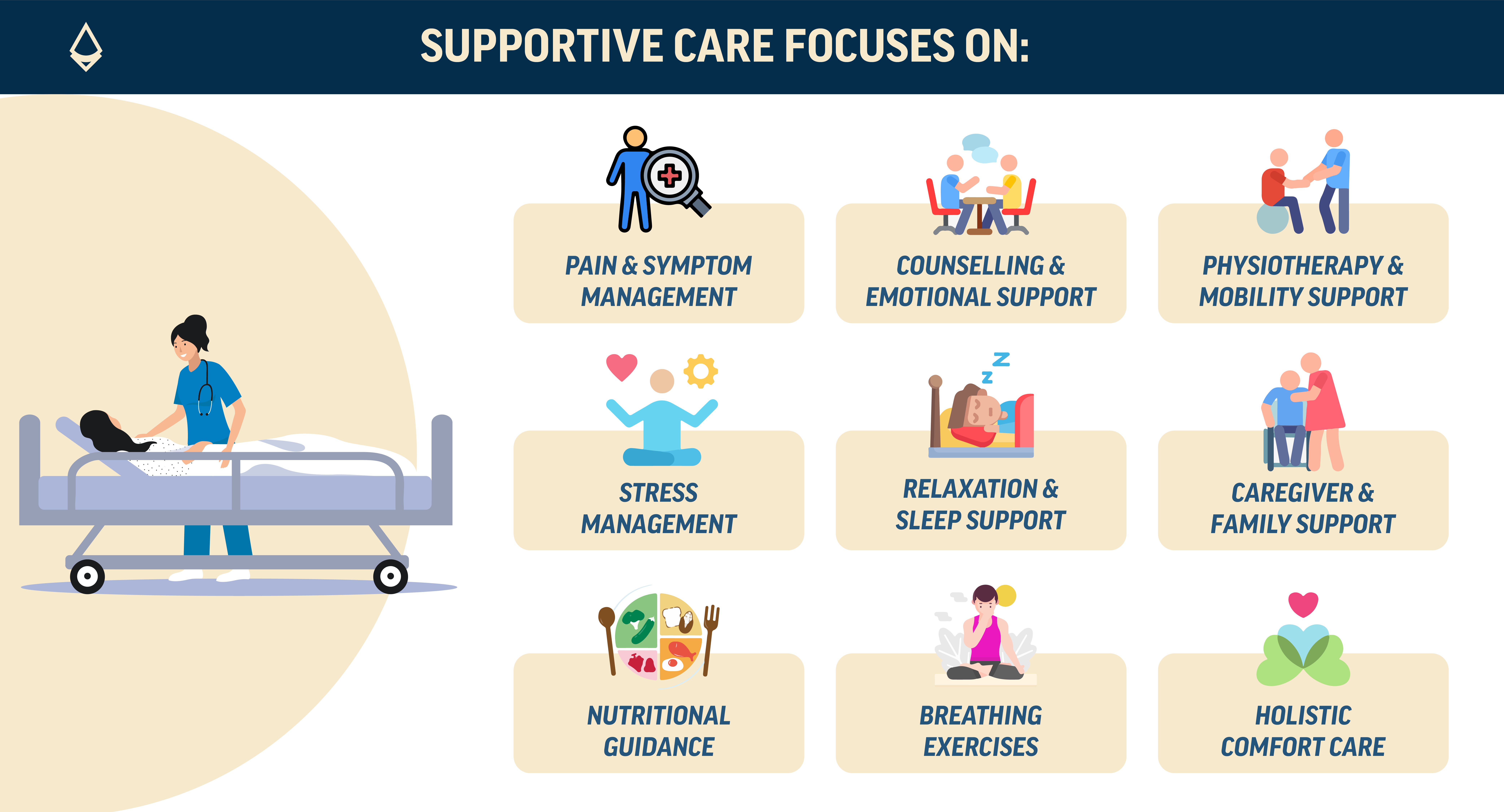
Patients commonly experience chronic pain, fatigue, insomnia, anxiety, loss of appetite, nausea and emotional distress. Supportive care teams help manage these symptoms through personalised treatment plans that may include medications, physiotherapy, counselling, breathing exercises, relaxation techniques and nutritional support.
Emotional care is equally important. Many patients and caregivers struggle with fear, burnout, grief and stress during long-term illness. Supportive care helps address these concerns through counselling and open communication.
Why is caregiver burnout common during long-term illness?
Constant physical care, emotional stress and decision-making responsibilities can leave caregivers mentally and physically exhausted over time.
Why Early Supportive Care Matters?
Many families wait until symptoms become severe before seeking supportive care. However, early intervention can make a major difference.
Why do many patients delay seeking supportive care?
Many people mistakenly associate supportive care only with end-of-life treatment, which often delays symptom management and emotional support.
Early palliative care may help:
Improve comfort during treatment
Reduce unnecessary hospital visits
Support better communication with doctors
Help patients make informed healthcare decisions
Reduce emotional stress for caregivers
Supportive care is not about giving up. It is about helping patients live more comfortably and meaningfully despite illness.
Can hospice or palliative care reduce hospital visits?
Proper symptom management and continuous support may help reduce emergency visits and repeated hospitalisations in some patients.
What are Natural and Integrative Approaches in Supportive Care?
Supportive care today often combines conventional treatment with integrative approaches that focus on improving comfort and quality of life. Depending on the patient’s needs, this may include physiotherapy, nutritional support, relaxation techniques, counselling and breathing exercises.
Cannabinoid-based medications are also being used in palliative and supportive care for their potential role in managing symptoms such as chronic pain, anxiety, sleep disturbances, nausea, appetite loss and neuropathic discomfort. And while not a cure, cannabinoid-based formulations may help improve overall comfort and well-being when used under proper medical supervision as part of an integrative care approach.
Final Thoughts
Hospice and palliative care both aim to improve quality of life, but they differ in timing and treatment goals. Palliative care supports patients at any stage of serious illness alongside treatment, while hospice care focuses on comfort during the final stages of life.
Both approaches highlight an important shift in healthcare - treating not just the illness, but also the physical, emotional and psychological challenges that come with it.
Key Takeaways
- - Palliative care can begin at any stage of a serious illness alongside treatment.
- - Hospice care focuses entirely on comfort during end-of-life care.
- - Both approaches prioritise pain relief, symptom management and emotional support.
- - Early supportive care may improve the quality of life for both patients and caregivers.
- - Supportive care combines conventional treatment with integrative approaches that improve comfort and quality of life.