

Hospital or Home? Understanding Modern Palliative Care Services



When people hear the term palliative care, they often associate it only with end-of-life treatment. In reality, palliative care is a specialised form of medical support designed to improve the quality of life for people living with serious or chronic illnesses, regardless of their stage of treatment. It focuses on managing symptoms, reducing suffering and helping patients and families navigate the physical, emotional and psychological challenges that come with complex health conditions.
Today, palliative care is available both in hospitals and at home, giving patients the flexibility to receive compassionate, holistic care in the setting that best suits their needs.
Can palliative care begin at the time of diagnosis?
Yes, it can be introduced early alongside curative treatments to help manage symptoms and improve overall well-being.
What Does Palliative Care Include?
Unlike treatments aimed at curing a disease, palliative care works alongside ongoing medical therapies to make daily life more comfortable. A multidisciplinary team (doctors, nurses, counsellors, nutritionists, physiotherapists, social workers) works together to address multiple aspects of a patient's well-being.
Common services include:
Pain and symptom management
Relief from nausea, fatigue, breathlessness and insomnia
Emotional and psychological counselling
Nutritional guidance
Mobility and rehabilitation support
Family counselling and caregiver education
Advance care planning and decision-making support
Does palliative care help with mental and emotional health?
Absolutely, many palliative care programs include counselling and psychological support for both patients and their families.
Palliative care can benefit individuals with conditions such as cancer, advanced neurological disorders, chronic lung diseases, kidney failure, heart disease and progressive degenerative illnesses.
Is palliative care only for cancer patients?
No, it also benefits people living with conditions like heart failure, COPD, kidney disease, Parkinson's disease and dementia.
Emerging research also suggests that certain cannabinoid-based medications may have a supportive role in palliative care by helping manage symptoms such as chronic pain, nausea and loss of appetite when used under appropriate medical supervision.
What Are Palliative Care Services in a Hospital Setting?
Hospitals remain one of the most common places where palliative care is introduced, especially when patients are undergoing active treatment or experiencing complex symptoms.
Comprehensive Medical Monitoring
Hospital-based palliative care teams work closely with specialists to manage difficult symptoms that may require constant observation or immediate intervention. This is particularly important for patients dealing with severe pain crises, uncontrolled vomiting, respiratory distress, or treatment-related side effects.
Coordinated Treatment Planning
One of the biggest advantages of hospital palliative care is the collaboration between different medical departments. Oncologists, cardiologists, neurologists and palliative care experts can collectively design a care plan that aligns with the patient's goals and comfort.
Emotional and Family Support
Serious illnesses affect entire families, not just patients. Many hospital programs include psychological counselling, spiritual care and social work services that help loved ones cope with stress, uncertainty and caregiving responsibilities.
What Are the Benefits of Home-Based Palliative Care?
For many individuals, home is where they feel safest and most comfortable. Advances in healthcare have enabled many palliative care services to be delivered directly at home, reducing unnecessary hospital visits while maintaining high-quality support.
Can palliative care reduce unnecessary hospital visits?
With effective symptom management and regular monitoring, home-based palliative care can often prevent avoidable emergency admissions.
Personalised Care in Familiar Surroundings
Receiving care at home allows patients to stay close to family, maintain their routines and avoid the emotional strain of repeated hospital admissions. Familiar surroundings often contribute to reduced anxiety and improved overall well-being.
Services Commonly Offered at Home
Home-based palliative care may include:
Regular doctor and nursing visits
Pain and symptom assessment
Wound and catheter care
Medication management
Physiotherapy and mobility assistance
Caregiver training and education
Teleconsultations for ongoing monitoring
Many home care programs also provide emergency guidance, helping families know when a symptom can be managed at home and when hospital care is necessary.
Who decides whether a patient receives care at home or in a hospital?
The decision is usually based on the patient's medical needs, personal preferences and the level of support available at home.
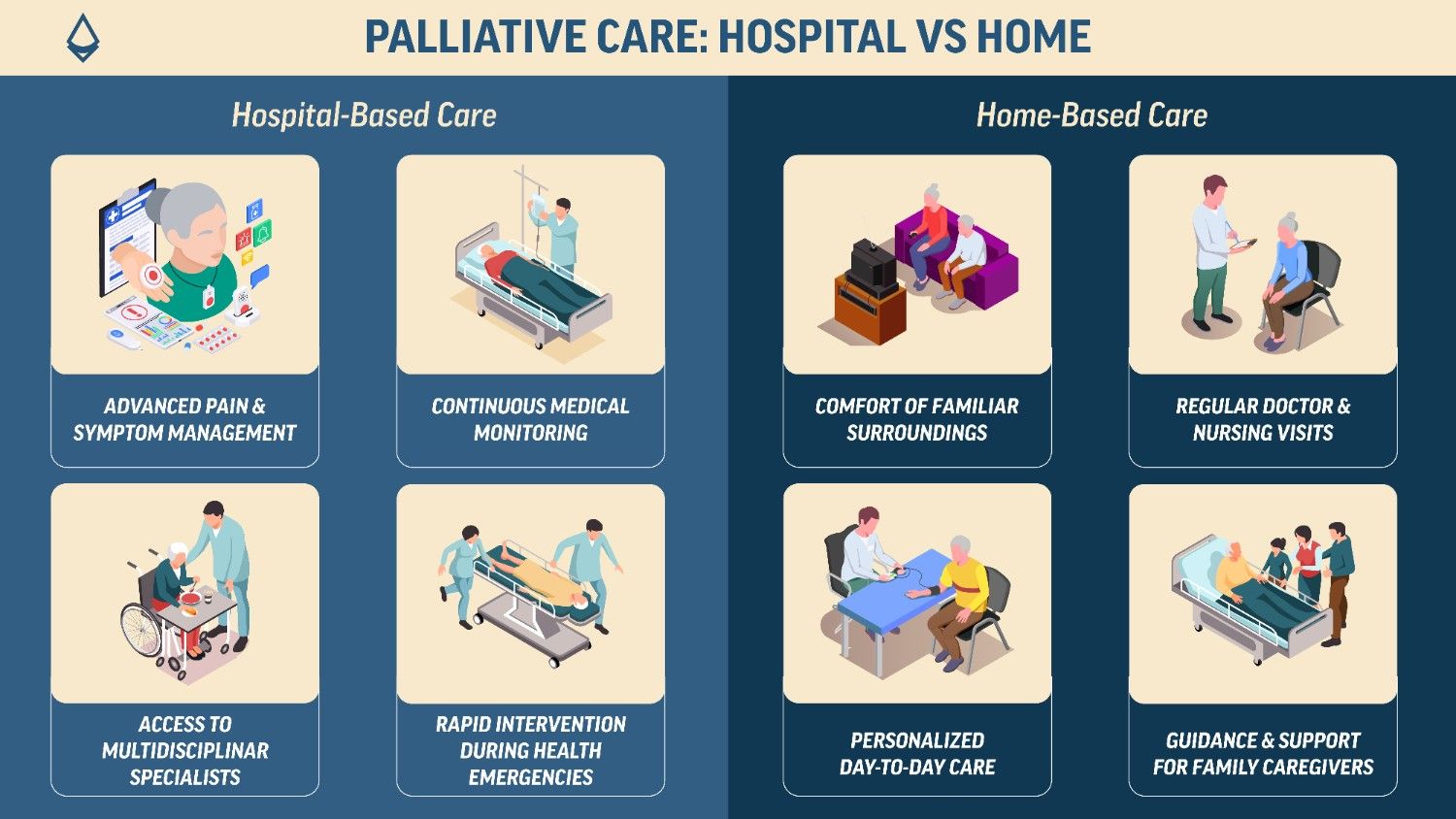
How Home and Hospital Care Work Together?
Palliative care is not an either-or choice between hospital and home. In many cases, the two models complement each other. A patient may receive specialised interventions during a hospital stay and then transition to home-based support for long-term symptom management.
This integrated approach helps:
Minimise unnecessary hospitalisations
Ensure continuity of care
Reduce caregiver burden
Improve the patient's quality of life
The ultimate goal is to create a care plan that adapts to changing medical needs while respecting the patient's preferences and dignity.
Why is Supporting the Caregivers Important?
Family members often become primary caregivers, managing medications, appointments and emotional support. Without proper guidance, this responsibility can lead to physical and mental exhaustion.
Palliative care teams actively support caregivers by teaching practical skills, offering counselling and connecting families with community resources. This support system can make a significant difference in preventing burnout and improving the overall care experience.
Conclusion
One of the most important aspects of palliative care is that it treats the person, not just the illness. Focusing on comfort, communication, independence, and emotional well-being, it helps patients continue to live meaningful lives despite serious health challenges.
Key Takeaways
- - Palliative care focuses on improving quality of life alongside medical treatment.
- - Hospital-based palliative care offers specialised symptom management and multidisciplinary support.
- - Home-based palliative care allows patients to receive compassionate care in familiar surroundings.
- - Combining hospital and home services ensures continuity of care and reduces unnecessary admissions.
- - Palliative care supports not only patients but also families and caregivers through education and counselling.