

Gender Differences in the Prevalence of Insomnia


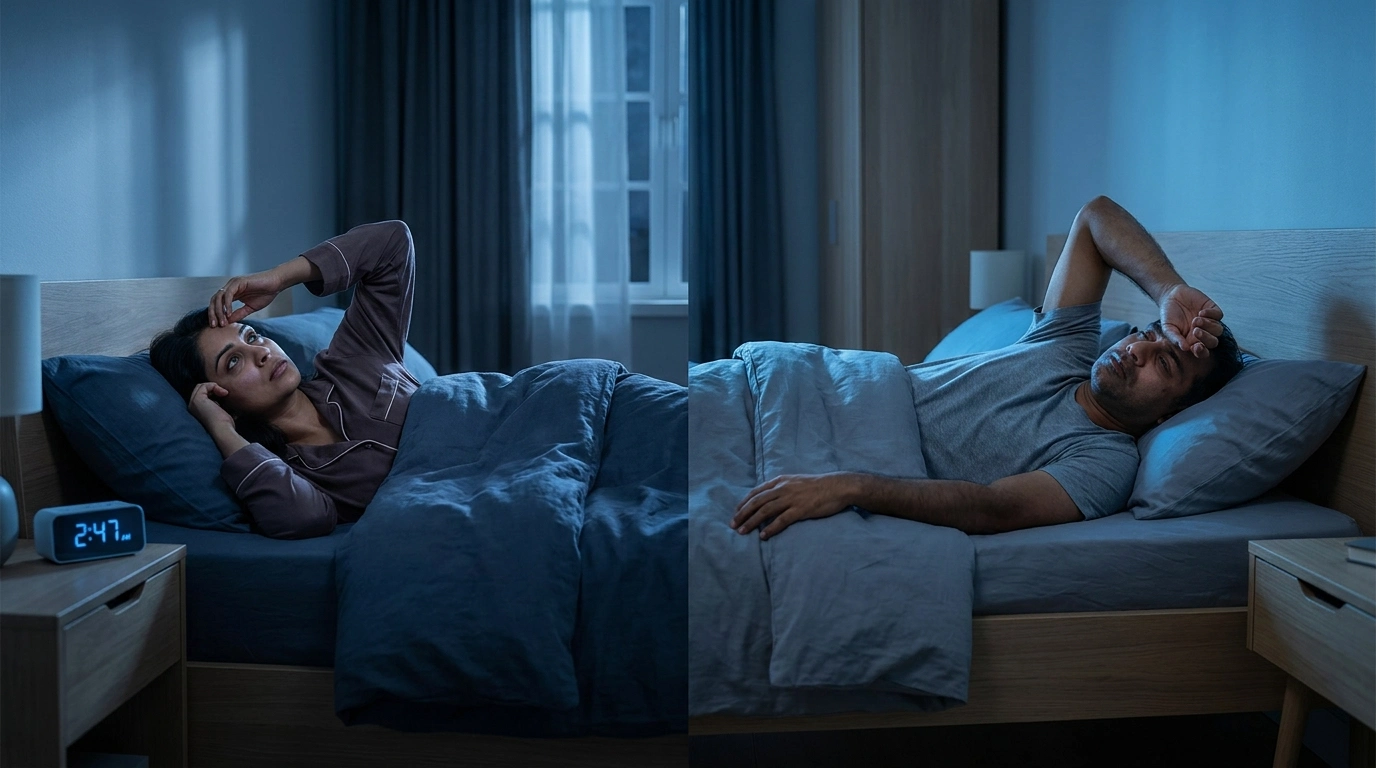
While anyone can struggle with falling asleep or staying asleep, research has consistently shown that insomnia is not experienced equally across genders. Women are more likely to develop chronic insomnia than men, while men are more likely to experience certain sleep disorders, such as obstructive sleep apnea.
These differences are shaped by a combination of biology, hormones, mental health, lifestyle and social responsibilities. Understanding how insomnia affects women and men differently can help improve diagnosis, treatment and long-term sleep health.
Why are Women More Likely to Experience Insomnia?
Studies suggest that women are around 40-60% more likely to develop insomnia than men. One of the biggest reasons is hormonal fluctuation throughout life.
Hormonal changes during the menstrual cycle, pregnancy, postpartum recovery and menopause can significantly affect the body's sleep-wake cycle. For example, many women experience poor sleep before menstruation due to changing progesterone levels, while menopause often brings hot flashes and night sweats that repeatedly interrupt sleep.
Does Menopause always cause Insomnia?
Not always. While many women experience sleep disturbances during menopause due to hormonal changes, symptoms such as hot flashes, night sweats, anxiety and mood changes often contribute to disrupted sleep rather than menopause alone.
Beyond biology, women are also more likely to experience anxiety and depression - both of which are strongly associated with chronic insomnia. Balancing work, caregiving responsibilities and household duties can further increase stress and contribute to persistent sleep difficulties.
Is Insomnia more common at certain ages?
Yes. The risk increases with age, especially in women during menopause and older adults.
How Does Insomnia Affect Men?
Although insomnia is less frequently reported in men, it remains a significant health concern. In many cases, men's sleep problems are linked to chronic stress, irregular work schedules, alcohol consumption, or underlying medical conditions.
Is insomnia always caused by stress?
No. Hormones, medical conditions, medications, lifestyle habits and mental health can all contribute to insomnia.
Men are also more likely to experience insomnia alongside disorders such as obstructive sleep apnea, cardiovascular disease, or chronic pain. Additionally, many men delay seeking medical advice for sleep-related problems, allowing symptoms to persist for years before receiving appropriate treatment.
This difference in healthcare-seeking behaviour may partly explain why insomnia appears less prevalent in men despite its substantial impact on their health.
Do Symptoms Differ Between Women and Men?
The symptoms of insomnia can overlap, but their presentation often differs.
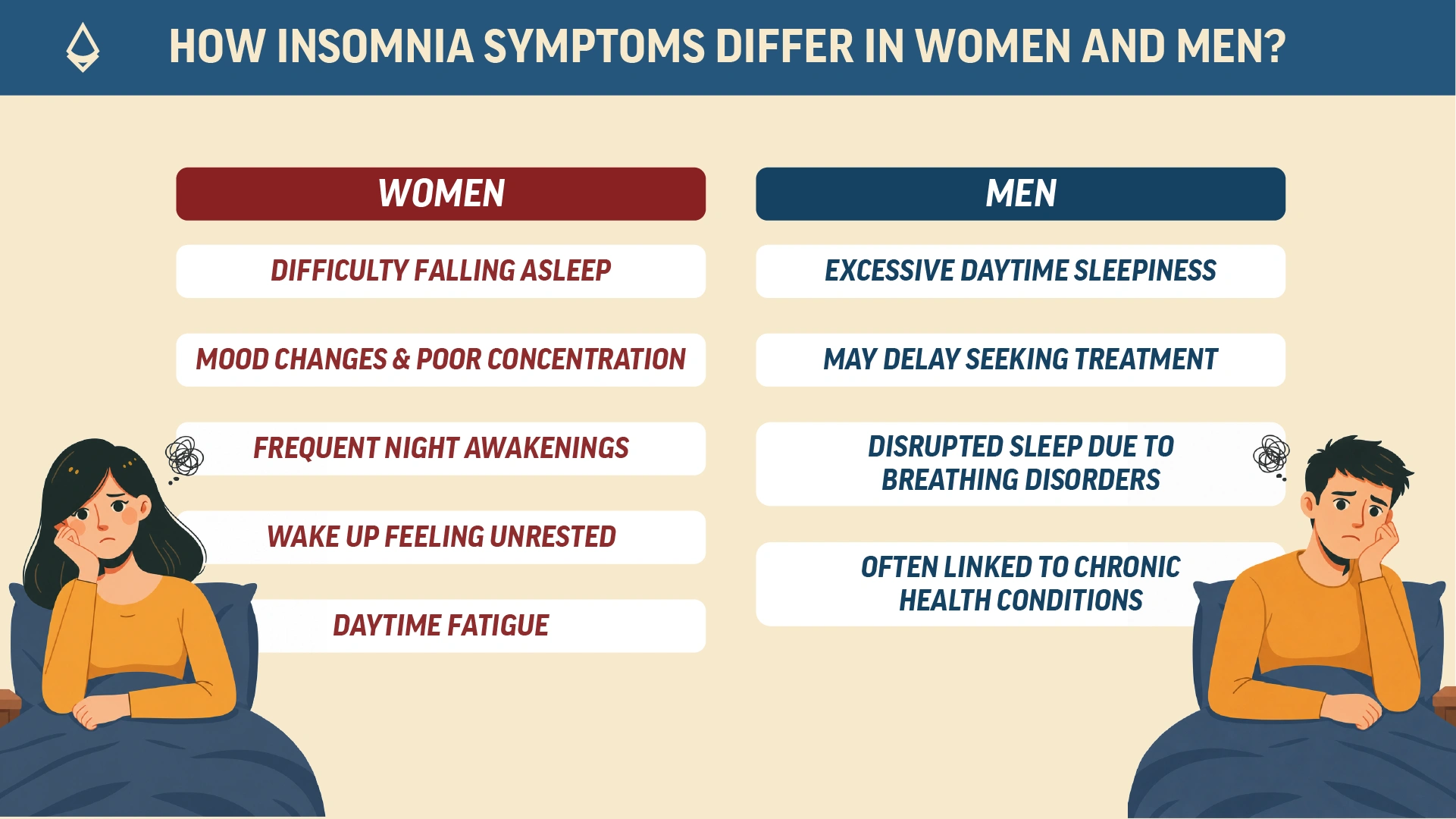
Women commonly describe difficulty falling asleep, frequent awakenings during the night and waking up feeling unrefreshed despite spending enough time in bed. They are also more likely to report daytime fatigue, mood changes and difficulty concentrating.
Men, however, may be more likely to experience sleep disruption related to breathing disorders, excessive daytime sleepiness, or insomnia occurring alongside other chronic medical conditions. Because these symptoms can vary considerably, healthcare providers should evaluate both biological and lifestyle factors rather than relying on sleep duration alone.
Why Personalised Treatment is Important for Insomnia?
There is no single treatment that works for every person with insomnia. Identifying the underlying cause is essential for successful management.
Treatment may include improving sleep hygiene, practising relaxation techniques, increasing physical activity, managing stress, or undergoing Cognitive Behavioural Therapy for Insomnia (CBT-I), which remains the first-line treatment for chronic insomnia. In some cases, medications may also be recommended for short-term symptom relief.
Can insomnia be temporary?
Yes. Short-term insomnia may last a few days or weeks, while chronic insomnia persists for three months or longer.
Emerging research is also exploring the role of cannabinoid-based medications in managing sleep disturbances, particularly in people whose insomnia is associated with conditions such as chronic pain or anxiety.
Why Recognising These Differences Matters?
Insomnia is more than an inconvenience. Persistent sleep deprivation increases the risk of depression, anxiety, impaired concentration, weakened immunity, cardiovascular disease, metabolic disorders and reduced quality of life.
Recognising the different biological and social factors that influence sleep in women and men allows healthcare providers to identify high-risk individuals earlier and develop more personalised treatment strategies. As research continues to improve our understanding of sleep health, gender-specific approaches may play an increasingly important role in helping people achieve restorative, healthy sleep.
Key Takeaways
- - Women are significantly more likely to experience insomnia due to hormonal changes, mental health conditions and life-stage transitions.
- - In men, insomnia is commonly associated with chronic stress, sleep apnea and other underlying medical conditions.
- - The symptoms and causes of insomnia can differ between genders, making a personalised assessment essential.
- - CBT-I, lifestyle modifications and treatment of underlying conditions remain the cornerstone of insomnia management.
- - Early diagnosis and personalised treatment can significantly improve sleep quality and reduce the long-term health risks associated with chronic insomnia.