

Effective Home Remedies for Joint Pain Relief



Joint pain is one of those conditions that slowly becomes part of one’s daily life. It may start as mild stiffness in the morning, discomfort while climbing stairs or aching fingers after long work hours. Over time, it can affect mobility, sleep and our overall quality of life.
Why does joint pain sometimes feel worse at night or after long periods of rest?
Inactivity reduces circulation and joint lubrication, leading to stiffness and heightened pain sensitivity.
While severe or persistent joint pain requires medical evaluation, many cases of mild to moderate joint discomfort, especially those associated with early osteoarthritis, overuse, stiffness, or age-related wear, can be alleviated with effective home remedies.
What Actually Works for At-Home Joint Relief?
Joint pain relief at home isn’t about trying random remedies, instead it’s about using the right intervention for the right type of discomfort. Whether it’s stiffness, swelling, inflammation or muscle tightness, each remedy works differently.
Is joint pain always coming from the joint itself?
Not always. Weak or tight surrounding muscles can increase joint stress and contribute significantly to pain.
Rest
Rest is essential during acute flare-ups, especially after overuse or strain. When a joint is irritated, continuous loading can worsen inflammation.
However, rest does not mean complete immobilisation for long periods. Short-term rest allows tissues to recover, but prolonged inactivity can reduce circulation and increase stiffness. The goal is controlled recovery and not total inactivity.
Ice and Heat Therapy
One of the most effective home interventions for joint pain is temperature therapy, but choosing correctly matters.
Heat works best for stiffness. When a joint feels tight, restricted or painful after inactivity, warmth increases blood flow, relaxes surrounding muscles and improves tissue elasticity. A heating pad, hot water bag or warm shower applied for 15-20 minutes can noticeably improve mobility.
Cold therapy is better for swelling or active inflammation. If the joint feels warm, puffy or tender after overuse, a wrapped ice pack applied for 10-15 minutes helps reduce inflammatory fluid buildup and temporarily dull pain signals.
How does one know whether to use heat or cold?
If the joint is stiff and tight, one should use heat. If it’s swollen, warm to the touch or recently strained, cold therapy should be used.
Gentle Massage
A warm oil massage can significantly improve circulation around stiff joints, helping reduce muscular tension that often worsens pain. When thoughtfully formulated oils are used, the benefits extend beyond simple lubrication.
Arnica and rosemary are traditionally known to ease musculoskeletal discomfort, while ginger and lemongrass contribute anti-inflammatory support. Peppermint provides a mild cooling sensation for quicker comfort and lavender and bergamot promote relaxation of both muscles and the nervous system. In addition, cannabinoid-based pain relief oils support the body’s natural pain-regulating pathways and complement topical massage for chronic joint discomfort.
Massage should remain gentle and rhythmic, focusing on the muscles surrounding the joint rather than pressing directly into inflamed areas. The goal is improved circulation, relaxation and sustained relief, not deep pressure.
Epsom Salt Soaks
Warm water immersion itself improves circulation and reduces muscle tightness around joints. Adding Epsom salt may enhance relaxation due to its magnesium content, which supports muscle function.
Soaking in warm water with 1-2 cups of Epsom salt for 15-20 minutes can ease stiffness, especially in the knees, hips and lower back. While magnesium absorption through skin remains debated, many people report noticeable comfort after soaking.
Ginger and Turmeric
Both ginger and turmeric are known for their anti-inflammatory properties.
Turmeric contains curcumin, a compound studied for its ability to influence inflammatory pathways linked to joint discomfort. For better absorption, turmeric should be combined with black pepper and a small amount of healthy fat. Half a teaspoon in warm milk or water daily can support long-term inflammation balance.
Ginger contains gingerols, which may improve circulation and reduce inflammatory activity. It can be consumed as tea or used externally as a warm compress by soaking a cloth in ginger-infused water and applying it over the joint.
These remedies are not instant painkillers, but consistent use may help reduce the inflammatory burden over time.
Light Movement
Movement is one of the most important yet underused home remedies.
Cartilage does not have its own direct blood supply. It receives nutrients through synovial fluid, which circulates only when the joint moves. Prolonged immobility reduces lubrication and increases stiffness.
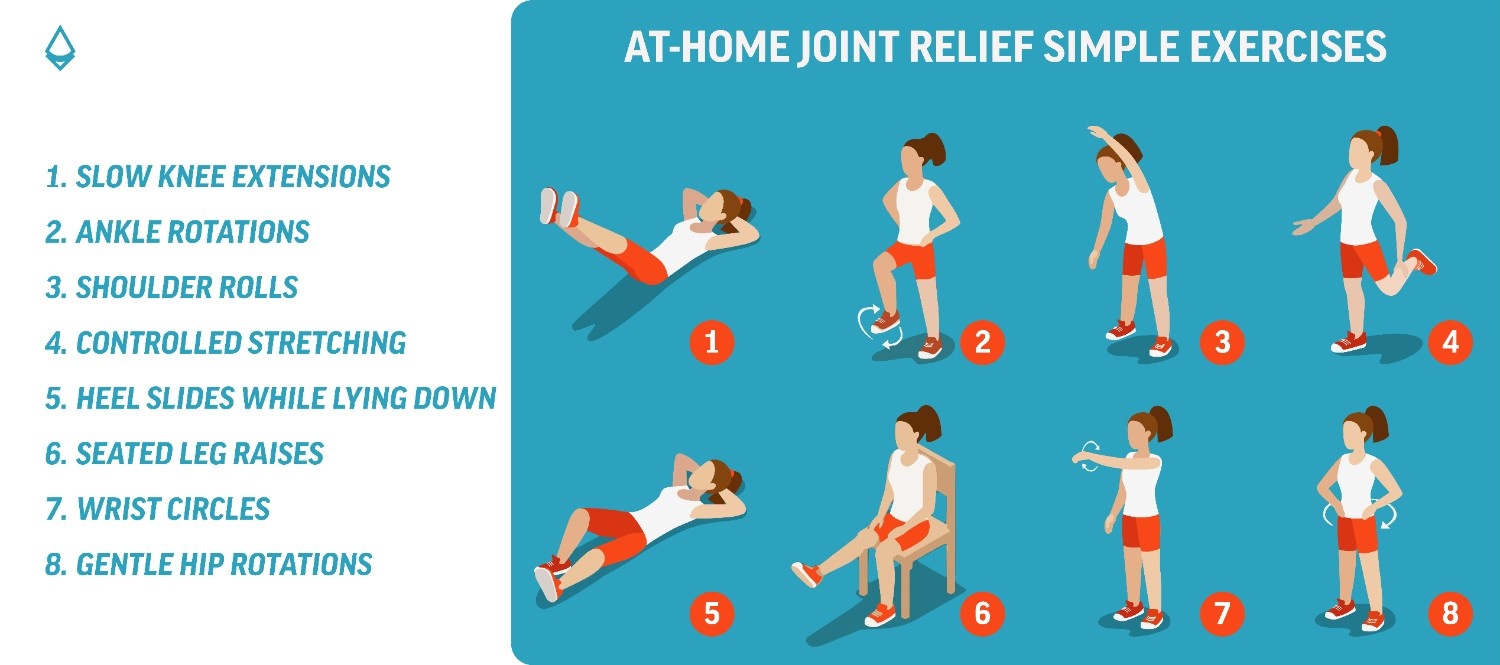
These are a few exercises that help maintain joint nourishment and reduce stiffness. Strengthening surrounding muscles further reduces pressure on the joint surface. For example, stronger thigh muscles decrease load on the knee joint.
How do movement and hydration actually nourish joints?
Cartilage gets nutrients through synovial fluid, which circulates when one moves and works best when one is well hydrated.
Why a Healthy Weight Should be Maintained?
Excess body weight increases mechanical stress on weight-bearing joints such as knees and hips. Even modest weight reduction can significantly reduce joint load during walking and daily movement.
Additionally, fat tissue releases inflammatory compounds, which may contribute to chronic joint discomfort. Maintaining a healthy weight supports both mechanical and inflammatory balance.
How to Support Joint Health Internally?
Diet and hydration play a supportive role in long-term joint comfort. Omega-3 fatty acids may help regulate inflammatory signalling.
A few good sources include:
Fatty fish such as salmon and sardines
Ground flaxseeds
Chia seeds
Walnuts
Hydration is equally important. Cartilage is largely composed of water and proper hydration supports lubrication and shock absorption. Steady water intake throughout the day helps maintain joint function.
When to Seek Medical Attention?
Home remedies are most effective for mild to moderate joint discomfort. Medical evaluation is necessary if there is persistent swelling, redness, fever, sudden severe pain or inability to bear weight. These symptoms may indicate infection, autoimmune flare or structural damage.
If pain continues beyond a few weeks, keeps returning, or limits daily movement, consulting a physiotherapist is also advisable. A physiotherapist can assess joint mechanics, muscle imbalances, posture and movement patterns and design a targeted rehabilitation plan to reduce strain and prevent long-term damage.
Early guidance often prevents minor joint issues from becoming chronic problems.
Final Thoughts
Joint pain rarely improves with a single quick fix; instead, it responds better to consistent, layered care. When combined with temperature therapy, anti-inflammatory kitchen ingredients like turmeric and ginger, warm soaks, therapeutic oil massage, proper hydration, supportive fats and regular gentle movement, pain is addressed from multiple angles.
Why does reducing inflammation internally matter for joint pain?
Because many types of joint pain are inflammation-driven, calming it from within supports longer-term relief, not just temporary comfort.
These simple home remedies can help joints feel less stiff, more mobile and better supported in daily life.
Key Takeaways
- - The right remedy depends on the symptom - heat eases stiffness, cold calms swelling.
- - Gentle daily movement keeps joints lubricated and reduces stiffness.
- - Reducing internal inflammation supports longer-lasting joint comfort.
- - Strong surrounding muscles help protect and stabilise painful joints.
- - Persistent or worsening pain should always be medically evaluated.