

Does Plantar Fasciitis Cause Morning Heel Pain?



Plantar fasciitis is one of the most common causes of heel pain. It occurs when the plantar fascia, a thick band of tissue connecting the heel bone to the base of the toes, becomes irritated from repeated stress. The pain can make everyday activities such as walking, exercising or standing for long periods uncomfortable.
While plantar fasciitis often improves with conservative treatment, identifying the symptoms early and addressing factors that continue to stress the foot can support recovery.
What Is Plantar Fasciitis and What Causes It?
The plantar fascia supports the arch of the foot and helps absorb shock with every step. Repeated loading can cause small injuries and irritation within the tissue, leading to pain and stiffness.
What is the plantar fascia?
The plantar fascia is a strong band of connective tissue running along the bottom of the foot. It helps support the foot's arch and absorb forces during walking and running.
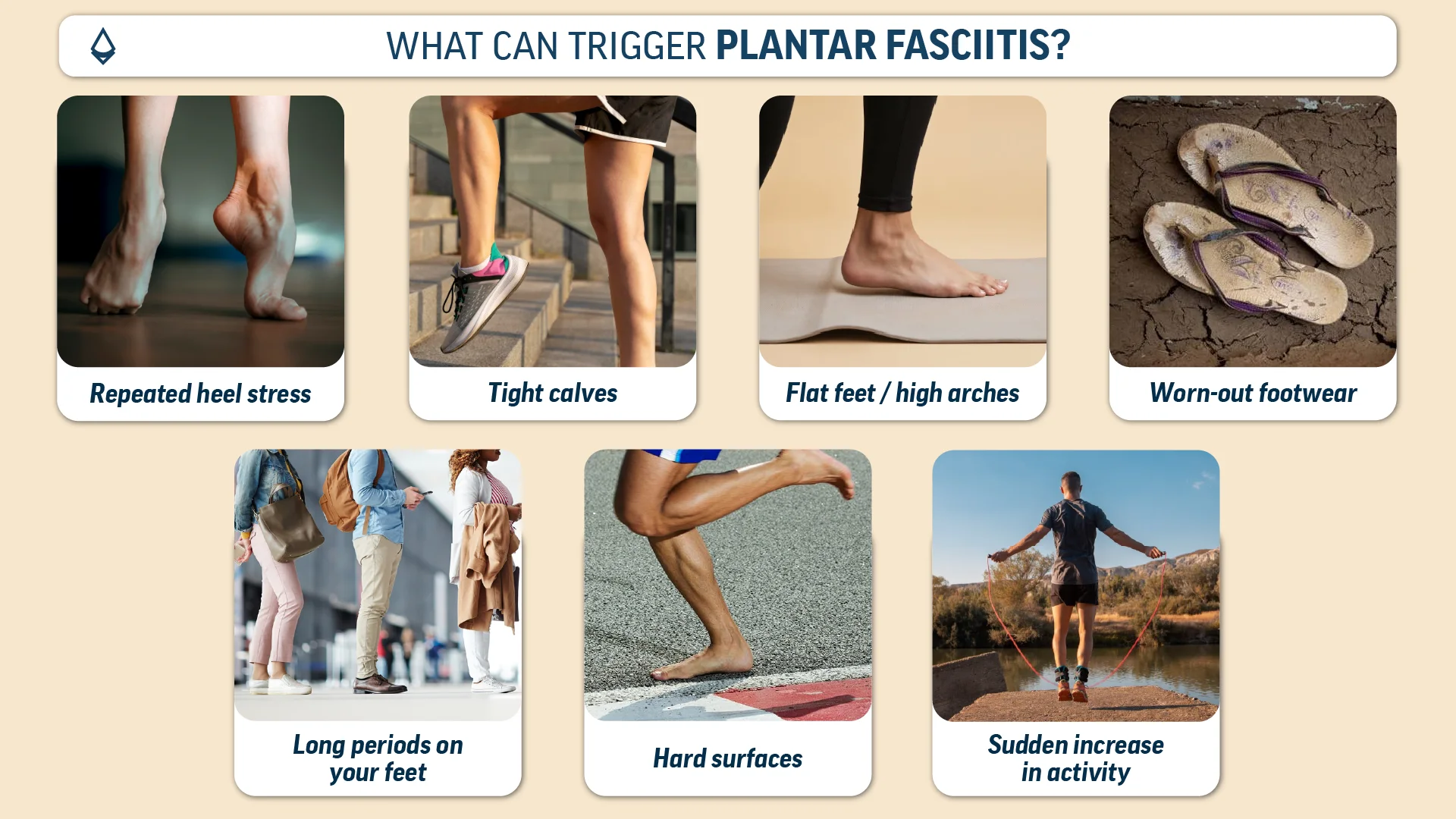
Plantar fasciitis may be associated with:
A sudden increase in running, walking or other physical activity
Prolonged standing or walking on hard surfaces
Tight calf muscles or reduced ankle flexibility
Flat feet or very high arches
Excess body weight
Poorly supportive or worn-out footwear
Activities that repeatedly place stress on the heel
Can walking make plantar fasciitis worse?
Prolonged walking or sudden increases in activity can aggravate symptoms. However, complete rest is usually unnecessary; activity can often be modified and gradually increased as pain improves.
It usually develops gradually rather than from one specific injury.
Is Heel Pain in the Morning a Sign of Plantar Fasciitis?
Pain with the first few steps after waking is one of the most characteristic symptoms of plantar fasciitis. The pain is usually felt on the underside or inner side of the heel and may ease after walking for a few minutes.
Pain can also return after sitting or resting for a prolonged period and then standing up. Long periods of walking, standing or exercise may make symptoms worse.
However, not all heel pain is plantar fasciitis. Achilles tendon problems, stress injuries, nerve irritation and other foot conditions can produce similar symptoms.
How Is Plantar Fasciitis Diagnosed?
Plantar fasciitis is generally diagnosed through a medical history and physical examination. A clinician may examine the location of tenderness, foot and ankle movement, walking pattern and symptoms during specific movements.
Imaging is not usually necessary when the symptoms are typical. X-rays, ultrasound or other tests may be considered if symptoms are persistent, unusual or suggest another cause.
A heel spur seen on an X-ray does not necessarily mean that the spur is responsible for the pain. Heel spurs can occur alongside plantar fasciitis but are not considered its primary cause.
Is plantar fasciitis the same as a heel spur?
No. A heel spur is a bony growth that may appear on an X-ray, while plantar fasciitis involves irritation of the plantar fascia. A spur does not necessarily cause heel pain.
How Should Shoes Be Chosen for Plantar Fasciitis?
Footwear can affect the amount of stress placed on the plantar fascia. Shoes should provide adequate cushioning, a stable heel and appropriate arch support while allowing enough room for the toes.
Very flat, tight or worn-out shoes may aggravate symptoms, particularly during prolonged walking or standing. Running and walking shoes should also be replaced when their cushioning and structural support have significantly deteriorated.
Orthotic inserts may provide additional comfort for some people, but they are generally more useful as part of a broader treatment plan rather than as the only intervention.
How Long Does Plantar Fasciitis Take to Recover?
Plantar fasciitis recovery time varies considerably. Some people improve within weeks or months, while others experience symptoms for longer. Most cases improve with conservative treatment, although recovery can be gradual.
Can plantar fasciitis go away on its own?
Yes. Most cases improve with conservative care such as activity modification, stretching, strengthening and supportive footwear, although recovery can take several months.
Symptoms may persist if one continues activities that aggravate the heel, increases physical activity too quickly, or doesn't address contributing factors such as limited calf flexibility and unsuitable footwear.
The goal is not simply to stop the pain temporarily but to gradually improve the foot's ability to tolerate normal daily and physical activity.
How Can Plantar Fasciitis Be Prevented?
Preventing plantar fasciitis largely involves managing the load placed on the feet. Exercise intensity should be increased gradually, particularly after a period of inactivity. Regular stretching and strengthening of the calf and foot muscles can support mobility and foot function.
Supportive footwear is especially important for people who spend long periods standing, walk extensively or participate in running and other high-impact activities. Maintaining a healthy body weight where appropriate and addressing recurring heel pain early can also help reduce prolonged stress on the plantar fascia.
Physiotherapy can be useful when pain persists, limits movement or interferes with normal activity. Treatment may include stretching, progressive strengthening, manual therapy, movement retraining and taping.
What Home Remedies Can Help Plantar Fasciitis?
Home treatment focuses on reducing irritation while gradually restoring normal foot function. Temporarily reducing activities that worsen pain, switching to low-impact activities and avoiding prolonged barefoot walking on hard surfaces can help.
Is it better to walk barefoot with plantar fasciitis?
Barefoot walking may be comfortable or beneficial for some people, but tolerance varies. If it increases heel pain, particularly on hard surfaces, supportive footwear may be more appropriate.
Ice can provide short-term pain relief. Rolling the foot over a frozen water bottle for around 15-20 minutes can combine cooling with gentle massage.
Other measures that may help include:
Wearing supportive footwear indoors and outdoors
Using a suitable insole or heel pad if it improves comfort
Regular calf and plantar fascia stretching
Gradually returning to running or other high-impact activities
Replacing footwear once cushioning and support have deteriorated
For persistent pain, cannabinoid-based medications are being used as part of broader pain-management approaches. However, they should only be considered under the guidance of a healthcare expert.
When Should Plantar Fasciitis Be Evaluated by a Doctor?
Heel pain should be evaluated when it is severe, persistent or interferes with normal activities. Medical assessment is particularly important if the pain follows an injury, causes significant difficulty walking, is accompanied by numbness or weakness, or does not improve with appropriate home care.
An accurate diagnosis can distinguish plantar fasciitis from other causes of heel pain and help determine whether physiotherapy, orthotics, medication or other treatment is appropriate.
Also watch:
Key Takeaways
- - Morning heel pain is a classic sign of plantar fasciitis, particularly pain with the first few steps after waking.
- - Stretching the plantar fascia and calf muscles is central to treatment and has strong support in clinical guidelines.
- - Supportive, well-cushioned footwear can reduce heel stress, while worn-out or unsupportive shoes may aggravate symptoms.
- - Recovery can take several months, although most people improve with conservative treatment.
- - Persistent heel pain should not be self-diagnosed indefinitely; professional assessment can rule out other causes and guide rehabilitation.