

Can Vitamin Deficiencies Cause Joint Pain?


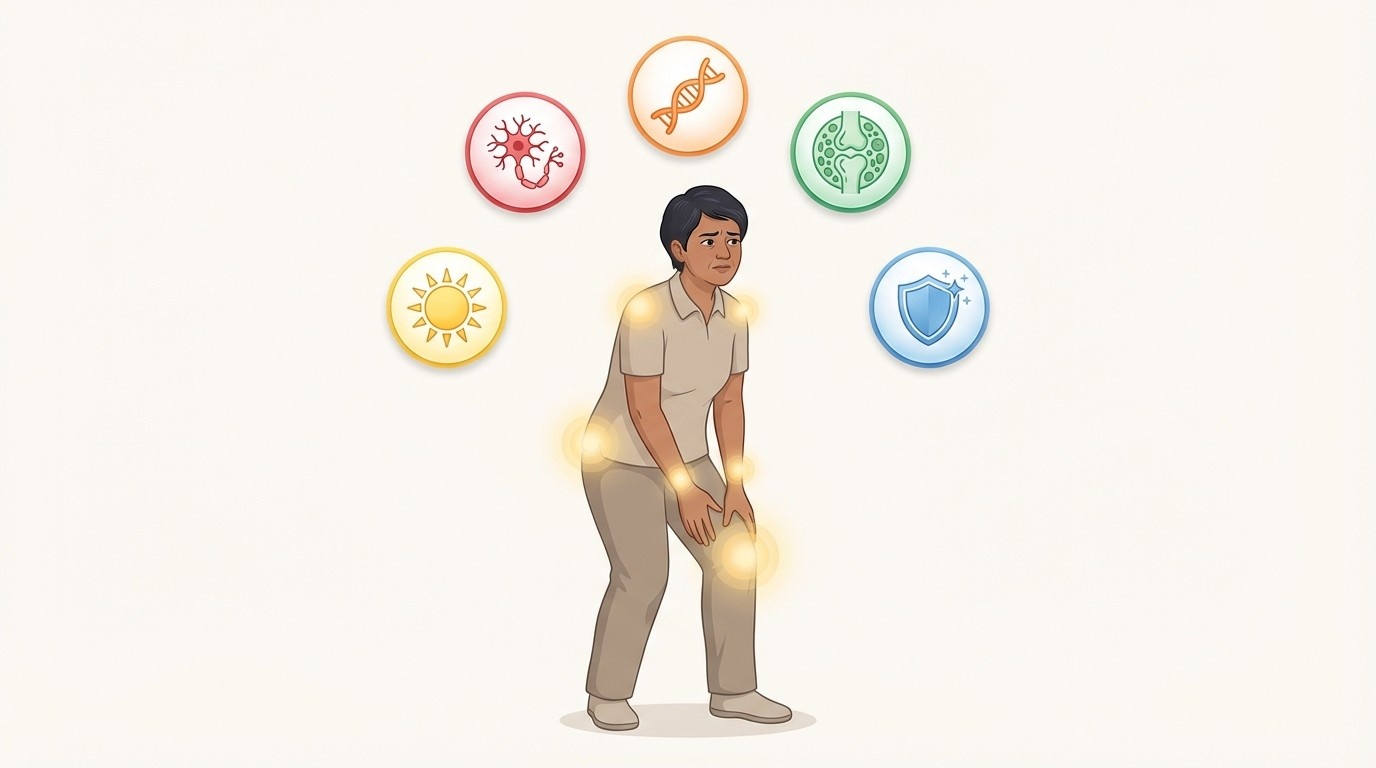
Yes, vitamin deficiencies are a lesser-discussed trigger that often goes unnoticed when it comes to joint pain. Our joints rely on a steady supply of nutrients to maintain cartilage integrity, bone density, lubrication, nerve function and inflammation control. When key vitamins run low, the body’s repair systems slow down. Over time, this can translate into stiffness, persistent aches, reduced mobility and even accelerated joint degeneration.'
Vitamin D: The Most Common Hidden Cause
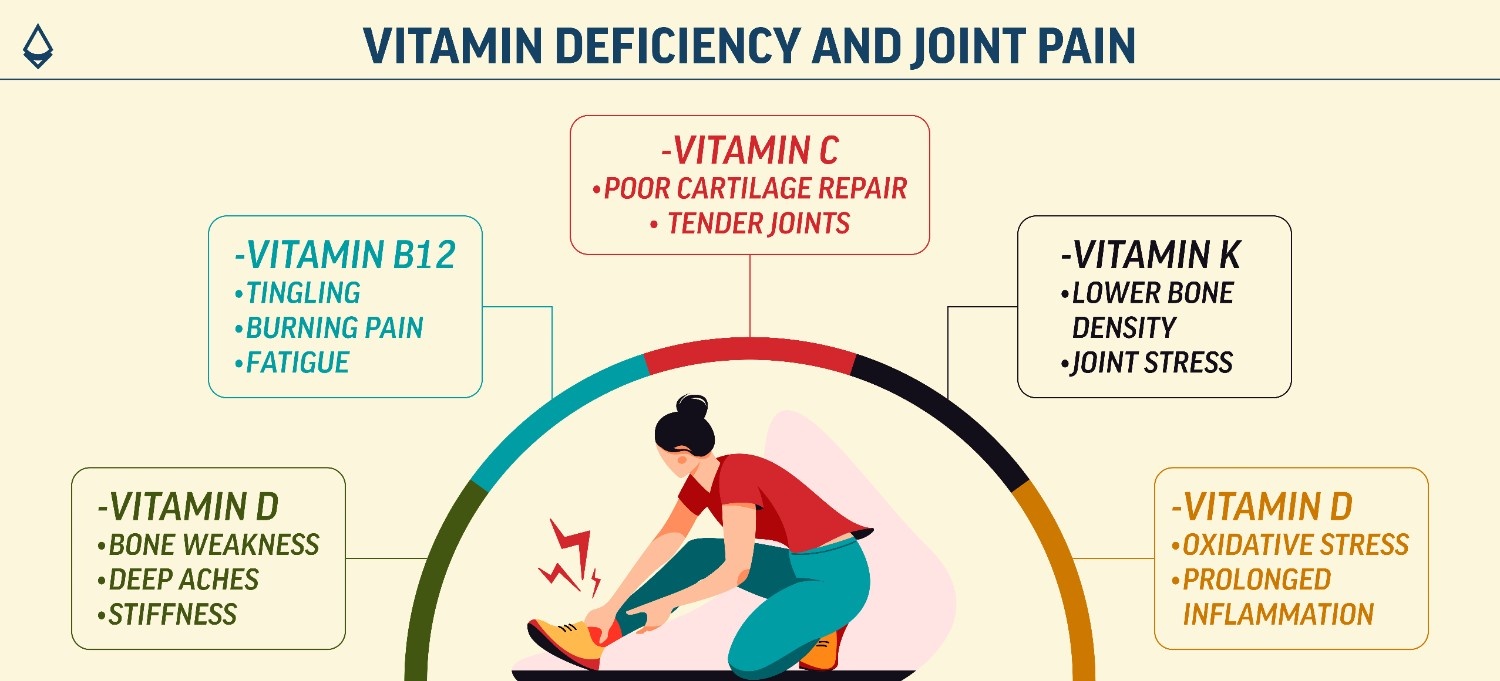
Vitamin D deficiency is one of the most prevalent nutrient gaps worldwide, particularly in people who spend long hours indoors. Vitamin D regulates calcium absorption and supports bone mineralisation. Without it, bones can become soft (osteomalacia in adults), leading to deep, dull joint and bone pain.
What is osteomalacia?
Osteomalacia is the softening of bones in adults due to severe Vitamin D deficiency. It can cause deep, dull bone and joint pain.
Low Vitamin D also increases inflammatory cytokines in the body. This means:
Higher joint stiffness
Increased sensitivity to pain
Slower recovery after activity
Vitamin B12: When Joint Pain Is Actually Nerve Pain
Vitamin B12 is essential for nerve insulation (myelin sheath formation). A deficiency can lead to nerve irritation, which is sometimes mistaken for joint pain.
What does “myelin sheath” mean?
The myelin sheath is a protective covering around nerves. Vitamin B12 helps maintain it. When it weakens, nerve irritation can cause joint pain to feel like a sensation.
Symptoms often include:
Tingling in hands and feet
Burning sensations
Weak grip strength
Fatigue and brain fog
Because nerve pathways run close to joints, the discomfort may feel like it’s coming from the joint itself. Vegetarians, vegans, older adults, and individuals with digestive disorders are at higher risk.
Vitamin C: Essential for Cartilage Repair
Cartilage is the shock absorber of the joints and it depends heavily on collagen. Vitamin C is required for collagen synthesis. Without adequate intake:
Cartilage regeneration slows
Ligaments lose tensile strength
Joint cushioning reduces
Micro-injuries take longer to heal
Long-term insufficiency can contribute to faster cartilage wear, especially in weight-bearing joints like the knees.
Why is collagen important for joints?
Collagen is the main structural protein in cartilage. Vitamin C helps produce it. Without enough collagen, joint cushioning reduces and wear increases.
Vitamin K: Supporting Bone and Joint Structure
Vitamin K activates osteocalcin, a protein responsible for binding calcium to bones. When Vitamin K levels are low, bone mineral density may decline, placing additional stress on joint structures.
Emerging research also suggests a potential link between low Vitamin K and progression of osteoarthritis due to impaired cartilage health.
People with poor vegetable intake or long-term digestive issues may be more at risk.
Vitamin E: Controlling Oxidative Stress in Joints
Inflammation and oxidative stress are major contributors to joint degeneration. Vitamin E acts as an antioxidant that protects joint tissues from free radical damage.
Low antioxidant protection may:
Increase inflammatory response
Accelerate tissue breakdown
Prolonged joint soreness after physical strain
While severe deficiency is rare, marginal intake may affect long-term joint resilience.
How Vitamin Deficiency-Related Joint Pain Feels Different?
Joint pain caused by nutrient deficiency often has distinct characteristics:
Diffuse or widespread discomfort rather than one isolated joint
Accompanied by fatigue or muscle weakness
Persistent despite rest
No obvious swelling or injury
Gradual improvement after correcting the deficiency
If joint pain doesn’t have a clear mechanical cause, checking Vitamin D and B12 levels is often a practical first step.
Who Are Most at Risk?
Certain groups are more prone to vitamin-related joint discomfort:
Individuals with limited sun exposure
Vegetarians or restrictive diets
People over 50
Those with gut absorption issues
Individuals with chronic stress (which increases nutrient demand)
How To Restore Joint Health Naturally?
Addressing joint pain linked to vitamin deficiency starts with identifying the gap through blood tests. Once identified, correction becomes a daily nutritional reset.
For Vitamin D, regular early-morning sun exposure can significantly improve levels. Dietary additions like fatty fish, egg yolks and fortified dairy or plant milks can offer additional support.
Is sunlight really enough for Vitamin D?
For many people, 15–20 minutes of early sun helps, but diet and absorption still matter.
For Vitamin B12, including dairy, eggs, fish or fortified foods is essential, especially for vegetarians. Those on restrictive diets may need structured supplementation under guidance.
Why are vegetarians at higher risk for B12 deficiency?
Vitamin B12 is mostly found in animal-based foods, making intake lower in plant-based diets.
For Vitamin C, think fresh and colourful - amla, guava, citrus fruits, capsicum and leafy greens. Since Vitamin C is heat-sensitive, lightly cooked or raw forms are more beneficial.
For Vitamin K, dark leafy greens such as spinach, methi and mustard leaves help support bone and cartilage integrity. Fermented foods may also contribute to a better Vitamin K2 status.
Vitamin E intake can be improved with a handful of almonds, sunflower seeds, cold-pressed oils and seasonal nuts.
Absorption matters just as much as intake. Healthy fats enhance absorption of fat-soluble vitamins (D, E, K), and supporting gut health through fibre-rich foods and fermented options improves nutrient utilisation.
Alongside correcting nutrient deficiencies, cannabinoid-based topical oils, particularly those formulated with plant-derived cannabinoids, play a potential role in modulating local inflammation and supporting pain relief. When applied externally, they interact with receptors in the skin without systemic effects, making them a complementary option for those looking to support joint comfort while addressing underlying nutritional gaps.
Conclusion
Yes, vitamin deficiencies can cause or worsen joint pain. While they may not be the only cause, they are often an overlooked and reversible contributor.
Before assuming that the joint discomfort is purely age-related or degenerative, it may be worth asking a simpler question: Is our body getting the nutrients it needs to repair, protect and regulate inflammation? Sometimes, restoring balance at the cellular level can ease pain in ways we don’t immediately expect.
Key Takeaways
- - Vitamin deficiencies can quietly trigger or worsen joint pain by slowing the body’s natural repair systems.
- - Low Vitamin D and B12 are common but overlooked causes of stiffness, deep aches and even nerve-related pain.
- - Deficiency-related joint pain often feels widespread, persistent and accompanied by fatigue rather than visible swelling.
- - Simple blood tests, targeted nutrition, sun exposure and improved absorption can significantly restore joint resilience.
- - Joint health is biochemical - restoring micronutrient balance can reduce pain in ways that aren’t purely structural or age-related.