

What is Paediatric Palliative Care?



Paediatric palliative care is a specialised form of medical care designed for children living with serious, life-limiting, or chronic illnesses. Instead of focusing only on curing the disease, it focuses on improving the child's overall quality of life and supporting the family through every stage of the illness.
It works alongside ongoing medical treatment and is not limited to end-of-life situations. The idea is simple but powerful: when a child is facing a serious illness, care shouldn’t only be about survival, but also about comfort, dignity and emotional well-being.
Why do children struggle to describe their pain accurately?
Young children often express discomfort through behaviour changes like irritability, withdrawal, disturbed sleep, or loss of appetite rather than clear verbal communication.
Why is Paediatric Palliative Care Different?
Children are not just small adults - their physical, emotional and developmental needs are completely different. A child’s understanding of illness changes with age and so does their ability to cope with pain, fear and medical procedures.
What is “developmentally appropriate care” in paediatrics?
It means adjusting communication, emotional support and medical care according to the child’s age, maturity and understanding of illness.
Paediatric palliative care recognises this and adapts care accordingly. It blends medical treatment with emotional support, communication and psychological care in a way appropriate to the child’s developmental stage.
What Conditions is Paediatric Palliative Care Used For?
This type of care is commonly introduced in children dealing with conditions such as cancer, severe neurological disorders, complex genetic conditions, congenital abnormalities and progressive organ diseases. It is also used in situations where long-term treatment is needed and symptoms significantly affect daily life. The key point is not the specific disease, but the seriousness and impact of the condition on the child’s life.
What is the Core Focus of Care?
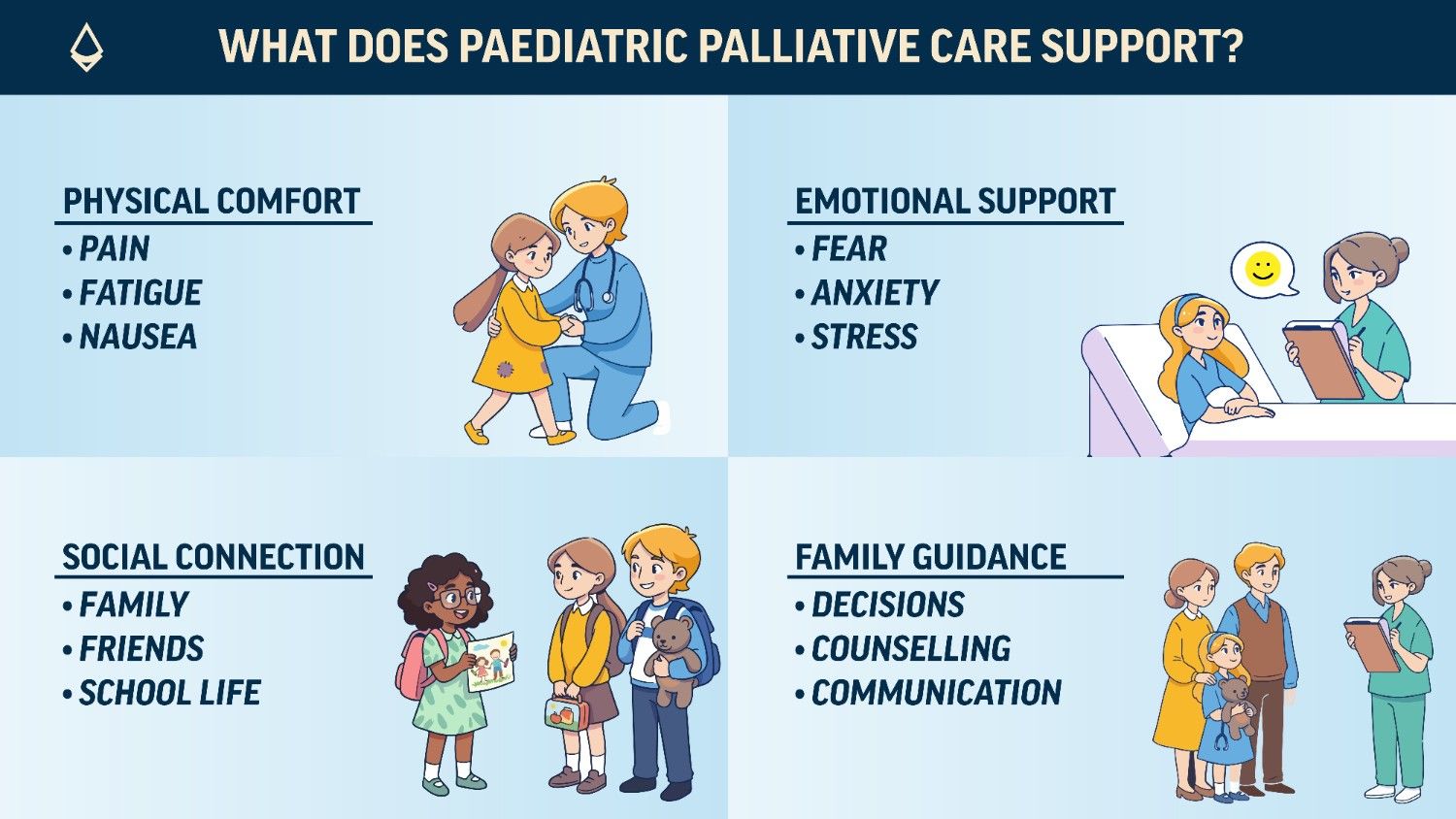
At its heart, paediatric palliative care aims to reduce suffering in all its forms. Physical discomfort like pain, fatigue, nausea, or breathing difficulties is addressed alongside emotional challenges such as anxiety, fear, or sadness.
What is “comfort care” in paediatric illness management?
Comfort care focuses on easing physical and emotional distress so the child feels safer, calmer and more supported throughout treatment.
But it goes beyond symptom management. It also focuses on helping children continue to experience normal aspects of childhood - playing, learning, connecting with family and feeling safe. This balance between medical care and emotional well-being is what makes the approach truly holistic.
How Does Paediatric Palliative Care Support Families?
When a child is seriously ill, the entire family is affected. Parents often experience emotional stress, confusion about treatment decisions and overwhelming responsibility. Siblings may also feel fear, neglect, or uncertainty.
Paediatric palliative care supports families by helping them understand the illness, guiding them through complex medical choices and providing emotional counselling. It ensures that families are not navigating the journey alone. This support often becomes just as important as the care given to the child.
Why do children experience pain differently from adults?
Children may not always express pain clearly, especially at younger ages, which makes behavioural cues and specialised paediatric assessment extremely important.
Who Makes Up the Paediatric Palliative Care Team?
Paediatric palliative care is delivered by a multidisciplinary team that may include doctors, nurses, psychologists, social workers, therapists and sometimes spiritual care providers.
Each professional contributes to a different aspect of care, from medical management, emotional support, communication and rehabilitation to family counselling. The goal is coordinated, whole-person care rather than fragmented treatment.
When Should Paediatric Palliative Care Begin?
A common misconception is that palliative care begins only when curative treatment stops. In reality, it can begin at the time of diagnosis and continue throughout the illness, even alongside active treatment. Early integration often helps improve symptom control, reduce distress and enhance quality of life for both the child and the family.
Conclusion
Paediatric palliative care is not about giving up, but it is about improving how a child lives, even in the presence of serious illness. It ensures that care is compassionate, balanced and centred on dignity rather than just disease outcomes.
For families, it provides emotional grounding during one of the most difficult journeys they may ever face. For children, it ensures that comfort, connection and care are never lost in the process of treatment.
Key Takeaways
- - Paediatric palliative care improves quality of life alongside medical treatment.
- - It addresses the physical, emotional, social and developmental needs of children.
- - Families receive continuous emotional and decision-making support.
- - It can begin at diagnosis and continue through all stages of illness.
- - It focuses on comfort and dignity, not just disease outcomes.